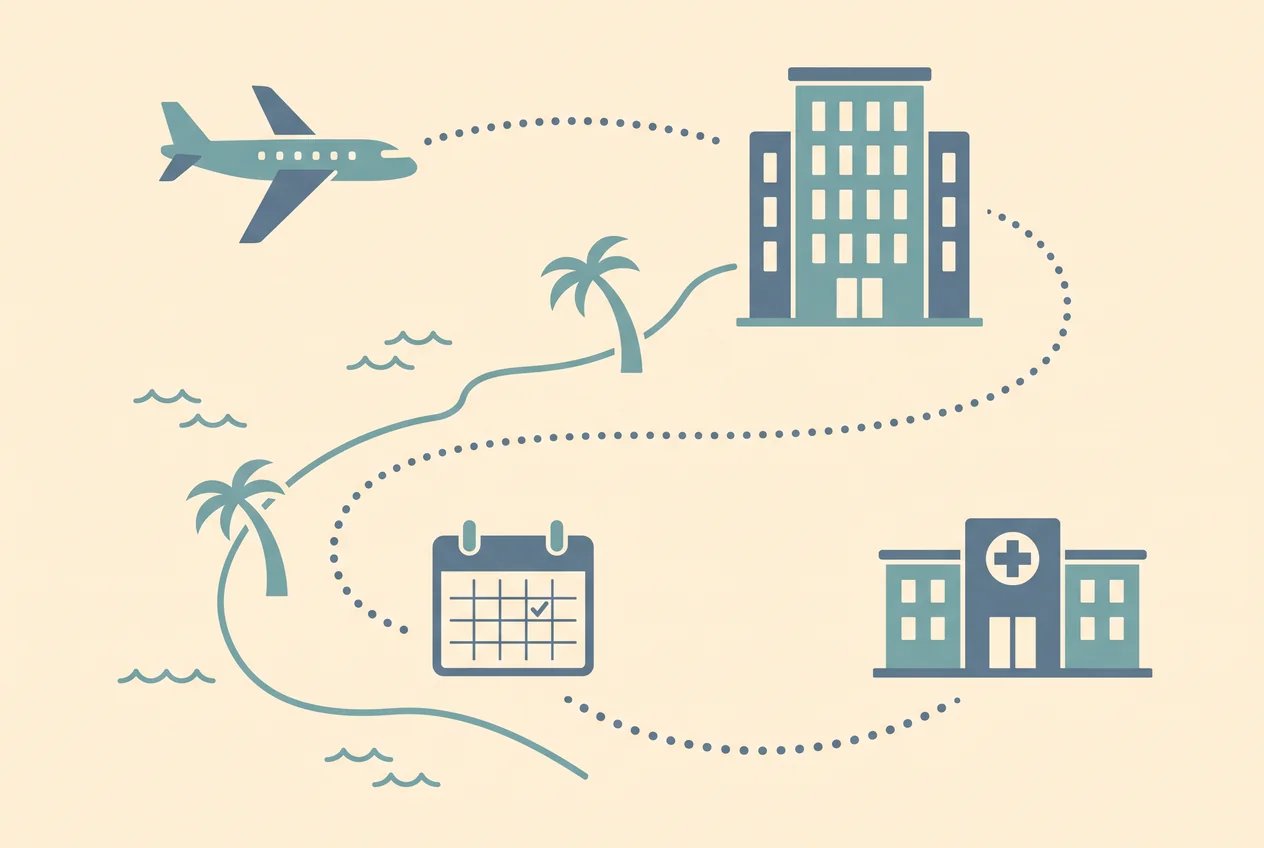
Every plastic surgery practice has a map of where its patients come from, and for a surgeon with a national following, the map is rarely confined to the county. People fly into Palm Beach from the Northeast, the Midwest, Texas and the West Coast because the surgeon they want is here and not where they live. That choice is reasonable. Choosing a surgeon for a focused skill, whether a particular rhinoplasty technique, a deep plane facelift or a mommy makeover, often matters more than choosing the nearest one. But it changes the nature of the project. A local patient needs a plan for surgery. An out-of-state patient needs a plan for surgery, a hotel, an airplane, a caregiver, a pharmacy, a follow-up schedule and a contingency for the one afternoon when something unexpected happens.
This guide is the logistics layer that most consultations only touch lightly. It covers how long to stay for common procedures, when flying home is considered safe, how to choose where to recover, what to arrange at home before you leave, what to do about complications that appear after you go home, and how to think about timing in a place with hurricane season and a winter high season. The details of each operation belong to your surgeon, and nothing here replaces specific instructions. The point is to help you walk into a consultation with the right questions and to remove the avoidable stress from a trip that is already emotionally full.

Why a trip for surgery needs more planning than a trip for anything else
Most travel involves risks that are mostly inconvenient: a delayed flight, a lost bag, a poor meal. Travel for surgery has the same risks, plus the particular vulnerability of recovering from an operation in an unfamiliar place. You will be tired, swollen, on medication and dependent on another person. You may not be allowed to drive, lift or bend. You may need to sleep propped up. You may need to be within a short distance of the surgeon’s office for several visits. Small mismatches, such as a hotel bed that is too low, a room three flights from the elevator or a pharmacy that is closed on the day you need it, become meaningful problems when you are in the first days of recovery.
The other difference is that your usual safety net is far away. At home you know your hospital, your primary care doctor and your neighbors. A few hundred miles away, you have a hotel room and a phone. This does not make out-of-state surgery unsafe, and many patients do it successfully. It does mean the plan has to be built before the trip, not during it.
Choosing the surgeon still comes first, and the same principles apply wherever you live. The practice’s five tips for choosing a Florida rhinoplasty surgeon are useful beyond rhinoplasty, particularly the points about reviewing results, understanding the surgeon’s training and confirming how follow-up care works. Dr. Justin Bellamy trained at NYU Langone and completed an aesthetic plastic surgery fellowship at the Dallas Plastic Surgery Institute, and the About section of his site describes patients who travel from across the country. Whatever surgeon you choose, a distance trip is easier when the office is organized and responsive, and you can judge that by how they handle your first few questions.
How long you should plan to stay
The question patients ask first is how many nights they need. There is no single answer, because it depends on the procedure, how you heal, whether there are drains or a dressing to remove, and your surgeon’s preferences. What follows are commonly used planning ranges, offered so you can sketch a realistic calendar, and your surgeon’s instructions always override them.
For rhinoplasty, many surgeons want the patient nearby until the splint is removed at the first follow-up visit, which is typically about a week after surgery. That usually means planning for roughly a week to ten days in the area, including the day before surgery. The swelling that follows lasts far longer, and the explanation of how long rhinoplasty swelling lasts is worth reading before you plan any events in the following months.
For a facelift or neck lift, including a deep plane facelift, patients commonly plan for about a week to two weeks in the area. The first follow-up visit usually occurs within a day or two, and further visits occur over the first week or so. Early bruising and swelling are significant, and many people prefer not to be seen in public until they look more settled. Patients who are curious about the anesthesia plan can read about whether a facelift requires general anesthesia, and the practice’s pages on awake surgery and on who is a candidate for awake plastic surgery explain when a lighter approach may be an option.
For breast procedures such as augmentation, patients often plan for several days to a week, with a first visit within a few days. The week by week breast augmentation recovery guide gives a picture of what to expect. Procedures that include a lift or a revision may call for a bit more time.
For body contouring such as Lipo 360 or a tummy tuck, plan on about a week to ten days, sometimes longer when drains or a compression regimen require monitoring. The week by week Lipo 360 recovery guide and the explanation of drains after a tummy tuck describe why the first week involves visits and why you are generally not asked to travel immediately. A combined mommy makeover is the most demanding scenario. Because several procedures are done at once, patients usually plan for the longer end of these ranges and arrange extra help.
Whatever the range, build in a buffer. It is far easier to extend a stay by two days than to find a flight, hotel and caregiver at the last minute. If your surgeon clears you early, you can leave early. If the swelling is slower or a drain needs another day, you have room.
When it is safe to fly home
Flying after surgery is a question of blood clot risk, comfort and the ability to manage a problem in transit. Surgery and immobility both raise the risk of deep vein thrombosis, and a long flight adds to it. This is why surgeons are cautious about flying too soon, particularly after body procedures, combined operations or procedures with long anesthesia times. Many surgeons also want to examine the surgical site, remove drains or dressings and confirm that early healing looks normal before they clear you to fly.
In general, patients are cleared to fly after the first week for many facial procedures, and sometimes later for body contouring and combined operations, but the decision is individual. Ask for a specific time frame during your consultation and ask what would change it. Ask whether the surgeon wants you to wear compression stockings on the flight, move around the cabin regularly, stay hydrated and avoid alcohol. Book a flexible fare if possible, so that changing the date does not cost more than the trip.
Practical points help the flight go smoothly. Book an aisle seat so you can stand and walk. Pack your medications and garments in a carry-on, not in checked luggage. Wear loose, front-opening clothing and a scarf or soft collar if recommended. Ask for wheelchair or cart assistance at the airport if walking long distances is tiring, which is commonly available on request. Carry a letter or the office’s contact information in case a problem arises, and know who to call if you feel unwell in transit. Cabin pressure can worsen swelling slightly, and some patients feel more discomfort than they expect, so pain medication within reach is wise.
If you drive home rather than fly, plan frequent stops to walk, and never drive yourself while taking prescription pain medication or if your surgeon has told you not to drive. A passenger should do the driving.
Seeing the surgeon before you commit to the trip
Traveling for a consultation is an investment in itself, and many out-of-state patients begin with a conversation before they fly. Ask the office what the process is for reviewing your photographs and history in advance, and whether a preliminary discussion can be arranged. An early review helps confirm that you are a candidate for what you want and prevents wasted trips. It also lets you ask about the surgeon’s approach before you buy a plane ticket.
When you do travel, consider whether you can combine the consultation and surgery into a single trip, or whether it is wiser to separate them. Separate trips give you time to think and to plan. A single trip, where the consultation happens a day or two before surgery, is more efficient but leaves less room to change your mind or to resolve questions about candidacy. Both approaches are common, and the right one depends on your comfort and your schedule. A candid conversation with the office about what they recommend is useful.
Bring a list of questions and take notes. In the consultation, ask how many cases like yours the surgeon performs, to see photographs of patients with similar anatomy through the practice’s photo gallery, and what the plan is for follow-up care if you live far away. Reading the patient testimonials can give a sense of other people’s experience, including travel, though your own consultation should drive your decision.
Where to stay: choosing a recovery base
Where you recover matters more than how luxurious it is. The ideal place is quiet, clean, easy to get in and out of, close to the surgeon’s office and set up for someone who cannot lift or bend. Many patients choose a hotel with a reliable elevator and a kitchenette, or a short-term rental on a ground floor or with an elevator. Others prefer to stay with friends or family in the area, if they have them.
Some details deserve attention. A bed that can be elevated or that you can sleep upright in, with extra pillows, is important for facial procedures and rhinoplasty. A low bed or a deep couch that is hard to get out of is a problem after body procedures. A bathroom with a raised toilet seat or sturdy handrails helps, as does a shower where you can sit if you need to. Access to food, whether through a kitchenette, a nearby grocery that delivers or a meal service, will prevent you from relying on whoever happens to be with you. Check that the room has a way to keep medications and cold packs cold, because you may need both.
Proximity matters because you will have visits and because you may need to return urgently. Staying within a reasonable drive of the office, rather than in a beach town an hour away, reduces stress. Palm Beach International Airport is close to the Palm Beach Gardens area, which is convenient for arrival and departure, and Fort Lauderdale and Miami are alternative gateways, though they involve a longer drive that you will not want to make soon after surgery. Whichever airport you choose, plan the ride to the lodging in advance and avoid a long drive on the day of surgery.
Cleanliness and a calm environment matter for wounds and sleep. Avoid places with heavy renovation, loud events or shared bathrooms. If you are traveling in winter, which is high season in South Florida, book early, since good options near the office can fill quickly.
Who should come with you
Almost every surgeon requires a responsible adult to drive you home from the surgical facility and stay with you for the first night, and many want someone available for the first few days. For an out-of-state patient, that person is also your travel partner, navigator and advocate. Choose someone calm and reliable who can read instructions, manage a medication schedule, help with garments and drains, and call the office if something looks wrong.
Be honest about what you are asking. Caring for a recovering patient is physically and emotionally demanding, and a friend who hates the sight of blood or who cannot stay awake past nine in the evening may not be the right fit. Some patients bring a family member and arrange for a professional recovery caregiver for specific hours. Others hire a nurse for the first nights. Ask the office what they recommend, and about any resources they know of, without assuming that any service exists.
Give your caregiver written information. They should know your medications and times, the signs that mean call the office, the surgeon’s contact numbers including after hours, the address of the nearest emergency department and any allergies. Make sure they have a phone with enough battery and charging cables. Small things like these make the difference when you are groggy.
Before you leave home: tests, clearances and pharmacy
Most surgeons require preoperative testing, which may include blood work, an electrocardiogram, a pregnancy test and, for some breast procedures, imaging. Out-of-state patients usually complete these near home and send the results to the office. Ask what is needed, how recent it must be and how to submit it. If you have a chronic condition, such as high blood pressure, diabetes or a heart or lung condition, ask your primary care doctor for a clearance letter, and make sure your surgeon knows about all your medications and supplements. Several common supplements and medications can increase bleeding and must be stopped in advance, and the office will provide a list.
Weight and general health matter too. Some procedures carry higher risks at higher body mass indexes, which the piece on why BMI matters for some procedures explains. If your surgeon has asked you to reach a particular weight or to stop nicotine for a certain period, build that into your timeline, since delaying a trip is much easier than canceling one.
Fill prescriptions as early as the office allows, and ask whether prescriptions will be sent to a pharmacy near your lodging or to your home pharmacy. Controlled medications often cannot be sent across state lines in the usual way, so ask the office exactly how it will work. Confirm that the pharmacy near your lodging is open when you will need it, especially around weekends and holidays. Stock your lodging in advance with the supplies on the surgeon’s list, such as gauze, gentle cleanser, stool softeners, ice packs and loose clothing.
Setting up home so you are not worrying about it
A surprising amount of stress comes from what is left undone at home. Arrange childcare, pet care and work coverage in advance. If you are caring for children, give extra thought to the weeks after you return, when you may still be restricted from lifting. Prepare your home for your return by setting up a recovery area with pillows, water and meals, and by moving frequently used items to waist height.
Tell your employer how much leave you need, and plan for a cushion. Many patients return to desk work sooner than to physical work, but the first days back are often tiring. If you work with the public, consider how visible bruising or swelling might be and whether remote work is possible. Think through how you will explain your absence. Some patients are open about it, and others prefer a simple, true statement such as having had a procedure, and a clear script avoids awkwardness.
Timing the trip: seasons, weather and hurricane season
South Florida has a pattern that matters for planning. The cooler, drier months from late fall through spring are the high season, when tourism, events and hotel demand peak. This is a pleasant time to recover, since the weather is mild, but lodging fills and prices rise, so book early. Summer is hotter and more humid, and it overlaps with the Atlantic hurricane season, which runs from June through November.
Hurricane season is a practical consideration, not a reason to avoid summer or fall. Storms are most likely in late summer and early fall, and they can disrupt flights, close roads and complicate the days after surgery. If your surgery falls in this window, buy flexible airfare, consider travel insurance that covers medical and weather interruptions, and ask the office what its plans are if a storm is forecast. Watch the forecast in the week before you travel and have a backup plan for dates.
Sun and heat also matter. Fresh incisions and healing skin should be protected from strong sun, and sweating and heat can aggravate swelling. A shaded, air-conditioned recovery base and a hat and sunscreen routine, as directed, are part of the plan. Patients planning a facial procedure or rhinoplasty in the summer should plan on spending much of their time indoors for the first weeks.
Finally, think about your calendar at home. Surgery just before a wedding, a graduation or a major work event is stressful, and swelling can last longer than expected. Many patients plan surgery at least three to six months ahead of important events, and for rhinoplasty, longer.
A simple timeline for the weeks before you travel
| When | What to do |
|---|---|
| Eight to twelve weeks out | Confirm the date, book lodging and flights with flexible terms, arrange caregiver, request pre-op instructions |
| Four to six weeks out | Complete labs and clearances, stop any medications or supplements as directed, arrange work leave and home help |
| One to two weeks out | Fill prescriptions as instructed, buy supplies, confirm transport from the airport, pack medications and garments |
| The week of surgery | Follow fasting and medication instructions exactly, confirm arrival times, share contacts with your caregiver |
| After surgery | Attend scheduled visits, follow activity limits, ask for written clearance before flying, plan the return trip |
This table is a framework. Your surgeon’s office will provide the specific timetable for your procedure.
Follow-up care once you are home
The weeks after you fly home are the part of out-of-state surgery that deserves the most advance thought. Healing continues for months, and you will have questions long after you leave. Ask the office how follow-up works for patients at a distance. Common arrangements include photo updates through a secure channel, scheduled phone or video check-ins and an in-person visit at a later milestone, such as a few months out. Ask what the office considers an emergency and how to reach someone after hours.
Identify a local physician before you leave, ideally one who knows you and agrees to see you if a non-urgent problem arises, such as a minor wound issue or a question about an infection. Make sure your surgeon’s office sends them a summary if you wish. Know where the nearest emergency department is. Complications after plastic surgery are uncommon, but if one occurs, you want to avoid the situation of explaining a complex operation to a stranger without documentation. Carry a copy of your operative report and medication list.
Some problems can be managed at home with guidance from the surgical team, and some require prompt in-person care. Fluid collections such as a seroma after body contouring, for example, may need to be drained, and an out-of-state patient should know ahead of time who would do that. Compression garments, which the guide to the compression garment timeline explains in detail, need to be worn and adjusted correctly, and sending photographs of how a garment fits can help your surgeon troubleshoot remotely.
Finally, be realistic about the emotional side. The weeks after surgery involve swelling, uneven healing and moments of doubt, and being away from your regular surgeon can intensify them. Staying in touch with the office, using the follow-up channels offered and keeping a photo diary can ease that anxiety.
A short folder to carry with you
Put together one folder, paper or on your phone, that you can hand to anyone. It should hold your government identification, insurance information if relevant, the surgeon’s name and the office phone numbers including after hours, the date and name of your operation, your medication list with doses and times, your allergies, your caregiver’s name and number, the address of your lodging, and the name and number of your local physician at home. Add the discharge instructions you receive after surgery and photographs of how the surgical area looked on the first days, so that any clinician who sees you can compare. It takes ten minutes to assemble and removes a great deal of friction if you ever need help in a place where nobody knows you.
Special considerations for combined and higher-risk plans
Some plans deserve a more conservative approach to travel. Combined procedures, such as a mommy makeover that includes a tummy tuck, breast surgery and liposuction, involve longer anesthesia and a greater recovery burden. Surgeons set limits on how much to combine for safety, and the right plan may involve staging across two trips. The mommy makeover page describes how these operations are combined, and the first step is to discuss what is safe for you.
Age and health also matter. The discussion of how old is too old for a facelift makes the point that health, not the number, drives the decision, and out-of-state patients with several medical conditions need extra coordination between their surgeon and their home physicians. Patients who take blood thinners, have significant heart or lung disease or have a history of blood clots need a careful plan about flying and about timing. Never hide a condition to avoid delaying your trip.
What a good out-of-state experience feels like
When it goes well, an out-of-state surgical trip feels organized rather than frantic. The office answers questions promptly. You know where you are staying, who is with you and what happens each day. You have written instructions, a list of contacts and a clear timeline for flying home. You feel supported, not abandoned, when you leave, and you know what to do if something looks wrong.
If you are weighing a trip to Palm Beach, the practical next step is to talk with the office about your procedure and your location. You can learn about Dr. Justin Bellamy, review the photo gallery and contact the office to ask how they work with patients who are traveling. Their answers will tell you a great deal about how well the trip will go.
Frequently Asked Questions
How long should I stay in Palm Beach after plastic surgery?
It depends on the procedure. Many patients plan about a week to ten days for rhinoplasty and body contouring, and a week to two weeks for facelift or neck lift, with more time for combined operations. Your surgeon will give a specific recommendation, and adding a buffer day or two is wise.
When can I fly home after surgery?
Surgeons usually want to see you after the first week and confirm early healing before clearing you to fly, and longer waits are common after body procedures. Ask for a specific time frame in writing and follow any instructions about compression stockings and walking on the flight.
Is it safe to have plastic surgery out of state?
It can be, with preparation. Choose a surgeon with the right training and results, complete local pre-op testing, bring a responsible caregiver, stay near the office for follow-up, and arrange a plan for care after you go home. Safety depends on planning as much as geography.
Do I need someone to stay with me?
Almost always. Surgeons typically require an adult to drive you home from the facility and stay with you for at least the first night, and many want help for several days. Choose someone reliable who can manage medications and call the office if needed.
Where should I stay while recovering?
Choose a quiet, clean place close to the office with an elevator or ground floor access, a bed where you can sleep elevated, a bathroom suited to limited mobility and easy access to food and a pharmacy. Staying close reduces stress if you need to return urgently.
Which airport is best for Palm Beach Gardens?
Palm Beach International Airport is the closest option and usually the most convenient. Fort Lauderdale and Miami are alternatives with longer drives, which can be tiring soon after surgery. Plan your ground transportation in advance.
Can I have pre-operative tests done at home?
Usually yes. Labs, an electrocardiogram and other tests are often completed near home and sent to the surgeon’s office. Ask what is required, how recent the results must be and how to submit them.
What if I have a complication after I go home?
Know in advance whom to call, how the office handles after-hours concerns and where the nearest emergency department is. Identify a local physician who can see you for non-urgent issues and carry a summary of your operation and medications.
Should I travel during hurricane season?
You can, with flexibility. Buy flexible airfare, consider travel insurance, watch forecasts the week before and ask the office about its plans if a storm is forecast. Late summer and early fall carry the highest risk of storm disruption.
Can I combine a consultation and surgery in one trip?
Some patients do, and others separate them to allow time for decisions and preparation. A single trip is efficient but leaves less room for second thoughts. Discuss both options with the office and choose based on your comfort and schedule.
How do I get my prescriptions if I live in another state?
Ask the office how prescriptions will be handled. Many are sent to a pharmacy near your lodging or to your home pharmacy, and controlled medications may have additional requirements. Confirm the pharmacy hours and pick up medications early.
How far in advance should I plan the trip?
Many patients start planning eight to twelve weeks ahead, which allows time for testing, lodging, flights and caregiver arrangements. High season in South Florida and flexible travel terms make early booking particularly helpful.
Planning Surgery in Palm Beach From Out of State?
The office can talk through stay length, follow-up visits and timing for your procedure. Contact Bellamy Plastic Surgery to request a consultation with Dr. Bellamy. Call (561) 705-0044 or complete our online contact form.