

Facelift in Palm Beach, FL
A facelift is the most direct way to address what happens to the lower and middle face over time: cheeks that slide, jowls that form along the jaw, folds that deepen around the mouth, and a neck that loses its line. Skincare and injectables can help at the edges, but once tissue has descended, the only thing that puts it back is surgery.
Facelifts and neck lifts are the core of Dr. Justin Bellamy's practice. He is a board-certified plastic surgeon who performs deep plane facelifts awake under local anesthesia, and patients travel from across the country to his Palm Beach Gardens office. What follows covers how a facelift works, what recovery really involves, how long results last and how to tell whether it is the right step for you.
What a facelift does
A facelift, or rhytidectomy, tightens and repositions the tissues of the face and neck to restore a more youthful contour. The goal is a natural look roughly 10 years younger, with no change to your fundamental appearance. It treats:
- Sagging skin along the jawline, in the midface and in the neck
- Creased skin on the neck
- Deepened lines from the nose to the corners of the mouth
- Marionette lines
- Volume loss in the cheeks and temples
- Jowls
- A double chin
Modern facelifts avoid the overly tight, distorted look people associate with old-style surgery. Dr. Bellamy's technique restores lost volume to the cheeks and temples, elevates descended tissue to where it belongs, tightens skin to remove jowls, softens folds around the mouth and sharpens the jawline and neckline.
Deep plane facelift, explained
The deep plane facelift is a specific technique that mobilizes and repositions the deeper facial tissues that have descended with age, known as the SMAS layer. It releases the facial ligaments that hold those tissues down, so the skin and the SMAS move together. This differs from SMAS plication or SMASectomy techniques, which tighten the layer with sutures and removal without fully lifting it off the muscle beneath.
SMAS plication and SMASectomy can give lovely results in the right patient, and they have their place. The deep plane approach is more technically demanding and takes longer, but it gives the surgeon more control over the deeper tissues and can produce a stronger result, with improved blood flow to the skin as it heals. The full comparison of deep plane versus SMAS facelifts covers how they differ in recovery and longevity.
Patients who choose a deep plane facelift tend to notice a more natural look, softened folds around the mouth, a sleeker facial contour, restored volume, less noticeable scarring and results that last longer than traditional methods.
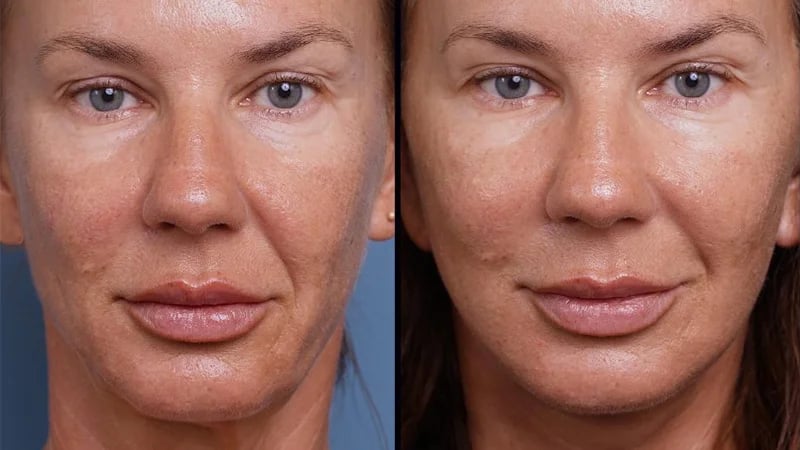
Awake facelift under local anesthesia
Many patients are more anxious about anesthesia than about surgery. Dr. Bellamy performs facelifts awake under local anesthesia, from abbreviated mini facelifts to full deep plane operations, with hidden incisions and a smooth recovery. A deep plane facelift with Dr. Bellamy takes about three to four hours awake, and adding eyelid surgery or laser resurfacing can add a little more time.
The difference between a mini facelift and a deep plane facelift is mostly the depth and extent of the work, not the process. More significant age-related changes call for more extensive work, and the experience for the patient is otherwise very similar. Whether awake surgery suits you depends on your health and preferences, and Dr. Bellamy will discuss it at your consultation. His awake deep plane facelift is planned around your health, comfort and goals.
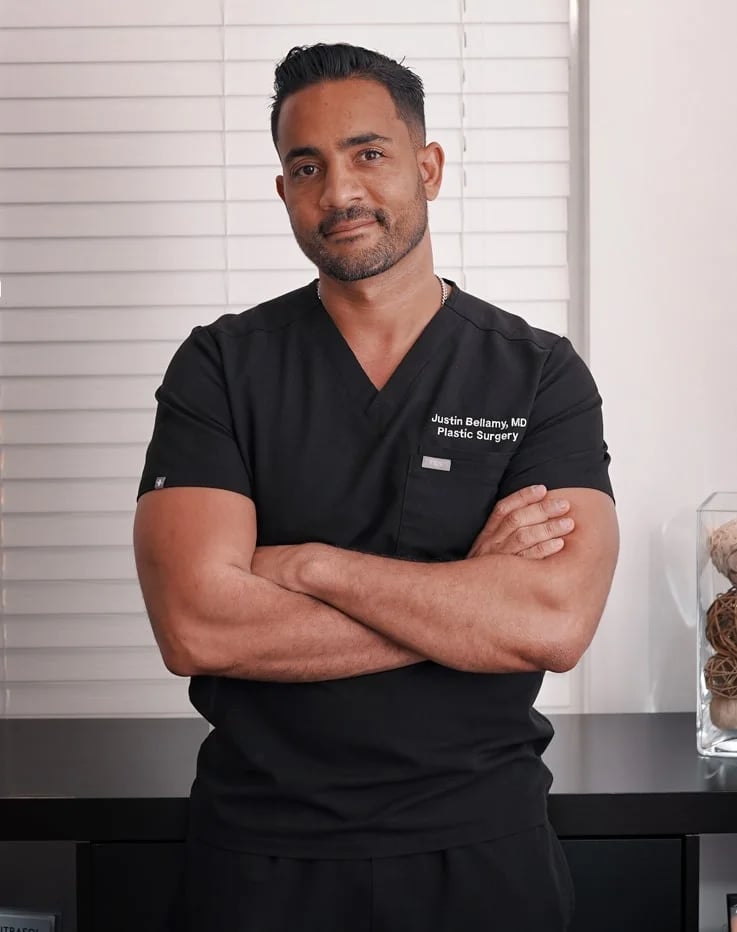
Looking for the best plastic surgeon in Palm Beach?
Dr. Justin Bellamy uses his esteemed education, cutting-edge techniques, and state-of-the-art medical equipment to create customized treatment plans to meet his patients’ needs and expectations. He has published over thirty peer-reviewed articles and book chapters and is a thought-leader in the field of plastic surgery. Trust Dr. Bellamy for a comprehensive and modern plastic surgery experience.
Who should think about a facelift now, and who should wait
Age is the wrong question. Some people are ready in their late forties, and others are still happy with injectables in their sixties. What matters is what is happening to the structure of your face. If you can pinch and lift your jowls or cheeks in the mirror and immediately look better, or if filler and skin treatments no longer keep up, surgery is likely the next step. If your concern is fine lines, uneven color or early volume loss, other treatments will probably serve you better for now.
Health and habits matter more than the calendar. The patients Dr. Bellamy is most comfortable operating on are generally healthy, at a weight they can hold and nicotine-free. Blood pressure that is well controlled is especially important, since it is directly linked to the most common complication. Patients have had facelifts from their thirties to their eighties, and the average is in the fifties.
Who should wait? Anyone who smokes and won't stop, anyone with an untreated medical condition that affects healing, and anyone hoping a facelift will change how other people see them rather than how they look. Those are worth working through before scheduling a date.
Combining a facelift with other procedures
A facelift lifts the lower and middle face. Many patients also want to refresh the eyes, brow or skin, and they are often done at the same time. Eyelid surgery and a brow lift handle the upper face. A neck lift carries the correction under the chin. Volume can be restored with dermal fillers or facial fat grafting, and Botox softens expression lines.
Skin quality supports the result. Dr. Bellamy recommends laser skin resurfacing, Morpheus8 skin tightening or Intense Pulsed Light (IPL) skin rejuvenation alongside a facelift for the best outcome.
Getting ready
There is nothing you need to do before your consultation except think about what you would like to restore. That might be the jawline, the cheeks, tired eyes, a heavy brow or skin quality, and some patients want only one or two of those.
Once a date is set, preparation is straightforward. In the last week, eat well, favoring protein and keeping salt low. Herbal supplements, especially garlic, fish oil and zinc, and medicines with aspirin stop, because they encourage bruising. Blood pressure medicines and most other prescriptions continue, and Dr. Bellamy reviews yours with you.
Nicotine is the rule that cannot bend. No smoking, vaping or nicotine products for at least four weeks before surgery and four weeks after. A facelift lifts large flaps of skin, and smoking sharply raises the risk of tissue loss, wounds, infection and a hematoma. If quitting isn't possible right now, Dr. Bellamy can talk through non-surgical alternatives. Being rested, hydrated and well fed going in helps too, and someone needs to stay with you the night of surgery.
Surgery day, awake and comfortable
You are greeted by the nursing team at the practice's own facility, which has two AAAASF-certified operating rooms, and you and Dr. Bellamy go over the plan one final time. He answers your last questions and marks your face while you are sitting up.
Because you are awake under local anesthesia, the day feels different from what most people picture. He places incisions where they can hide, behind the ear, under the chin or within the posterior hairline, removes loose skin, and lifts and repositions the deeper tissue before closing. For a deep plane facelift, count on about three to four hours. Facelifts are day surgery, and you go home the same day.
Your recovery timeline
Recovery is smoother than most people expect, though it does take planning. Here is how it typically goes with Dr. Bellamy:
- The night of surgery. You should be walking around the house normally.
- Days one to two. You wear a head wrap, and the dressings are removed one to two days after surgery. It is replaced by a more subtle supportive chin and neck garment, worn for a total of two weeks.
- Days seven to ten. All sutures are removed.
- Days ten to fourteen. The majority of swelling and bruising subsides.
- Around three weeks. You can return to cardiovascular exercise.
- Around four weeks. You can return to weightlifting.
Return to work depends on the job. A desk or work-from-home role is possible as soon as you no longer need narcotic pain medication, which for most people is within three to four days. If it matters that no one can tell you've had surgery, Dr. Bellamy recommends at least two weeks. For manual labor, he recommends four. You can go out in public as soon as you feel comfortable, and some patients prefer to wait until all evidence of surgery has faded.
Residual swelling can take up to six to twelve months to fully subside, and you will see your new contours emerge after about a month.
Surgical Mastery Meets Aesthetic Artistry
Risks and safety
Complications are uncommon, but every surgery carries some risk. The most common significant one is a hematoma, a collection of blood under the skin, which usually comes from elevated blood pressure after surgery. That is why good blood pressure control matters, and Dr. Bellamy makes sure it is well managed before you leave the facility. Every surgery also carries a small risk of infection, which is why you are given a short course of preventive antibiotics. Injury to nerves or nearby structures is extremely rare.
How long do results last?
A facelift can turn back the clock by about 10 years, and you then age normally from that new starting point. Results can last 10 to 15 years, and patients who seek a second facelift typically do so more than 10 years after the first. Healthy habits, sun protection and not smoking all extend the result.
Non-surgical alternatives and the "liquid facelift"
Non-surgical alternatives include skin tightening technologies such as FaceTite and Morpheus8 radiofrequency microneedling, laser resurfacing, and neck or jowl liposuction. Fillers can soften features that bother you, but they do not replace a facelift that truly lifts and re-supports the face.
The "liquid facelift" is a full-face filler treatment that restores volume. It can be a good temporary choice for early aging, and results last about six to twelve months. It doesn't address excess skin, and overusing filler to imitate a facelift can eventually leave a puffy "pillow" face. A surgical facelift removes excess skin, repositions descended tissue and restores volume where it is needed, for a natural, longer-lasting result. The trade-offs are that surgery is a bigger procedure, costs more up front and requires good health.
Understanding the price
A facelift's cost reflects how much is being done: the technique, whether the neck or eyelids are included, and the facility and anesthesia involved. That is why an honest number can only come after an exam. Dr. Bellamy's team writes out the estimate for your plan.
What we cover at your consultation
Expect a conversation before an examination. Dr. Bellamy asks what you see in the mirror and what you would like to change, then looks at your face at rest and in motion, checks how much of the sag is skin and how much is deeper tissue, and reviews your health and medications. He explains the risks and benefits and gives an honest recommendation, including which type of facelift suits you, or whether you don't need one yet.
You will leave with a plan. To see the kind of change patients achieve, compare facelift and neck lift before and after photos. To arrange a visit, reach out through the contact form or call (561) 705-0044. Patients come to the Palm Beach Gardens office from Jupiter, West Palm Beach and Boca Raton.
Frequently Asked Questions
As soon as you feel comfortable. Some patients go out right away, while others wait until all evidence of surgery has faded. You wear a head wrap for the first day or two, then a more subtle chin and neck support for a total of two weeks. Sutures come out within 7 to 10 days, and most swelling and bruising settles in 10 to 14 days.
A facelift can turn back the clock by about 10 years, and results typically last 10 to 15 years. You age normally from your new starting point, so healthy habits such as sun protection and not smoking help. People who want a second facelift usually wait more than 10 years.
Yes. Dr. Bellamy performs facelifts, from mini facelifts to deep plane facelifts, awake under local anesthesia, with hidden incisions and a smooth recovery. A deep plane facelift takes about three to four hours. Your consultation will cover whether this suits you.
The difference is mostly the depth and extent of the work. A mini facelift treats early changes with less dissection, while a deep plane facelift releases deeper ligaments and repositions the SMAS layer for more significant aging. The process is otherwise very similar.
No special preparation is needed. It helps to think about which features you want to restore, such as skin quality, excess skin on the cheeks, jawline or neck, tired-looking eyes or brow position.
Stay well rested, hydrated and nourished, and arrange for someone to stay with you the night of surgery. Stop nicotine at least four weeks before, stop aspirin-containing medicines and most herbal supplements, and follow a healthy, high-protein, low-salt diet in the week before.
Complications are uncommon. The most significant is a hematoma, a collection of blood under the skin, which good blood pressure control helps prevent. There is also a small risk of infection, so you receive preventive antibiotics, and extremely rare injuries to nerves or nearby structures.
Smoking raises the risk of every complication, including tissue loss, wounds, infection, hematoma and poor healing. You must stop at least four weeks before surgery and stay nicotine-free until four weeks after. If you cannot stop, Dr. Bellamy can review non-surgical alternatives.
You can walk around the house normally the night of surgery. Cardio resumes after about three weeks and weightlifting after four. Most desk jobs are possible within three to four days once you no longer need narcotic pain medicine, though two weeks is recommended if you don't want signs of surgery to show, and four for manual labor.
There is no age too young or too old. Some patients have facelifts in their thirties and others in their eighties, and the average patient is in their fifties. Health and skin quality matter more than age.
Options include FaceTite and Morpheus8 radiofrequency microneedling, laser resurfacing and neck or jowl liposuction. Fillers may soften features but do not replace a facelift that truly lifts the face. Dr. Bellamy can review surgical and non-surgical options at your consultation.
A liquid facelift is a full-face treatment with hyaluronic acid fillers that restores volume temporarily, typically for about 6 to 12 months. It does not address excess skin, so it suits early aging. Overuse of filler to imitate a facelift can lead to an overfilled look.
It is a technique that releases facial ligaments and repositions the deeper tissues of the face, known as the SMAS layer, so the skin and deeper layer lift together. It is more technically demanding than SMAS plication or SMASectomy but can provide a more robust result.