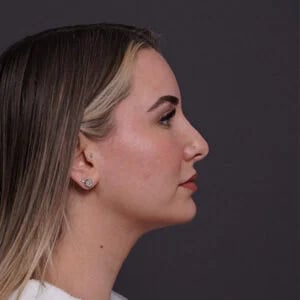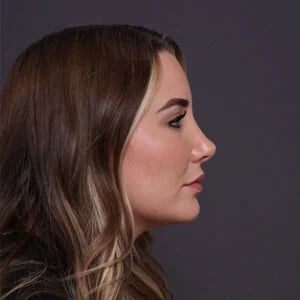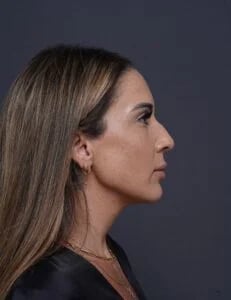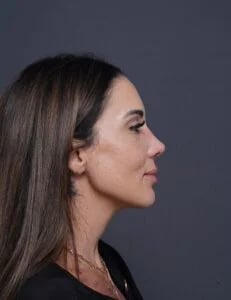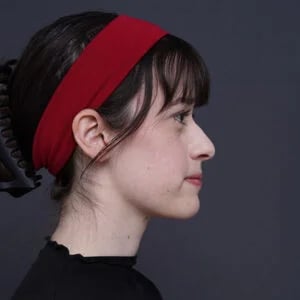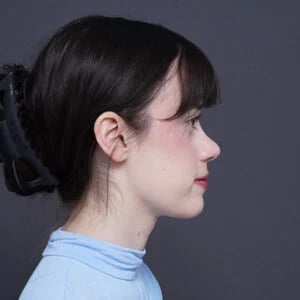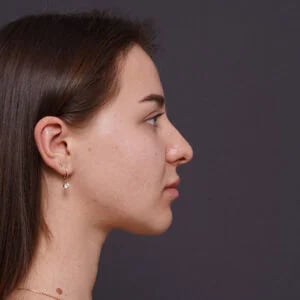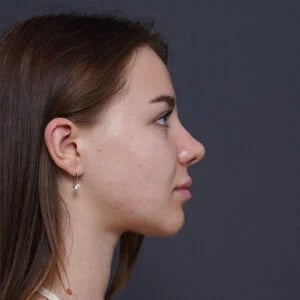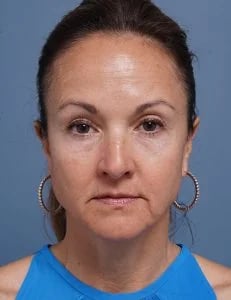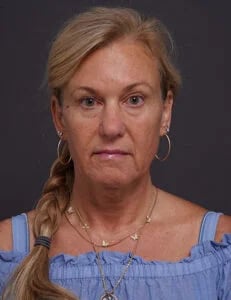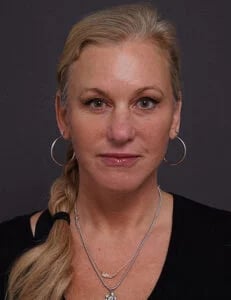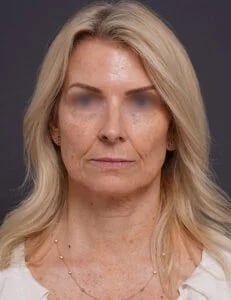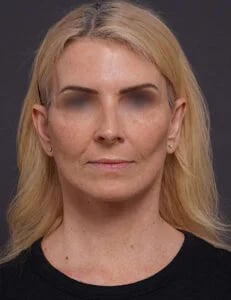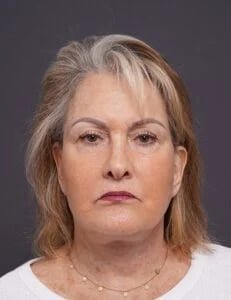

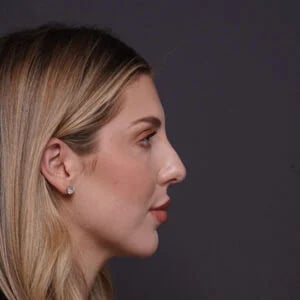
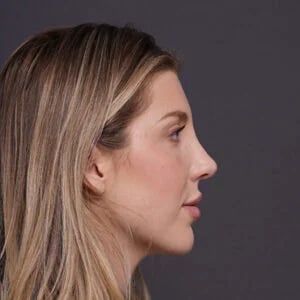
Individual results may vary.
Before and after photographs are the most useful thing on a surgical website and the easiest to present in a flattering way. A few habits make the difference between looking at a gallery and actually reading one.
Start with the lighting. Lighting changes a face more than many procedures do. Light from above casts shadows that deepen the hollows beneath the eyes and emphasise the folds running from nose to mouth, which makes a before photograph look worse than the face does in life. Flat, even, front-on light fills those same shadows. A genuine pair is shot under identical conditions, and where the lighting clearly differs between the two images, part of what is being shown is the lighting.
Then the angle. A small rotation of the head changes the apparent projection of the nose, the definition of the jawline and the fullness of the cheek. Matched pairs are taken from the same camera position. A profile set against a three-quarter view is not a comparison.
Then the expression. A relaxed face and a slightly smiling one are different shapes. A smile lifts the midface, narrows the eyes and softens the folds around the mouth, so a smiling after photograph against a neutral before photograph overstates the result.
Then the incidentals. Makeup, hairstyle, glasses and jewellery all change how a face reads, and so does weight change between the two photographs, particularly around the jawline and neck.
Finally, look for someone like you. The most informative case in any gallery is the patient whose starting point resembles your own in age, facial structure and specific concern. An excellent result on a very different face says little about what is achievable on yours.
Facial surgery results evolve, and a photograph captures one point on that curve.
Swelling after facial surgery resolves over months rather than weeks, and the final contour is not visible early. Scars follow a separate timeline, typically looking their worst within the first few months and then fading and flattening over a year or more.
A photograph taken at six weeks and one taken at a year therefore show genuinely different things about the same operation. This also means galleries from different practices are not always directly comparable, since one may show early results and another mature ones, with both being honest.
Different procedures change different things, and knowing where to look makes a gallery far more useful.
Facelift and neck lift. For results from facelift, deep plane facelift and neck lift, the jawline and the area beneath the chin carry most of the information. Look at whether the jawline reads as a clean line from chin to ear and at what has happened to the neck in profile. The site also covers awake deep plane facelift for patients interested in that approach, and the article on the different types of facelifts explains how the techniques differ.
Rhinoplasty. Nasal results need both a profile and a front-on view to be judged properly, because the profile shows the bridge and tip projection while the front view shows width and symmetry. A gallery showing only one view is showing half the result. The practice covers rhinoplasty broadly along with preservation rhinoplasty, revision rhinoplasty, ethnic rhinoplasty and scarless rhinoplasty, and the article comparing closed and open rhinoplasty is worth reading alongside the photographs.
Eyelids and brow. Results from blepharoplasty and brow lift are easiest to judge when you check where the eyebrow sits in each photograph, since brow descent and excess eyelid skin produce a similar appearance and are different problems. The dedicated blepharoplasty and brow lift gallery covers these cases specifically.
Chin and jawline. For chin implant and chin liposuction results, the profile view carries nearly all the information, since a chin that sits further forward changes the entire lower face in profile and comparatively little from the front.
Volume. Facial fat grafting and buccal fat removal change fullness rather than position, which reads most clearly on three-quarter views.
Lips. Lip lift and lip augmentation results differ from one another in kind. A lip lift changes the distance between the nose and the upper lip, which is structural. Augmentation adds volume. Both show best on front-on views at rest.
Every photograph in this gallery shows one patient's outcome. It is not a prediction, a guarantee or an indication of a typical result.
What any procedure can achieve for an individual depends on anatomy, skin quality, age, healing, medical history and the technique chosen. Two patients having the same named operation can begin from very different places and reach very different outcomes, both of them good.
The sensible use of a gallery is to understand what a procedure does and what range of change is possible, then establish in person what is realistic for you.
Photographs show results. They do not show what the experience was like, which is what patient testimonials cover.
Background on Dr. Justin Bellamy, including his training and approach, is on his profile page, and the about section covers the practice. Patients interested in procedures performed under local anesthesia can read about awake surgery.
The full photo gallery covers every category, including breast and body results, and the blog covers individual procedures in more depth.
A gallery narrows the question. An examination answers it.
The practice is in Palm Beach Gardens, Florida. To arrange an assessment, use the contact page.
Lighting, angle and expression first, because all three change a face more than people expect. A genuine pair is shot under the same lighting, from the same camera position, with the same expression. Light from above deepens shadows and makes a before photograph look worse, a smile lifts the midface and softens the folds around the mouth, and rotating the head changes apparent nasal projection and jawline definition. After that, look for the patient whose starting point most resembles your own.
It varies, and the timing matters. Swelling after facial surgery resolves over months rather than weeks, so the final contour is not visible early, and scars typically look their worst in the first few months before fading and flattening over a year or more. A photograph at six weeks and one at a year show genuinely different things about the same operation, which is also why galleries from different practices are not always directly comparable.
No. Each photograph shows one patient's outcome and is not a prediction or a guarantee. What is achievable depends on anatomy, skin quality, age, healing, medical history and the technique used. Two patients having the same named operation can start from very different places and reach very different outcomes, both of them good. What is realistic for an individual is established at an in-person assessment.
Because each view shows a different part of the result. The profile shows changes to the bridge and to tip projection. The front-on view shows width and symmetry. Judging a nasal result properly requires both, and a gallery showing only one view is showing half the picture.
Look at where the eyebrow sits in each photograph. Brow descent and excess upper eyelid skin produce a similar hooded appearance and are different problems with different operations. If the brow is in the same position in both photographs, the change came from the eyelid. If the brow has moved, the brow was addressed.
Individual results may vary.


© 2026 Justin Bellamy, MD