

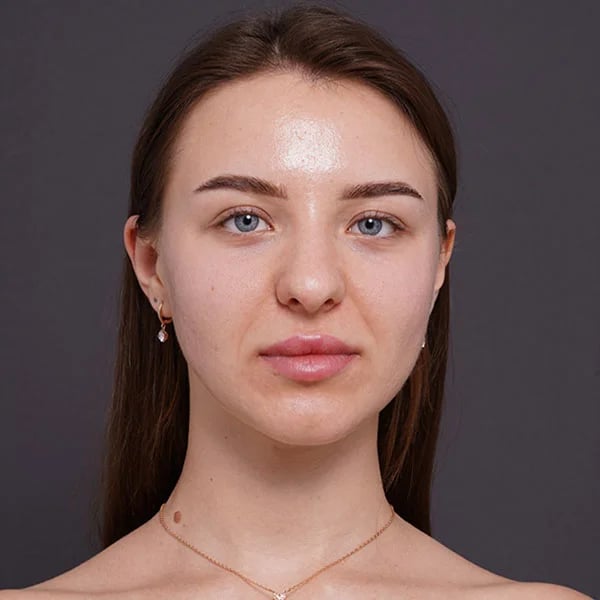
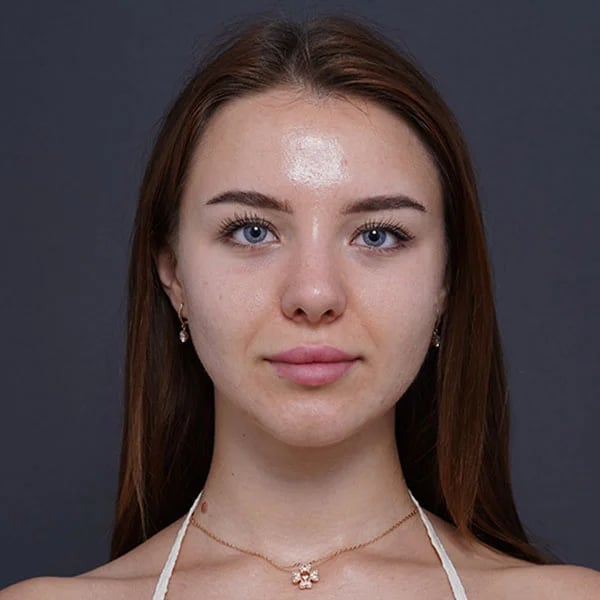
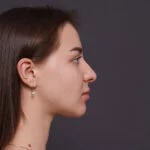
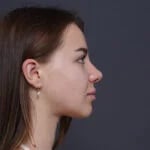




- Gender
- Female
Description
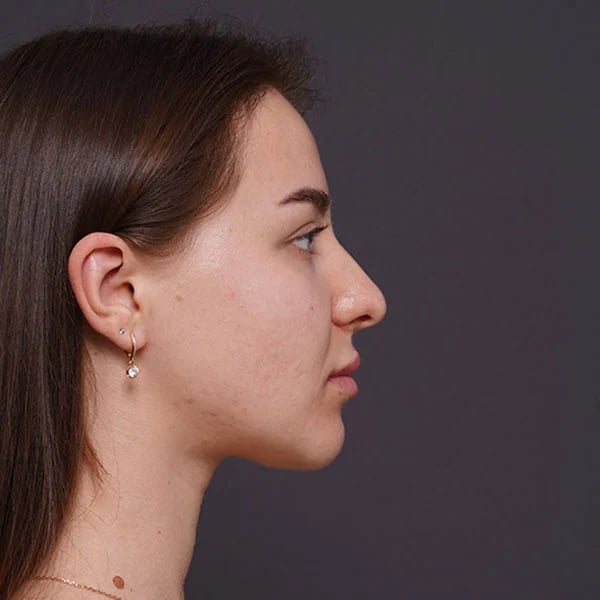
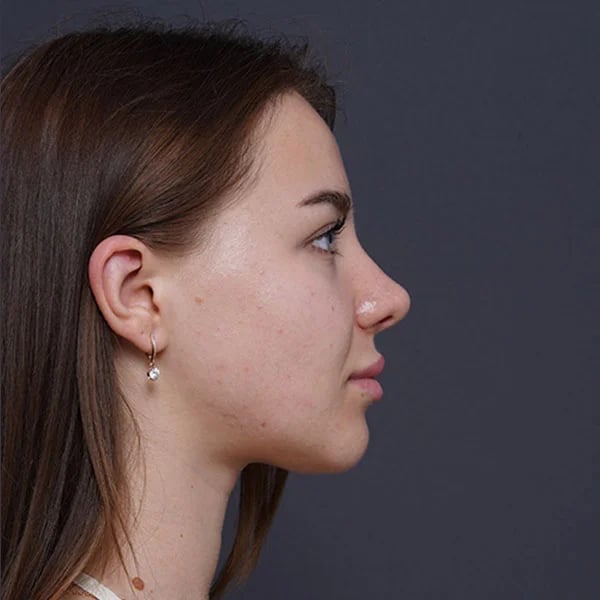
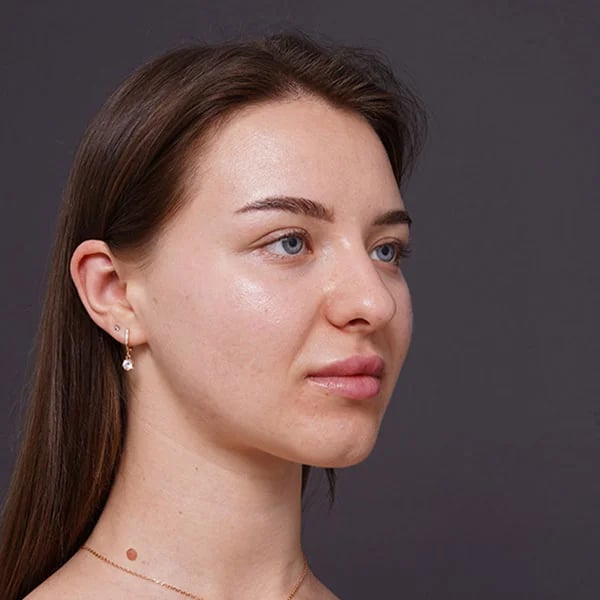
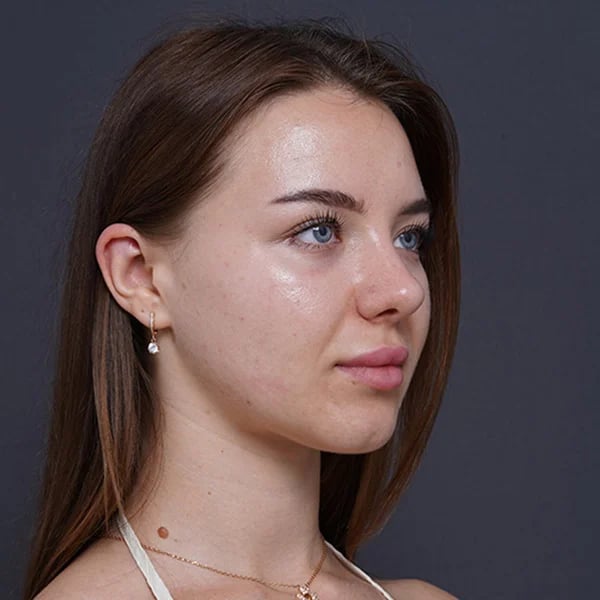
Patient is 3 months post closed rhinoplasty.
Three Months Into a Closed Rhinoplasty: What Is Still Changing
At twelve weeks after a rhinoplasty, the bruising has usually faded and the splint is long gone, but the nose is still healing. This case is recorded as a female patient three months after a closed rhinoplasty, and both the closed approach and the three-month mark shape how the photographs should be read. Individual results vary, and these photographs show one patient's outcome.
Working From the Inside: How a Closed Approach Changes the Operation
In a closed rhinoplasty every incision sits inside the nostrils. Nothing is cut across the little bridge of skin between the nostrils, which means the skin envelope is never fully lifted away and the tissues keep more of their natural attachments. The surgeon works through narrow tunnels, shaping cartilage and bone by feel and by a limited view, and the main difference from the open technique is access. A nose that needs a small refinement can be a good fit. A nose that needs extensive rebuilding of the tip structure may be easier to treat with a direct view. Which one suits a given nose comes down to how much of the tip framework has to be rebuilt, and the trade-offs between closed and open rhinoplasty are not always clear-cut.
Because the tissues are disturbed less, swelling after a closed procedure is often described as milder than after an open one. That is a tendency, not a guarantee, and it does not mean a closed result arrives faster. Every nose, however it was operated on, follows its own calendar.
The First Twelve Weeks
The first week is dominated by the cast or splint, congestion and the feeling of a blocked nose. By the end of the second or third week the visible bruising has faded, and most patients feel comfortable being seen. After that the changes become subtle, and they can be easy to misjudge. The bridge tends to look finished sooner than the tip, because the skin over the bone is thin and drapes quickly, while the skin over the tip is thicker, holds fluid longer and moves on a slower schedule. A tip that looks round or slightly full at three months is not a final result. It is a normal stage, and it usually keeps refining for many months after.
Patients also notice that the nose seems to change from day to day. It can look sharper in the morning and puffier in the evening, or different after a salty meal, a flight or a hard workout. None of that signals a problem. Whether a nose is on schedule is easier to judge once you know how rhinoplasty swelling unfolds week by week, because the pace is slower than most people expect.
Reading the Profile
The side view carries most of the information in a rhinoplasty photograph, so it is a good place to start. Begin at the top, where the nose meets the forehead. The depth of that notch, called the nasofrontal angle, affects the look of the whole nose, and a shallow or very deep notch changes how long the nose appears. Follow the line of the bridge downward and ask whether it is straight, slightly concave or gently curved, and whether it carries a clean, continuous edge from top to tip. Then look at the tip itself. A subtle shift in height just above the tip, often called the supratip break, can influence whether a nose looks natural or sculpted.
Finally, check where the nose lands against the upper lip. The angle between the underside of the nose and the lip influences whether a nose looks upturned, neutral or heavy, and it is easy to overlook because it sits so far from the part patients stare at. The aim is usually a nose that fits with the rest of the face.
The Front View
Front-facing photographs reveal a different set of qualities. The two sides of the bridge should read as parallel lines that flow smoothly into the brow, and the tip should sit on the midline of the face without pulling to one side. Symmetry is judged generously here. Almost nobody has perfectly matched sides, and a nose that is slightly off from a mathematically ideal midline can still look natural. What matters is that the nostrils, the width of the base and the tip all feel proportionate to the eyes and mouth. The overall impression usually matters more than any single measurement.
Skin Thickness and What a Photograph Cannot Show
Two patients can have similar surgery and end up with different-looking noses, partly because of skin thickness. Thin skin shows every contour beneath it and can reveal small irregularities, while thick skin hides detail, swells longer and limits how refined the tip can become. This is one reason why a three-month photograph is not a final one. In thicker skin, the last of the swelling can take a year or more to resolve, and the tip can keep refining during that time. In thin skin, the nose may look defined early but can need more care to keep the surface smooth. Planning takes the patient's skin into account.
Balance Beyond the Nose: Where the Chin and the Profile Come In
A nose is never judged alone. A slightly recessed chin makes any nose look larger, and the reverse is also true: a strong chin can make a refined nose look more delicate than it is. Patients who feel dissatisfied with their profile sometimes discover that the nose is only part of the story. When the chin is the missing piece, a chin implant can rebalance the face in a way that nose surgery alone cannot. That does not mean everyone needs it. It means that a thoughtful rhinoplasty consultation looks at the whole profile, and the answer may be that the nose should change less than the patient first expected.
Shape Is Built on Structure, and Structure Is Built on Breathing
The outside of the nose gets all the attention, but its inside decides how well it works. The septum divides the airway, the lateral walls of the nose need support so they do not collapse inward, and the cartilage of the tip needs enough strength to hold its position over the long term. A rhinoplasty that improves appearance while weakening these supports can lead to breathing trouble, pinching or slow changes years later. Closed rhinoplasty can address the septum and refine the cartilage structure, and airflow is considered throughout. That is why rhinoplasty planning treats appearance and airflow as one problem, and breathing is part of how a result is judged.
Keeping Natural Structure: The Preservation Mindset
Some developments in rhinoplasty have come from a simple idea: reshape what is already there instead of removing and rebuilding. Preservation techniques lower or reposition the existing bridge rather than cutting it away, which may help protect the nose's natural lines. They are not right for every nose, and they can sometimes be combined with either a closed or an open route, depending on the anatomy. Patients drawn to that philosophy tend to start by learning how preservation rhinoplasty works, and many local patients choose it for reasons that go beyond appearance, which is a large part of why Palm Beach patients choose preservation rhinoplasty.
Planning Rhinoplasty for Female Patients
A female patient does not automatically need a small, upturned nose, and planning does not have to follow that template. The aim is a nose that fits the individual face, with a balanced bridge line, a tip that is defined without being pinched, and a proportionate profile. Some patients want just a small adjustment, while others want a more pronounced change, and either can be discussed in terms of proportion and not trends. Decisions in female rhinoplasty start from proportion and balance, not from a stock shape.
Nasal Anatomy and Heritage
Noses carry the imprint of family and ancestry, and that is part of planning. Differences in skin thickness, tip shape, bridge height and cartilage strength vary among people of different backgrounds, and what suits one nose may not suit another. Patients who want to refine their nose without losing its character often look to ethnic rhinoplasty and Hispanic rhinoplasty, approaches built on the idea that the goal is a better version of your own nose, not someone else's.
When a Result Is Not Quite Right
An imperfect result is possible with any rhinoplasty, and it is worth discussing beforehand. Small asymmetries, a bump that returns, an edge that shows through thin skin, or a breathing change can all occur. Waiting is usually advised. Judging a nose at three months is judging it at the midpoint of its healing, and many concerns settle without any further treatment. If a problem persists once the nose has matured, usually after a year or more, revision rhinoplasty is a separate and more complex operation. Revision work deals with scar tissue and altered anatomy, which is why the original operation matters so much.
Daily Life While the Nose Heals
The weeks after the cast comes off are less about restriction than about common sense. Patients are usually advised to protect the nose from knocks, avoid heavy lifting and strenuous exercise for a period, and sleep with the head elevated for a while to limit swelling. Sun exposure can darken sensitive healing skin on the bridge, so sun protection matters. Glasses can rest on the healing bridge in some patients and must be managed carefully in others, and nose blowing is introduced gradually. The timing for each of these is set by the surgeon and differs between patients, so personal instructions override general advice. Dr. Bellamy's team provides those instructions as part of the post-operative plan.
Choosing Where to Have It Done
Experience with the technique matters in a closed rhinoplasty. Credentials matter too, and so does a clear discussion of whether a closed approach is truly the right fit for your nose. Weighing a surgeon's credentials, the way they talk about limits and the consistency of their results is easier with a clear framework, and choosing a Florida rhinoplasty surgeon sets one out, with Dr. Justin Bellamy's own training and background there to compare against it. For patients flying in, traveling to Palm Beach for plastic surgery from out of state mostly comes down to how long to stay and when follow-up falls.
More Cases to Compare
One set of photographs can only tell you so much. Looking across several results, at different stages and from several angles, gives a broader sense of a surgeon's work than any single case. A broader run of outcomes sits in the rhinoplasty gallery, and anyone who wants to talk through their own nose can request a consultation.
Common Questions at Three Months
Does a closed rhinoplasty leave any visible scars?
The incisions are made inside the nostrils, so there is no external scar on the skin between them. That is one reason some patients choose a closed approach.
Is a three-month photograph the final result?
No. Most of the obvious swelling has settled by three months, but the tip in particular continues to refine for many months, and in thicker skin it can take a year or longer.
Is closed rhinoplasty less painful than open rhinoplasty?
Patients often describe discomfort as manageable with either approach, and the difference is usually small. Swelling after a closed procedure is sometimes milder, but the experience varies from person to person.
Can every nose be treated with a closed approach?
No. Noses that need extensive tip rebuilding or complex structural work may be better served by an open approach. The right choice depends on your anatomy and goals and is decided at consultation.
Can a closed rhinoplasty improve breathing?
It can, when the problem is something like a deviated septum, which can be corrected through the same inside-the-nose incisions while the outer shape is refined.
When can I exercise normally again?
Light activity usually returns within a few weeks, while strenuous exercise and anything with a risk of a blow to the nose waits longer. Your surgeon gives the exact timeline for your case.
What if I am unhappy with the result at three months?
The first step is patience, because many concerns resolve as swelling fades. If something persists once the nose has fully healed, a revision can be discussed, though it is usually delayed until at least a year after the first operation.