

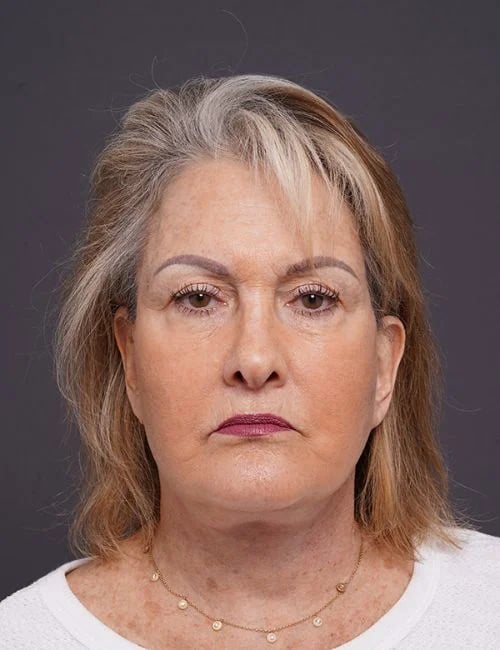
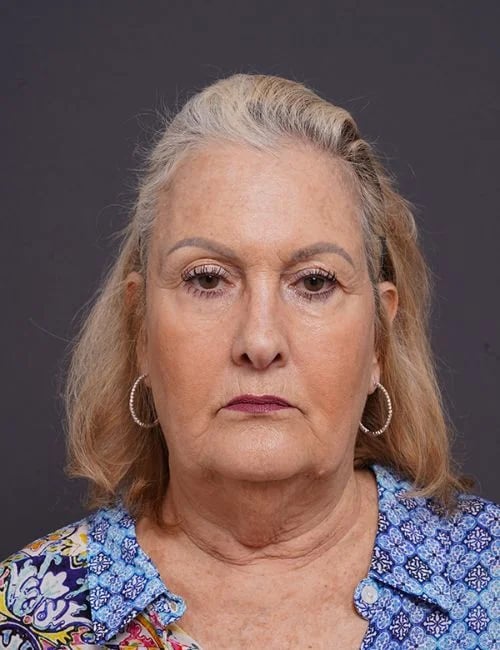
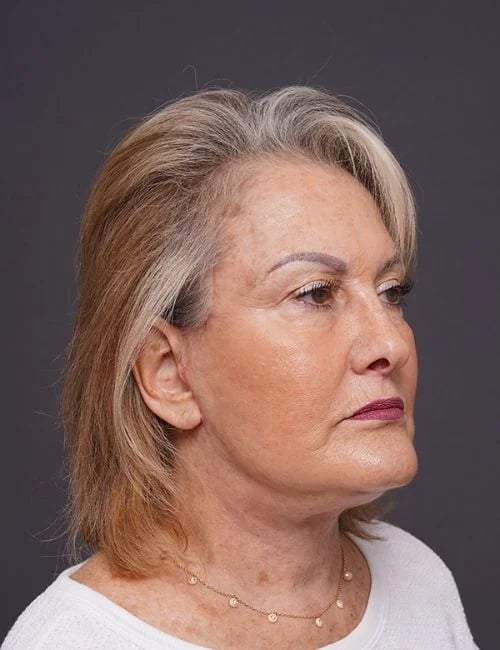
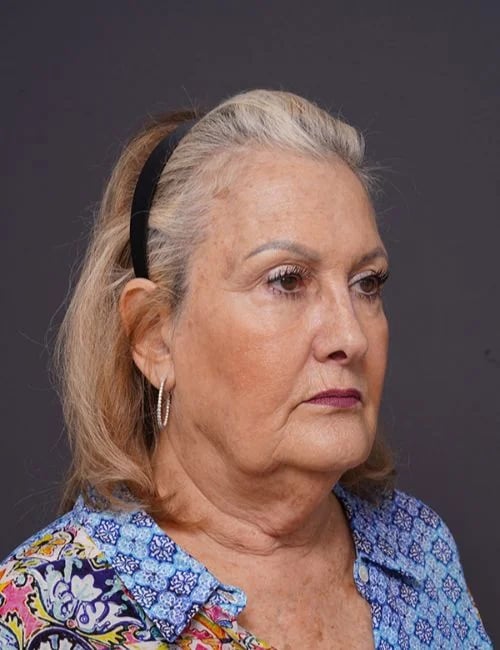






- Gender
- Female
Description
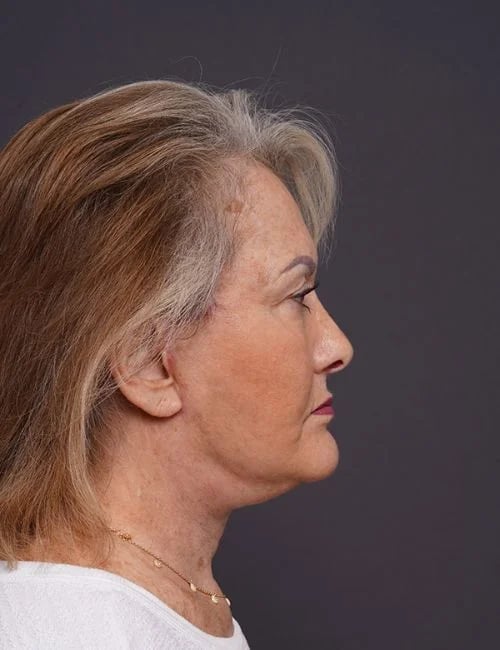
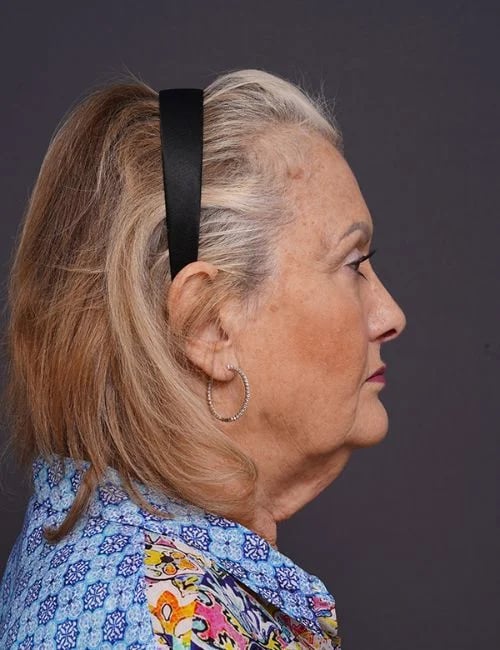
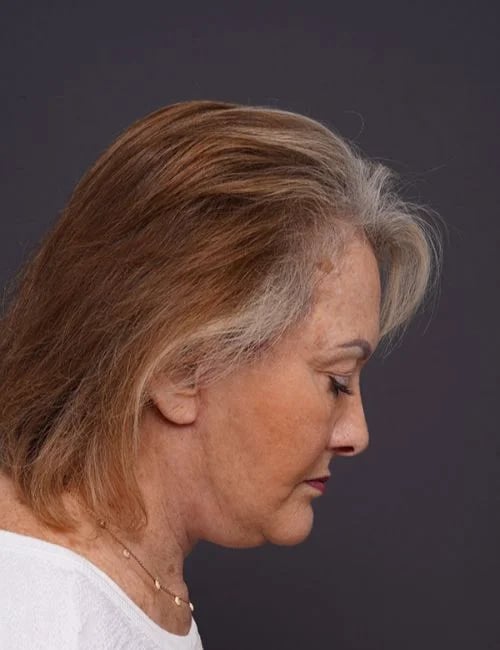
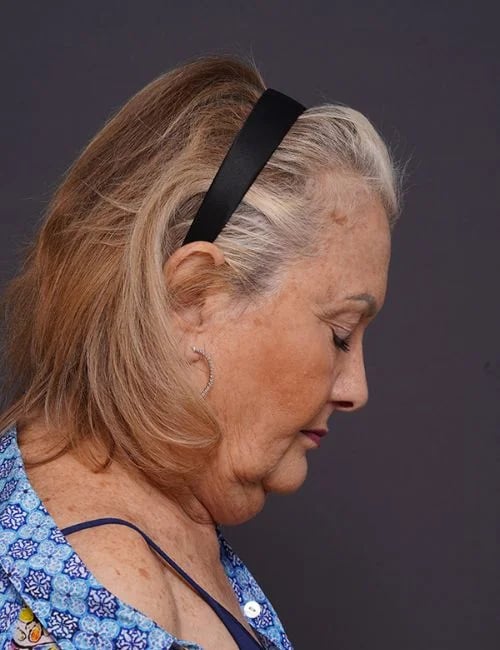
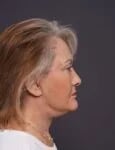
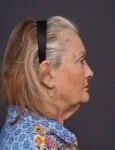
Patient is 3 months post facelift.
A Facelift Works on Several Layers
It is tempting to think of a facelift as pulling the skin back, but the operation usually involves more than that. A face is built in layers: skin on the outside, a thin layer of fat beneath it, a supportive sheet of connective tissue and muscle below that, and bone at the base. As the years pass, each layer changes in its own way, and the plan looks at the layers that have changed. This case is recorded as a female patient three months after a facelift. Individual results vary, and these photographs show one patient's outcome.
What Three Months Can and Cannot Show
At twelve weeks, the bruising has long gone and most patients feel comfortable in public. The face can look natural from a conversational distance, though some changes are still under way. Residual swelling lingers around the jawline and the lower face, sensation continues to return around the cheeks and ears, and the tissues are still softening into their new position. A three-month photograph is therefore a useful guide to the direction of a result, but not to its final refinement.
The Jawline, the Jowl and the Corner of the Mouth
The lower face is a good place to start. When you study a photograph like this one, follow the line from the chin to the angle of the jaw and ask whether it is clean and continuous. Jowls interrupt that line, so that is one area to look at. Then look at the fold running from the nose to the corner of the mouth and the lines that drop from the mouth toward the chin. The aim is usually to soften these folds and not erase them, because a face with no lines at all can look unnatural. The goal is a refreshed version of the same face, not a different one.
The Neck Below the Jaw
Faces and necks age together but not identically, and a facelift improves the upper neck more than the lower. Vertical bands, loose skin under the chin and a fullness that sits beneath the jaw often need dedicated work. Patients who are bothered mainly by the neck may want to read about neck lift surgery, and those with visible bands will find a deeper explanation in how platysmaplasty treats neck bands. Understanding where the lift ends and the neck work begins can help set realistic expectations.
Ears, Hairline and the Places Scars Go
Facelift scars are usually placed in front of and behind the ear and sometimes within the hairline. They take months to mature and can look pink and firm at first. Look at the ear itself in a photograph. A natural earlobe, an ear that has not been pulled forward and a hairline that sits where it began are small details worth checking, along with the jawline.
Deep Plane, SMAS or Something Smaller
The word facelift covers several different operations. A traditional SMAS lift tightens the supportive layer under the skin. A deep plane approach releases ligaments and moves the tissue as a unit, which many surgeons favor for established jowls and mid-face descent because it can produce a more natural contour with less tension on the skin. Smaller options exist for earlier changes. Knowing how these differ helps patients make sense of the recommendation they receive, and the comparison of the deep plane facelift versus SMAS facelift explains the trade-offs. The deep plane facelift page covers the technique in detail, and the broader landscape appears in the different types of facelifts. For earlier signs of aging, mini facelifts may be worth a look.
Why Some Faces Look Operated On
The look that people associate with an overdone facelift can have several causes: skin pulled sideways instead of tissue lifted upward, a mouth that appears fixed, ears pulled out of position, and a loss of soft contours. Many of these relate to relying on skin tension. Lifting deeper tissue in the direction it moved with age reduces the need to stretch the skin, which is one reason many surgeons have moved toward deeper techniques.
Eyes, Brows, Fat and Lips
A facelift works on the lower two thirds of the face, so changes around the eyes, brow and lips are not part of it unless planned. Heavy upper eyelids may call for blepharoplasty, a dropped brow for a brow lift, a flat or hollow midface for facial fat grafting, and a long upper lip for a lip lift. Patients who are undecided between using their own fat and fillers can learn about facial fat grafting versus dermal fillers. Combining procedures can create a more balanced face, though it also lengthens the surgery and recovery.
What Surgery Does Not Change
A lift repositions tissue and removes excess skin, yet it does not change the quality of the skin itself. Sun damage, fine lines, pigment and texture remain, and patients often pair surgery with skin care and non-surgical treatment to maintain the result. The options for that upkeep are wide, from non-surgical facial rejuvenation in Palm Beach to sun habits, and they matter more in a climate where Palm Beach skin ages differently.
The Face Keeps Aging
No facelift stops aging. It can improve changes that have already appeared, and the face continues to age from there. Genetics, sun exposure, smoking, weight changes and general health all influence how long a result lasts. Protecting the skin and avoiding large weight swings may help. A common question is whether they are too old or too young for surgery, and the answer in how old is too old for a facelift is that anatomy and health matter more than age.
Numbness, Tightness and Other Sensations
Three months after a facelift, most of the visible recovery is complete, yet some sensations can linger. Numbness around the cheeks, ears and jaw is common because small sensory nerves are cut or stretched during surgery, and it generally improves over many months as they regenerate. Tightness, especially when chewing or yawning, tends to ease gradually. Occasional tingling or itching often signals nerves waking up. These feelings are part of normal healing, though persistent or worsening symptoms deserve a conversation with the surgeon.
Hair, Makeup and Ordinary Life in the First Months
Everyday routines return in stages. Makeup can usually be used again within a couple of weeks, once incisions have healed, and hair coloring and styling products are typically delayed for a time near the incisions. Sun protection becomes important, since healing scars and tender skin burn easily. By three months, most patients have resumed their normal routines.
When Healing Does Not Go as Planned
Most facelifts heal without major problems, but complications can occur. A collection of blood beneath the skin, called a hematoma, usually appears early and needs prompt attention. Infection, delayed wound healing and widened scars can occur, and temporary weakness in a branch of the facial nerve is a recognised possibility, with permanent injury rare. Smoking multiplies the risk of skin healing problems, and surgeons are strict about it for good reason. Patients who follow instructions and attend their follow-up visits give themselves a better chance of a smooth recovery.
Timing a Facelift Around a Life
Planning is worthwhile. Healing takes weeks of visible change and months of refinement, so patients often choose a quieter season or a stretch of time away from public obligations. Those travelling for surgery need to consider how long to stay and when follow-up will happen, and the logistics are covered in traveling to Palm Beach for plastic surgery from out of state.
What Natural Usually Means
The word natural usually means a face that still moves, still carries expression and does not obviously look operated on. It means features that remain recognisable and contours that suit the underlying bone and muscle. It also means restraint. A natural result is rarely the most dramatic one, and patients who want a subtle change may prefer gentler choices.
The Cost Conversation
Facelift fees depend on technique, the extent of the operation, whether other procedures are combined, and where it is performed. Because it is an elective cosmetic operation, patients typically fund it themselves. Related procedures have their own pricing logic, and a useful comparison for those considering the neck is in what a neck lift costs in Palm Beach. A consultation produces a quote based on the specific plan.
Small Habits That Protect a Lifted Face
After the healing months, ordinary habits still help. Sunscreen every day, steady weight, not smoking and good sleep are all worth keeping up. It is simple advice, and it applies with or without surgery.
Sleeping, Pillows and the First Months
Sleeping with the head elevated is a common instruction in the early weeks because it limits swelling, and many patients keep a slightly raised position for longer than required because it is comfortable. Sleeping on the side with pressure on the cheek is usually discouraged at first, and by three months most patients have returned to their normal habits.
Awake, Sedated or Fully Asleep
Anesthesia is a legitimate concern, and options exist. Some patients are candidates for an awake deep plane facelift, and the article on whether you need general anesthesia for a facelift sets out the reasoning. The plan depends on health, the extent of surgery and preference, and is confirmed at consultation.
Seeing More Results
One photograph is a thin basis for judging any surgeon. A wider run of cases sits in the facelift and neck lift gallery, the overall approach is set out under facelift, and when you want to discuss your own face, you can request a consultation with Dr. Justin Bellamy.
Common Questions at Three Months
Is a facelift result final at three months?
It is close in appearance but not complete. Residual swelling and tightness continue to fade, and the final refinement often takes several more months.
Will a facelift fix my neck?
It improves the jawline and upper neck, but loose skin and vertical bands below the jaw often need additional neck work.
How can I tell whether a facelift looks natural?
Look for a smooth jawline, natural ears and hairline, soft rather than erased facial folds, and an expression that still looks like the person.
Do facelift scars stay visible?
They are placed in natural creases and the hairline and typically fade over many months, though early scars can look pink and firm.
How long does a facelift last?
Results vary with age, genetics and lifestyle. A facelift can improve visible signs of aging but does not stop aging, and how long the benefit lasts differs from person to person.
Can a facelift be combined with eyelid or brow surgery?
Yes. Some patients combine procedures, with the trade-off of a longer operation and recovery.
Do I need to stop smoking before a facelift?
Yes. Nicotine impairs healing and raises the risk of skin complications, and surgeons require patients to stop before and after surgery.