

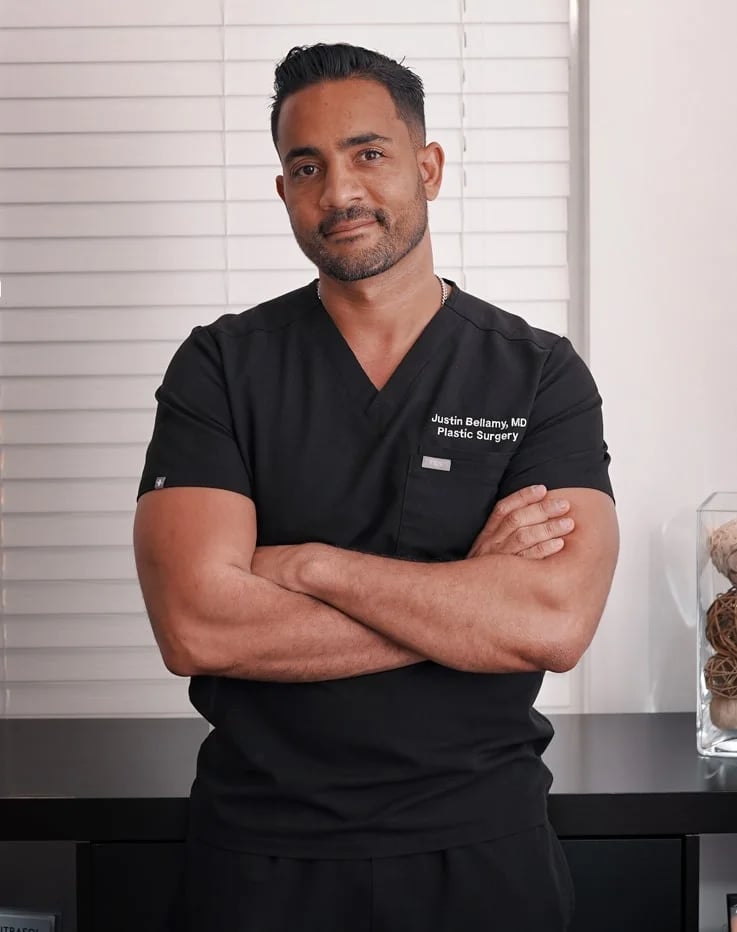
Anyone researching facelift options in Palm Beach eventually runs into the term "mini facelift," a phrase used widely in cosmetic surgery marketing to describe a smaller, faster, less invasive alternative to a traditional facelift. Patients searching for a mini facelift in Palm Beach often want to know two things right away: what exactly does the procedure involve, and does Dr. Justin Bellamy perform it? This guide answers both questions honestly, and explains why the answer is more nuanced than a simple yes or no.
What Is a Mini Facelift?
A mini facelift is generally described as a scaled-down version of a traditional facelift, targeting a smaller area of the face, typically the lower face and jawline, through shorter incisions and a less extensive lifting technique. It is often marketed toward younger patients in their forties or early fifties who have mild to moderate signs of aging, such as early jowling or a slightly less defined jawline, but who do not yet have the more advanced skin laxity and deeper folds that a full facelift is designed to address.
The appeal of a mini facelift is understandable. It promises a shorter procedure, a faster recovery, smaller incisions, and a lower price point than a comprehensive facelift. For the right candidate with genuinely mild concerns, a more limited procedure can indeed produce a pleasing, natural result.
However, the term "mini facelift" is not a standardized medical term with a single agreed-upon technique. Different surgeons and marketing materials use it to describe a wide range of procedures, from a simple skin-only tightening with minimal muscle work to more legitimate limited-extent lifting techniques. This inconsistency is one of the most important things for prospective patients to understand before choosing a procedure based on the name alone.
The Problem With Judging a Facelift by Its Name
Because "mini facelift" has no fixed clinical definition, two surgeons offering a "mini facelift" may be performing meaningfully different procedures. Some mini facelift techniques address only the skin, pulling and re-draping it without meaningfully repositioning the deeper structures of the face, such as the SMAS (the layer of muscle and connective tissue beneath the skin) or the deep plane beneath it. Skin-only lifting can create a temporary improvement, but because it does not address the deeper causes of facial aging, results from this type of procedure often do not hold up as well over time and can, in some cases, create a pulled or unnatural appearance as the skin gradually re-stretches while the deeper tissues remain unsupported.
Other procedures marketed as a mini facelift do involve some degree of deeper tissue repositioning but limit the extent of dissection and the area treated in order to shorten the procedure and recovery time. This more limited but structurally sound approach can be appropriate for a genuinely early-stage aging patient with a mild, localized concern.
Given this inconsistency, the more useful question for a prospective patient to ask is not "does this surgeon offer a mini facelift," but rather, "what specific technique does this surgeon use, and does that technique address the deeper structural causes of my particular signs of aging?"

Does Dr. Bellamy Perform a Mini Facelift?
Dr. Bellamy's practice centers on the facelift as a comprehensive category of care, with particular expertise and focus on the deep plane facelift technique, along with an awake deep plane facelift option performed under local anesthesia with sedation rather than general anesthesia for appropriately selected patients. Rather than marketing a separate, scaled-down "mini facelift" package under that specific name, Dr. Bellamy's approach is to tailor the extent of the deep plane technique to each patient's specific anatomy and degree of aging.
This distinction matters more than it might initially seem. The deep plane facelift technique repositions the SMAS and the deeper structural layers of the face rather than relying primarily on tightening the skin, which is widely regarded among facial plastic surgeons as producing more natural, longer-lasting results than skin-only lifting techniques, regardless of how extensive or limited the treated area is. For patients with genuinely mild, early signs of aging, Dr. Bellamy can tailor a more limited-extent deep plane approach that treats a smaller area with a shorter incision and recovery, effectively delivering the benefit that patients are seeking when they search for a "mini facelift," but built on a technique with a stronger long-term track record than many skin-only mini facelift approaches marketed elsewhere.
In other words, patients searching for a mini facelift in Palm Beach who consult with Dr. Bellamy should expect an honest conversation about whether their specific signs of aging are appropriately addressed with a smaller-scope procedure, and if so, what that procedure would actually involve using his preferred deep plane technique, rather than being sold a specific named package regardless of whether it is the right fit.
Deep Plane Facelift vs. Traditional Mini Facelift: Key Differences
Understanding the difference between the deep plane technique Dr. Bellamy specializes in and a typical skin-only mini facelift can help patients make a more informed decision.
Depth of Dissection
A traditional mini facelift, particularly the skin-only variety, works primarily at the level of the skin, with minimal repositioning of the deeper tissue layers. A deep plane facelift works beneath the SMAS layer, repositioning the deeper facial ligaments and fat pads along with the skin, which addresses the structural descent of facial tissue rather than simply removing slack skin.
Longevity of Results
Because skin-only techniques do not address the deeper structural support of the face, results tend to relapse more quickly as the skin gradually stretches again under the pull of gravity, sometimes within a few years. Deep plane techniques, by repositioning the deeper support structures, are generally associated with more durable results that can last considerably longer.
Naturalness of Outcome
Skin-only lifting carries a higher risk of an overly tight or "pulled" appearance, since the improvement relies heavily on tension applied to the skin itself. Deep plane techniques distribute the lift across the deeper tissue layers, which tends to produce a smoother, more natural-looking result without the telltale tightness sometimes associated with more superficial facelift techniques.
Recovery Time
A more limited skin-only procedure can offer a shorter recovery period, which is part of its appeal for patients hoping to minimize time away from work and social activities. A deep plane facelift, even when performed on a smaller scale for a patient with milder aging, typically involves a somewhat longer recovery than a purely skin-level procedure, though Dr. Bellamy's awake deep plane technique has been developed in part to help streamline this recovery process for appropriately selected patients.
Who Is a Good Candidate for a Smaller-Scope Facelift?
Patients in their forties and early fifties who are just beginning to notice early jowling, a softening jawline, or the first signs of skin laxity along the lower face and neck are often the best candidates for a more limited-extent facelift procedure. These patients typically have good skin elasticity remaining and have not yet developed the more advanced laxity, deeper nasolabial folds, or significant neck banding that would call for a more extensive facelift addressing a larger area of the face and neck.
Patients with more advanced signs of aging, including significant neck laxity, deep folds, or substantial jowling, are generally better served by a more comprehensive facelift procedure that addresses the full extent of their concerns, since a scaled-down procedure is unlikely to produce a satisfying result if the underlying aging is more advanced than the procedure is designed to correct. This is precisely the kind of assessment best made in person during a consultation, rather than by self-selecting a procedure based on marketing terminology alone.
What Happens During a Facelift Consultation With Dr. Bellamy
During a facelift consultation, Dr. Bellamy examines the specific areas of concern, evaluates skin quality and elasticity, and assesses the degree of descent in the deeper facial tissues. He discusses the patient's aesthetic goals and reviews photos of the patient at a younger age when helpful, in order to understand what a natural, refreshed version of their own face would look like, rather than pursuing a generic aesthetic ideal.
From there, Dr. Bellamy recommends a specific extent and technique tailored to the individual, which may be a more limited deep plane approach focused on the lower face and jawline, a more comprehensive deep plane facelift addressing the full face and neck, or complementary procedures such as a neck lift, brow lift, or blepharoplasty if the patient has concerns in those areas as well. Patients often assume they need a "mini facelift" when what would actually serve them better is a limited-extent deep plane lift combined with a smaller complementary procedure, and this kind of nuanced recommendation is only possible through an in-person evaluation.
Recovery After a Deep Plane Facelift
Recovery after a deep plane facelift, even when performed on a more limited scale, generally follows a predictable pattern, though individual healing times vary. In the first week, patients experience swelling and bruising that is most pronounced in the first few days and gradually improves. Most patients feel comfortable returning to light social activities with makeup coverage by the two-week mark, though residual swelling can persist in a subtler form for several weeks beyond that.
By four to six weeks, the majority of visible swelling and bruising has resolved, and patients typically feel confident in their appearance in most social and professional settings. Final results continue to refine over the following months as deeper swelling fully resolves and the tissues settle into their final position, with the fully mature result often visible around the six-month mark. Dr. Bellamy's awake deep plane facelift technique, performed under local anesthesia with sedation for appropriately selected patients, has been associated with a smoother early recovery experience for some patients compared to facelift procedures performed under general anesthesia, avoiding some of the grogginess and nausea sometimes associated with general anesthesia recovery.
Facelift Cost Considerations in Palm Beach
Cost is influenced by the extent of the procedure, the specific technique used, whether complementary procedures are added, and the anesthesia approach. A more limited-extent deep plane lift focused on a smaller area of the face is generally less expensive than a comprehensive facelift addressing the full face and neck, though it is worth noting that a well-executed deep plane technique, even at a smaller scale, is typically not priced at the lower end associated with the most basic skin-only mini facelift procedures marketed elsewhere, reflecting the more advanced technique and longer-lasting results involved.
The only way to receive an accurate quote is through an in-person consultation, since the final cost depends entirely on the specific extent and combination of procedures recommended for each patient's anatomy.
Why Technique Matters More Than the Name
Ultimately, patients researching a "mini facelift in Palm Beach" are usually looking for a procedure that addresses early, mild signs of aging with a shorter recovery and a more approachable price point than a full facelift. That underlying goal is entirely reasonable, and it can absolutely be achieved, but it is best achieved by asking a qualified, board-certified plastic surgeon what technique they recommend for your specific anatomy, rather than searching for a specific named package.
Dr. Bellamy's emphasis on the deep plane technique, scaled appropriately to each patient's needs, reflects a broader philosophy of prioritizing the technique that produces the most natural and durable result over marketing terminology. Patients considering a facelift in Palm Beach are encouraged to bring their specific concerns, whether that means early jowling, a softening jawline, or more advanced signs of aging, to a consultation and let the recommended technique be guided by their anatomy rather than a search term.
If you are exploring facelift options in Palm Beach and want an honest assessment of whether a more limited-extent procedure is appropriate for your goals, request a consultation with Dr. Bellamy's office to discuss your specific anatomy and options.
Comparing Facelift Techniques: A Closer Look
Because so much confusion in this space comes from inconsistent terminology, it helps to lay out the main categories of facelift-adjacent procedures side by side and understand what each one actually involves.
Thread Lifts
Thread lifts use temporary sutures with small barbs to lift and suspend sagging tissue without any surgical incision. They are minimally invasive and require essentially no downtime, but results are subtle, typically last only six months to a year, and are best suited for patients with very mild sagging who want a temporary refresh rather than a lasting structural change.
Skin-Only Mini Facelifts
As discussed earlier, this category of procedure lifts and re-drapes the skin without significantly repositioning the deeper facial structures. It can produce a modest, relatively short-lived improvement and is often the least expensive surgical facelift option, but it carries a higher risk of results relapsing within a few years and, in some cases, an unnatural or overly tight appearance if too much tension is placed on the skin itself.
SMAS Facelift
An SMAS facelift repositions the superficial musculoaponeurotic system, a layer of muscle and connective tissue beneath the skin, in addition to tightening the skin itself. This represents a meaningful step up from a skin-only approach in terms of both the naturalness and durability of results, and it has long been considered a standard, reliable facelift technique.
Deep Plane Facelift
A deep plane facelift goes a layer deeper than the SMAS technique, releasing and repositioning the deeper facial ligaments and fat compartments that anchor the face to the underlying bone structure. This approach allows for a more comprehensive repositioning of descended tissue rather than simply pulling existing tissue tighter, which many facial plastic surgeons believe produces a more natural-looking and longer-lasting result. This is the technique Dr. Bellamy specializes in and can tailor to a smaller, more limited extent for patients with milder concerns who might otherwise be searching for a "mini facelift."
Non-Surgical Alternatives to Consider First
Not every patient who searches for a mini facelift actually needs surgery, and Dr. Bellamy's consultations often include an honest conversation about whether non-surgical options might be a more appropriate starting point. For patients with very early signs of aging, options such as dermal fillers can restore lost volume in the cheeks and along the jawline, while neuromodulators can soften dynamic wrinkles caused by repeated muscle movement.
These non-surgical treatments cannot reposition descended tissue or address true skin laxity the way a facelift can, and their results are temporary, requiring ongoing maintenance treatments. However, for patients who are not yet ready for surgery, or whose concerns are genuinely limited to volume loss or fine lines rather than sagging, non-surgical options can be a reasonable interim step. Dr. Bellamy's non-surgical rejuvenation offerings are designed to complement his surgical practice, giving patients a full spectrum of options rather than steering everyone toward surgery by default.
Common Risks and Safety Considerations
As with any surgical procedure, a facelift, whether performed at a limited or comprehensive scale, carries risks that should be discussed thoroughly during a consultation. These include the general surgical risks of bleeding, infection, and scarring, as well as facelift-specific risks such as temporary or, rarely, permanent changes in facial nerve function, asymmetry, and skin irregularities during healing.
Choosing a board-certified plastic surgeon with specific, extensive experience in the deep plane technique is one of the most important steps a patient can take to minimize these risks, since the deep plane technique requires precise knowledge of facial anatomy, particularly the location of the facial nerve branches, to be performed safely. Dr. Bellamy's training at NYU Langone, one of the top-ranked plastic surgery residency programs in the country, followed by an advanced aesthetic fellowship at the Dallas Plastic Surgery Institute, reflects the level of specialized training this technique demands.
Setting Realistic Before-and-After Expectations
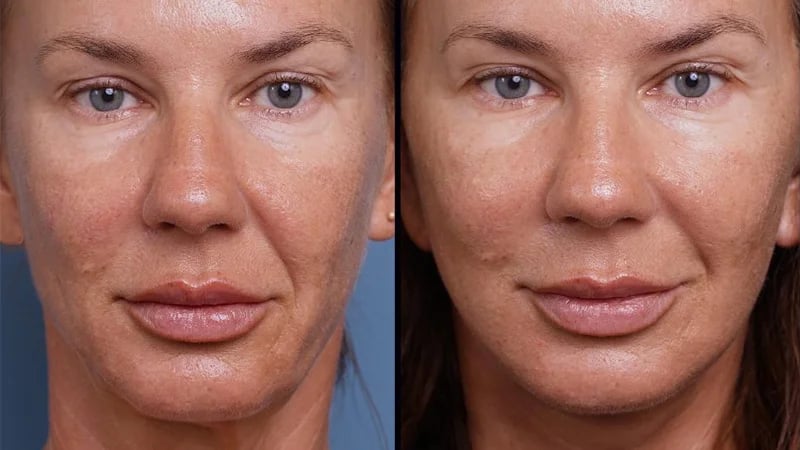
Patients considering a smaller-scope facelift procedure should understand that the goal of this approach is a natural, refreshed appearance rather than a dramatic transformation. A well-executed limited-extent deep plane lift should make a patient look like a well-rested, slightly younger version of themselves, with improved definition along the jawline and reduced jowling, rather than producing an entirely different facial structure.
Reviewing a surgeon's photo gallery of actual patient results, ideally including patients with a similar starting point and similar goals to your own, is one of the most useful ways to calibrate expectations before committing to a specific procedure. Dr. Bellamy is transparent about sharing real, unretouched patient outcomes so that prospective patients can make an informed decision grounded in actual results.
Maintaining Your Results Long-Term
Because a deep plane facelift addresses the deeper structural causes of facial aging rather than simply tightening skin, results tend to hold up well over time, but the natural aging process does continue after any facelift procedure. Maintaining a stable weight, protecting the skin from sun damage, and following a consistent skincare routine all contribute to preserving results for as long as possible.
Many patients also choose to incorporate periodic non-surgical treatments, such as neuromodulators or fillers, in the years following their facelift to address new, subtle changes as they emerge, extending the life of their surgical results without requiring a second surgical procedure for many years.
Breaking Down What Drives Facelift Cost
Beyond the extent of the procedure, several other factors influence the final cost of a facelift in the Palm Beach area. The surgeon's fee reflects the complexity of the specific technique used and the time required to perform it safely and precisely, and this fee is generally higher for the deep plane technique compared to a simpler skin-only approach, reflecting the additional training, precision, and operative time the deeper technique requires. Facility fees cover the cost of the operating room, equipment, and support staff, and these can vary depending on whether the procedure is performed in an accredited surgical suite versus a smaller in-office setting.
Anesthesia fees depend on the approach used, with an awake deep plane facelift performed under local anesthesia with sedation sometimes carrying different anesthesia costs than a procedure performed under general anesthesia, depending on the anesthesia provider and monitoring required. If complementary procedures such as a neck lift, brow lift, or blepharoplasty are added to address additional areas of concern, these will increase the total cost but may also improve the overall cost efficiency compared to scheduling each procedure as a separate surgery on a different date, since facility and anesthesia costs can be shared across a combined procedure.
Patients should also factor in the cost of pre-operative lab work, post-operative garments or dressings, and any follow-up visits, though many of these are included in a practice's global surgical fee. As with any elective cosmetic procedure, financing options are typically available for patients who prefer to spread the cost over monthly payments rather than paying the full amount upfront.
How to Evaluate a Facelift Surgeon in Palm Beach
Given the wide variation in both technique and terminology across the facelift market, patients researching their options in Palm Beach benefit from a structured approach to evaluating potential surgeons rather than choosing based on price or marketing language alone.
Start by confirming board certification through the American Board of Plastic Surgery, which verifies that a surgeon has completed an accredited residency and passed the specialty's rigorous certification examinations. From there, ask specifically which technique the surgeon uses for the procedure they are recommending, whether that is a skin-only lift, an SMAS technique, or a deep plane approach, and ask them to explain why that particular technique is the right fit for your specific anatomy and goals rather than accepting a generic recommendation.
It is also worth asking how many facelift procedures using that specific technique the surgeon performs each year, since technique-specific experience, particularly with more advanced approaches like the deep plane method, is directly relevant to both safety and the quality of results. Reviewing a substantial before-and-after photo gallery, ideally filtered to patients with a similar starting point to your own, and reading patient testimonials can provide additional confidence before committing to a surgeon and a specific surgical plan.
Why Patients in Palm Beach Choose Dr. Bellamy for Facial Rejuvenation
Dr. Justin Bellamy's approach to facial rejuvenation is built on a foundation of rigorous academic training combined with an artistic sensibility developed over years of specialized practice. He graduated cum laude from Yale University before completing his medical training at the Johns Hopkins School of Medicine, followed by residency at the top-ranked NYU Langone Plastic Surgery Residency program and an advanced aesthetic fellowship at the Dallas Plastic Surgery Institute, where he trained extensively in the deep plane facelift technique alongside leading surgeons in the field.
Rather than offering a one-size-fits-all named package, Dr. Bellamy evaluates each patient's specific anatomy, degree of aging, and goals, then recommends the extent and technique that will produce the most natural, durable result for that individual, whether that means a smaller-scope deep plane lift focused on the jawline or a more comprehensive procedure addressing the full face and neck. His emphasis on transparency, including sharing real patient outcomes on social media and in his practice's photo gallery, allows prospective patients to see actual results before making a decision, rather than relying on marketing terminology alone.
Frequently Asked Questions
What is the difference between a facelift and a neck lift?
A facelift primarily addresses sagging and laxity in the mid and lower face, including the jawline and jowls, while a neck lift specifically targets loose skin and muscle banding in the neck. Many patients benefit from combining both procedures, since facial and neck aging often occur together, though a patient with concerns limited to the neck alone may only need a neck lift.
Can I combine a mini or limited-extent facelift with eyelid surgery?
Yes, many patients combine a facelift, at any extent, with blepharoplasty to address both facial sagging and concerns around the eyes in a single surgical session, which can be more efficient than scheduling the procedures separately, provided the combined surgical time remains appropriate for the patient's individual health profile.
How soon will I see my final results?
Most of the visible swelling and bruising resolves within four to six weeks, but the fully mature, final result of a deep plane facelift is typically not visible until around the six-month mark, once all residual swelling has resolved and the deeper tissues have fully settled into their new position.
Will a smaller-scope facelift leave visible scars?
Incisions for a deep plane facelift, even at a limited extent, are typically placed within the hairline and along the natural contours around the ear, designed to be well hidden once fully healed. Most patients find their scars to be inconspicuous within several months as they fade and flatten.
Is the deep plane technique riskier than a simpler facelift?
The deep plane technique requires more precise anatomical knowledge, particularly regarding the facial nerve branches, but in the hands of a surgeon with specific, extensive training in the technique, it is considered a safe and well-established approach, associated with results that many surgeons believe are more natural and durable than simpler skin-only techniques. Not necessarily. "Mini facelift" is a marketing term that can refer to a range of different techniques, some of which work only on the skin, while a deep plane facelift specifically repositions the deeper structural layers of the face. A deep plane technique can be performed on a more limited scale to achieve a similar goal to what patients expect from a mini facelift, but the underlying technique and expected longevity of results can differ significantly.
How long do mini facelift results typically last compared to a deep plane facelift?
Skin-only mini facelift results often begin to relapse within a few years as the skin re-stretches, since the deeper support structures were not addressed. Deep plane facelift results, because they reposition the deeper tissue layers, are generally associated with longer-lasting outcomes.
Am I too young for a facelift?
There is no universal minimum age for a facelift. Some patients in their forties with early signs of jowling or jawline softening are good candidates for a more limited-extent procedure, while others in the same age range may not yet need surgical intervention and could benefit more from non-surgical options in the interim.
What is an awake deep plane facelift?
An awake deep plane facelift is performed using local anesthesia with sedation rather than general anesthesia, allowing appropriately selected patients to avoid some of the risks and recovery challenges associated with general anesthesia while still receiving the benefits of the deep plane lifting technique.
Can a mini facelift address my neck as well?
Most mini facelift techniques focus primarily on the lower face and jawline and may not adequately address significant neck laxity or banding. Patients with neck concerns often benefit from combining their facelift with a dedicated neck lift procedure to achieve comprehensive results.
How do I know if I need a full facelift instead of a smaller procedure?
The best way to determine this is through an in-person consultation, where a surgeon can evaluate the extent of your skin laxity, the position of your deeper facial tissues, and the specific areas of concern, then recommend the extent of procedure that will most effectively address your particular signs of aging.
Schedule Your Palm Beach Facelift Consultation Today
If you are ready to find out which facial rejuvenation technique fits your anatomy and goals, schedule your facelift consultation at Bellamy Plastic Surgery. Call (561) 705-0044 or complete our online contact form.