

Patients who move to South Florida from other parts of the country often notice, within a few years, that their skin seems to be aging on a different schedule than it did before. This is not a coincidence or a trick of the mind. Palm Beach's climate, sun exposure patterns, and lifestyle combine to accelerate specific, visible types of facial aging, and understanding exactly how helps explain why Dr. Justin Bellamy of Bellamy MD sees a distinct pattern of concerns in his Palm Beach patients compared to what a facial plastic surgeon in a northern climate typically sees.
Year-Round Sun Exposure Changes the Type of Aging, Not Just the Speed
Most people understand that sun exposure ages skin faster. What is less understood is that year-round, high-intensity sun exposure changes which type of aging shows up first. In climates with a genuine winter, sun damage accumulates seasonally, with a long recovery window each year when UV exposure is minimal. In Palm Beach, there is no such recovery window. UV index levels remain high for most of the year, and outdoor lifestyle habits, boating, golf, tennis, and beach time, mean sustained exposure is a daily reality rather than a seasonal one.

This produces a specific pattern: earlier and more pronounced photoaging, which shows up as fine lines, uneven pigmentation, and a rougher skin texture, often appearing five to ten years earlier than it would in a patient with an otherwise similar genetic background living in a northern climate. This is distinct from the deeper structural aging, sagging skin, volume loss, and jowling, that comes primarily from gravity and the natural loss of collagen and fat over time. Palm Beach patients often experience both types of aging simultaneously and more visibly, which is part of why a comprehensive approach that addresses skin quality alongside structural change tends to produce better results than addressing either one alone.
Humidity's Complicated Relationship With Skin Aging
Humidity is sometimes assumed to be protective for skin, since dry climates are known to accelerate fine line formation. South Florida's humidity does help maintain surface hydration, but it comes with its own tradeoffs. High humidity combined with heat increases sweating and oil production, which can lead to more frequent breakouts and clogged pores even in adult patients who otherwise have no history of acne. It also means sunscreen, the single most protective habit against premature aging, is harder to maintain consistently, since heavier formulations feel uncomfortable in Palm Beach's climate and get sweated off more quickly during a normal day outdoors.
This is one of the more overlooked reasons Palm Beach patients see more sun damage than sun protection habits alone would predict. It is not usually a lack of awareness about sunscreen. It is the practical difficulty of maintaining consistent, adequate reapplication in a climate this hot and humid for months at a time.
The Snowbird Pattern Adds Another Layer
A meaningful share of Palm Beach's population is seasonal, splitting time between South Florida and a northern home for part of the year. This creates a distinct aging pattern of its own: concentrated, intense sun exposure during the winter months in Florida, followed by a period back in a cooler, lower-UV climate. Patients in this pattern sometimes underestimate their cumulative sun exposure because they associate high UV risk only with the peak of a Florida summer, when in reality winter sun in South Florida remains intense enough to cause meaningful cumulative damage over years of seasonal residence.
What This Means for Surgical and Non-Surgical Planning
Dr. Bellamy's approach for Palm Beach patients reflects these climate-driven patterns directly. For patients whose primary concern is textural and pigment-related photoaging, non-surgical rejuvenation options addressing skin quality, texture, and pigmentation are often the right starting point, sometimes independent of any surgical procedure. For patients whose primary concern is structural, sagging along the jawline and neck, volume loss in the midface, a deep plane facelift or neck lift addresses the deeper aging process directly.
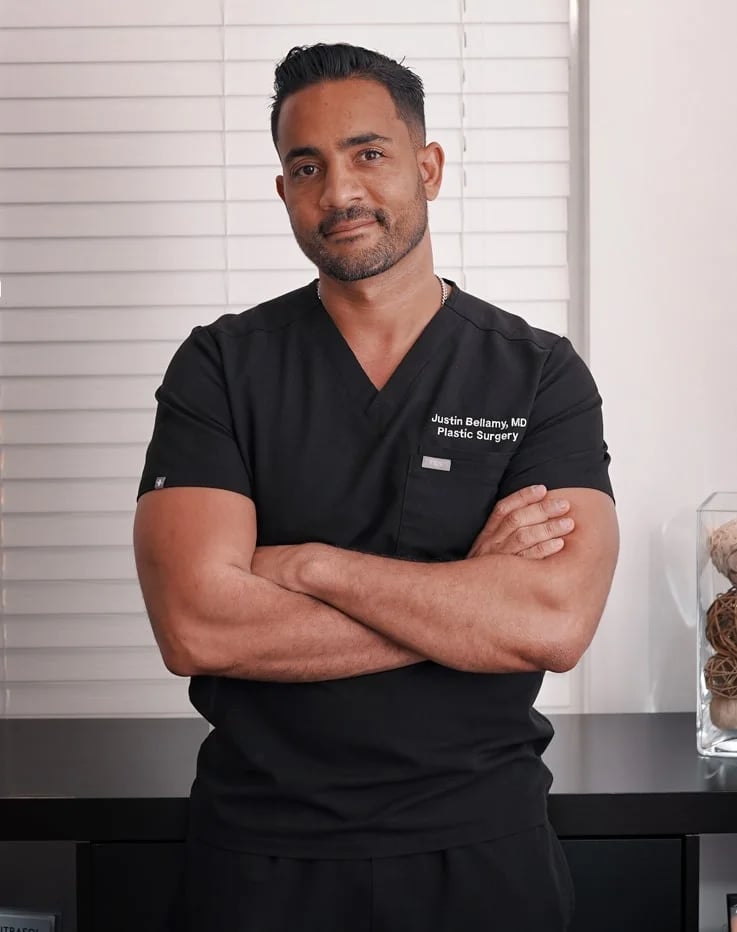
Many Palm Beach patients benefit from a combination of both, since the accelerated photoaging common in this climate means skin quality concerns and structural aging concerns frequently show up together rather than in isolation. This is also why patients considering rhinoplasty or other structural facial procedures in this climate should factor skin quality into the conversation from the start, since thinner, sun-damaged skin behaves differently during healing than skin that has been more consistently protected.
Practical Steps That Actually Matter in This Climate
For patients living in or spending significant time in Palm Beach, a few specific habits matter more here than they would in a milder climate.
Daily, broad-spectrum sunscreen reapplied at least once during a full day outdoors is the single highest-impact habit, more important here than in almost any other climate in the country given the year-round UV intensity. Physical barriers, wide-brim hats and UV-protective clothing, matter more in Palm Beach than in climates where outdoor time is naturally more limited by weather. And an honest accounting of cumulative sun exposure, including winters spent in Florida as a seasonal resident, gives both patients and their surgeon a clearer picture of true skin age versus chronological age when planning any procedure.
Why This Context Matters During a Consultation
A consultation that accounts for climate history gives Dr. Bellamy a more complete picture than a consultation that treats every patient's skin as though it aged under identical conditions. A forty-five-year-old patient who has lived in Palm Beach for two decades and a forty-five-year-old patient who recently relocated from a northern climate may have meaningfully different skin quality, sun damage patterns, and structural aging, even with similar genetics. Addressing this directly during a consultation, rather than defaulting to a generic aging timeline, is part of what allows a surgical and non-surgical plan to be built around a patient's actual skin history rather than their age alone.
The Salt Air and Wind Factor
Coastal proximity adds another variable that patients living further inland do not typically encounter. Salt air and coastal wind, common across much of Palm Beach, can have a subtly drying effect on the skin's outer barrier, even in a climate as humid as South Florida. This is frequently overlooked because the humidity itself seems to counteract dryness, but wind exposure specifically, from boating, beach walks, and outdoor dining along the water, strips moisture from the skin's surface in a way that ambient humidity does not fully offset. Over years of regular coastal exposure, this can contribute to a slightly rougher skin texture and finer surface lines, particularly around the eyes and mouth, areas already prone to early aging changes.
How Palm Beach's Aging Pattern Differs From Other Warm Climates
It is worth distinguishing Palm Beach's specific aging pattern from what patients might expect based on other warm-climate locations. Desert climates, for instance, produce a different aging signature: intense dryness alongside sun exposure, leading to more pronounced fine lines and a papery skin texture, but without the same oil production and breakout tendency that Palm Beach's humidity introduces. Tropical climates with heavy rainfall and less consistent sun intensity produce yet another pattern, often with less cumulative UV damage but more challenges related to humidity and skin congestion.
Palm Beach sits in a distinct category: consistently high UV intensity nearly year-round, combined with high humidity and coastal wind exposure, producing a combination of accelerated photoaging, oil-related skin concerns, and a subtly compromised skin barrier from environmental exposure, all layered on top of whatever structural aging a patient's genetics and age would otherwise produce. This combination is part of why a rejuvenation plan built for a Palm Beach patient benefits from being built specifically around this climate, rather than borrowed from a generic aging protocol developed for a different environment.
The Skin Quality Conversation Before Any Surgical Decision
Because photoaging changes skin quality and thickness, it also affects how skin behaves during and after any surgical procedure. Thinner, more sun-damaged skin can heal differently than skin that has been more consistently protected, sometimes showing more visible scarring or a longer resolution of redness at incision sites. This is part of why Dr. Bellamy incorporates a detailed skin quality assessment into surgical consultations for procedures like facelift and rhinoplasty, rather than treating skin condition as a cosmetic afterthought separate from the surgical plan itself.
For patients with significant photoaging, this sometimes means a recommendation to address skin quality, through appropriate skincare, chemical peels, or laser treatment, in the months leading up to a planned surgery, improving the tissue's condition before it is asked to heal from an incision. This sequencing reflects an understanding that skin condition and surgical outcome are connected, not separate considerations to be addressed independently.
Practical Guidance for Patients Splitting Time Between Climates
For the significant population of Palm Beach residents who split their year between South Florida and a cooler climate elsewhere, a few adjustments to a typical skincare routine are worth considering specifically because of this seasonal pattern. Sunscreen habits should not relax simply because a patient has left Florida for the summer, since UV exposure, while generally lower in a northern climate, still accumulates meaningfully over months of outdoor activity elsewhere. Skincare routines addressing barrier repair, particularly after a season of heavy coastal wind and sun exposure, can help offset some of the cumulative texture changes that develop during the Florida months. And an annual skin check, whether through a dermatologist or as part of a broader consultation with a facial plastic surgeon familiar with this specific climate pattern, gives snowbird patients a clearer, more accurate picture of how their skin is actually aging across both halves of their year, rather than assuming their skin ages the same way it would if they lived in one climate year-round.
Why Genetics Still Matter, Even in a Demanding Climate
None of this climate discussion is meant to suggest that environment overrides genetics entirely. Patients with a family history of slower structural facial aging will generally continue to age more slowly than the climate alone would predict, even in a demanding sun and humidity environment like Palm Beach. What changes is the specific type of aging that shows up first and most visibly. A patient with genetically resilient skin but heavy, unprotected sun exposure over decades may still develop pronounced photoaging, uneven pigmentation and texture changes, even while their underlying facial structure holds up relatively well. Conversely, a patient with a strong genetic predisposition toward earlier structural sagging may see that process accelerated further by the climate's demands on the skin's supportive tissue.
This is part of why Dr. Bellamy's consultations treat every patient's aging pattern individually, combining an understanding of Palm Beach's specific climate effects with an honest assessment of each patient's own genetic starting point, rather than applying a single generic aging timeline to every patient who walks through the door.
The Case for Starting Skin Protection Earlier in This Climate
Because photoaging accumulates faster in a climate like Palm Beach, the case for starting serious sun protection habits earlier in life is stronger here than in many other parts of the country. Patients who relocate to South Florida in their twenties or thirties, a period when skin damage is accumulating but not yet visible, often do not see the consequences of inconsistent sun protection until a decade or more later, when fine lines, pigmentation, and texture changes appear more abruptly than they might have expected. By the time these changes become visible, meaningful cumulative damage has often already occurred.
This is one of the more practical, actionable takeaways for younger Palm Beach residents specifically: the investment in consistent, high-quality sun protection during the years before visible aging appears pays off disproportionately in this climate compared to a milder one, simply because the baseline UV exposure is so much higher for so much more of the year.
Bringing Climate History Into a Consultation With Dr. Bellamy
Patients preparing for a consultation, whether for non-surgical rejuvenation, a neck lift, or any other facial procedure, can make the most of that visit by bringing an honest account of their sun exposure and climate history, not just their current concerns. How many years has the patient lived in or spent significant time in Palm Beach or a similarly sunny climate? Has sunscreen use been consistent, occasional, or largely absent over that time? Is there a family history of early skin aging, and does the patient's own skin seem to be following a similar or different pattern?
This information, combined with a direct physical exam, gives Dr. Bellamy a much more complete picture of a patient's actual skin history than an exam alone could provide, and it directly informs whether a proposed treatment plan should prioritize skin quality, structural correction, or, as is often the case for long-term Palm Beach residents, a combination of both addressed together for the most complete and natural-looking result.
The Bigger Picture for Long-Term Palm Beach Residents
For patients who have spent decades in Palm Beach, whether as year-round residents or seasonal ones, the cumulative effect of this climate is worth viewing as a single, ongoing story rather than a series of isolated concerns to address one at a time as they appear. A patient in their fifties considering their options today is, in effect, looking at the accumulated result of every summer, every boating trip, every round of golf played over the preceding decades, layered on top of whatever their genetics were always going to produce on their own.
Understanding this history does not change what treatment options exist today, but it does change how realistically a patient and their surgeon can plan for the future. A patient who has always lived in a demanding sun climate and plans to continue doing so needs an ongoing maintenance plan, not a single procedure treated as a permanent solution to a process that will keep unfolding as long as that climate exposure continues. This forward-looking framing, addressing not just today's concern but the climate that will keep shaping a patient's skin for years to come, is central to how Dr. Bellamy approaches long-term care for his Palm Beach patients.
Common Misconceptions Patients Bring to a Palm Beach Skin Consultation
A few misconceptions come up often enough in consultations that they are worth addressing directly. The first is the belief that a base tan or gradually built-up sun exposure offers meaningful protection against further damage. It does not. Any visible tan represents skin cells responding to damage already sustained, and continued exposure on top of a tan continues to add cumulative harm rather than building genuine resistance to it.
The second common misconception is that indoor time fully offsets outdoor sun exposure earlier in the day. Much of the UV damage relevant to skin aging, particularly UVA radiation, penetrates window glass and continues to affect skin during time spent near windows in a car, an office, or a home, even when a patient believes they are largely protected simply by being indoors for the bulk of the day.
The third is an assumption that skincare products alone, without consistent sunscreen, can meaningfully reverse or prevent photoaging in a climate this demanding. Topical treatments including retinoids and antioxidants have real, evidence-supported benefits for skin quality, but none of them substitute for daily, consistent sun protection as the foundational habit in a climate where UV exposure is a near-constant variable for most of the year.
Addressing these misconceptions directly during a consultation helps set realistic expectations about what any treatment plan, surgical or non-surgical, can actually achieve for a patient whose skin has spent years or decades in this specific climate.
Turning Climate Awareness Into an Actual Plan
Understanding why Palm Beach skin ages the way it does is only useful once it translates into a concrete plan tailored to an individual patient. That plan looks different for a thirty-year-old just beginning to notice early sun damage than it does for a sixty-year-old managing decades of accumulated exposure alongside structural facial aging. What both patients share is the benefit of a consultation that treats the local climate as a genuine clinical variable, not a passing conversational note, and builds a rejuvenation strategy around it accordingly, whether that strategy centers on skin quality treatments, structural procedures, or a combination of both suited to that specific stage of a patient's Palm Beach life.
Closing Thought on Living Well in a Demanding Climate
None of this is meant to discourage the outdoor lifestyle that draws so many people to Palm Beach in the first place. Golf, boating, tennis, and beach time are part of what makes this climate worth living in, and the goal of understanding its effect on skin aging is not to avoid the outdoors, but to enjoy it with a clear-eyed, informed approach to protection and long-term skin care. Patients who bring that awareness into a consultation with Dr. Bellamy get a plan built around the life they actually want to keep living in this climate, not one built around avoiding it.
Why Local Expertise Matters for This Specific Conversation
A surgeon practicing in Palm Beach year-round develops a different, more granular understanding of this climate's specific effects than a surgeon who only occasionally treats patients from the region. Dr. Bellamy's day-to-day practice in Palm Beach means these climate-driven patterns are not an abstract topic but a recurring, directly observed part of his clinical experience, informing how he evaluates every patient who walks through his door, whether they are a lifelong Florida resident or a recent arrival still adjusting to what this climate will mean for their skin over the years ahead.
A Simple Self-Check for Palm Beach Residents
Patients unsure whether their own skin is showing signs of climate-accelerated aging can use a simple self-check before their consultation: compare the skin quality on an area of the face or neck that receives regular sun exposure against an area that is more consistently covered, such as skin typically shaded by clothing or hair. A noticeable difference in texture, tone, or fine lines between these two areas is a strong indicator of cumulative photoaging specifically, distinct from the structural aging that affects both areas more evenly. Bringing this observation into a consultation gives Dr. Bellamy a useful starting point for discussing which treatments will address the photoaging component most directly.
A Note on Seasonal Timing for Procedures
Some Palm Beach patients ask whether there is an ideal season to schedule a surgical procedure given the climate discussed throughout this piece. There is some practical logic to considering timing carefully: scheduling a facelift, neck lift, or rhinoplasty during the cooler, slightly less intense months can make the early recovery period more comfortable, since swelling management and limiting sun exposure to healing tissue are both easier to manage when outdoor heat and UV intensity are somewhat lower. This is not a strict requirement, and procedures are safely performed year-round, but patients with flexibility in their schedule sometimes find the cooler months a more comfortable window for the initial weeks of recovery specifically.
Closing Perspective
Palm Beach's climate is not simply a backdrop to facial aging here, it is an active participant in it, shaping which concerns show up first and how quickly they progress. Patients who bring that understanding into a consultation with Dr. Bellamy, rather than treating their skin concerns as generic and climate-independent, tend to walk away with a plan that actually matches the environment their skin has been living in.
Frequently Asked Questions
Does living in Palm Beach really age skin faster than other parts of the country?
Yes, particularly in terms of photoaging, fine lines, uneven pigmentation, and texture changes driven by sun exposure, which tends to appear earlier and more visibly than in patients from lower-UV climates.
Is humidity good or bad for skin aging in this climate?
It is mixed. Humidity helps maintain surface hydration but also increases oil production and breakouts, and it makes consistent sunscreen wear more difficult, which can offset some of its hydrating benefit.
Do seasonal residents need to worry as much about sun damage as year-round residents?
Yes. Even a few winter months of Florida sun exposure each year adds up cumulatively, and seasonal residents sometimes underestimate this because they associate the highest risk only with a Florida summer.
Should skin quality be addressed before or alongside a surgical procedure like a facelift?
This depends on the individual case, but in a climate with significant photoaging, addressing skin quality alongside a structural procedure often produces a more complete and natural-looking result than addressing structural aging alone.
Schedule Your Palm Beach Skin Consultation Today
If South Florida sun has aged your skin faster than you expected, schedule your consultation at Bellamy Plastic Surgery. Call (561) 705-0044 or complete our online contact form.