




- Gender
- Female
Description
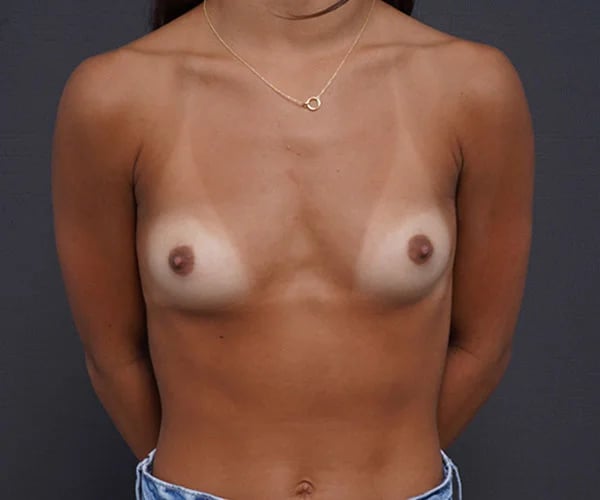
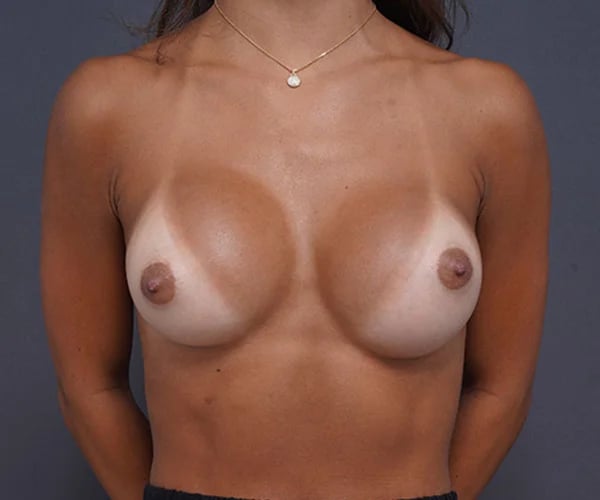
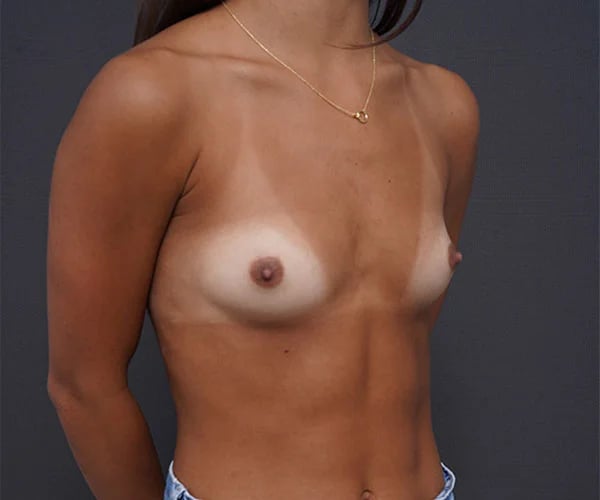
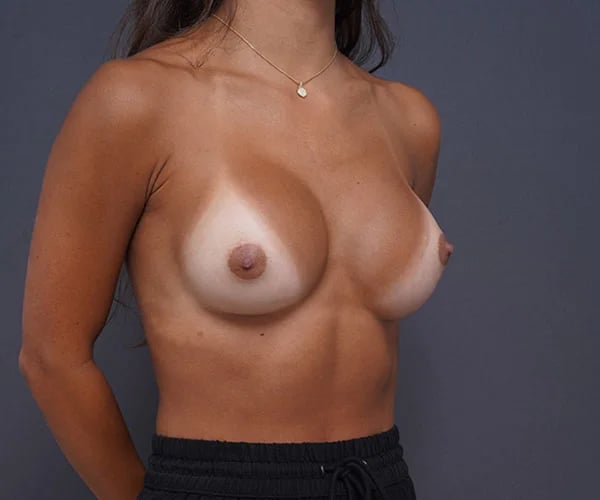
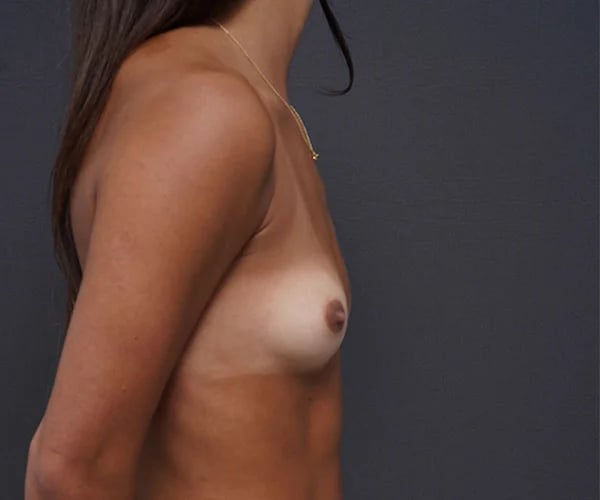
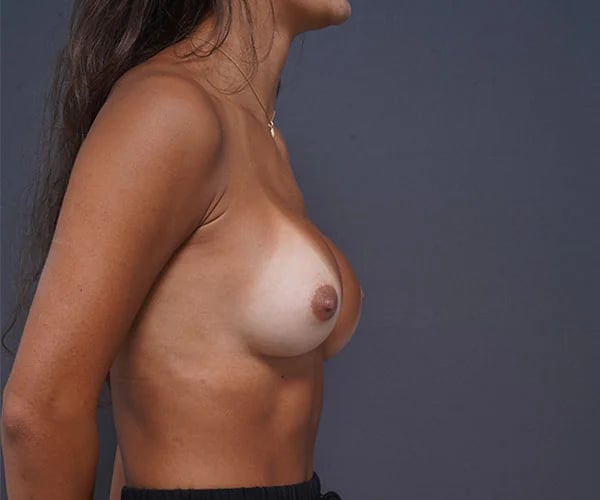
Patient is 4 months post breast augmentation.
Month Four After Breast Augmentation
Around the fourth month, a breast augmentation has usually moved past the early healing stage. The swelling that made everything look high and round has mostly gone, the soft tissue has had time to drape over the implant, and the person in the photograph is closer to her longer-term shape than at any earlier point. This case is recorded as a female patient four months after breast augmentation. That timing is useful to keep in mind, because it tells you how much weight a photograph can reasonably carry. Individual results vary, and these photographs show one patient's outcome.
Why Day Ten Looks Different From Month Four
The early weeks create a misleading picture. Implants placed beneath the chest muscle sit high at first, because the muscle is tight and the tissues are swollen, and the upper part of the breast can look fuller and more rounded than it will later. Patients sometimes read that look as the result, then feel concerned when it softens. That softening is expected. Over the following weeks the muscle relaxes, the pocket opens, and the implant eases down toward its intended position. By month four, most of that movement is behind the patient, and the breast has usually taken on a more natural slope.
Drop, Fluff and How Implants Settle
Surgeons use a loose vocabulary for this process. The implant drops as it moves lower in the pocket, and the breast fluffs as the tissue relaxes around it. Neither term is clinical, but both describe something real, and both explain why two photographs from the same patient taken eight weeks apart can look surprisingly different. Symmetry also evolves, because one side often settles a little faster than the other. A small difference at this stage is common and does not necessarily predict what the final result will be. The practical advice is to treat any asymmetry you notice in the first several months as a question for time, and to bring it to the surgeon if it persists after the breasts have fully settled.
Reading Fullness, Slope and Spacing
When you study a photograph like this one, a few details can tell you more than the overall impression. Look at the upper pole, where the breast meets the chest, and ask whether the transition is smooth or abrupt. A gentle slope reads as natural, while a sharp shelf can suggest an implant that is large for the tissue covering it. Look at the fold beneath the breast, which anchors the whole shape, and at the space between the two breasts, which shapes how the neckline of a garment sits. None of these has a single correct answer. They are matters of proportion, and what looks right depends on the width of the chest, the position of the nipples and the patient's own aesthetic.
The Implant Decisions That Show Up in a Photograph
Many visible qualities of a result trace back to a handful of choices made before surgery. Size is the obvious one, but profile matters nearly as much, because a higher-projecting implant of the same volume sits narrower and pushes forward, while a lower-projecting implant spreads wider. Fill material, saline or silicone, changes how the breast feels and how it behaves over the years. Placement, whether in front of the muscle or behind it, changes how much the muscle shapes the upper breast and how visible the edge of the implant can be. These decisions interact, which is why a plan built around the patient's own measurements is often more useful than a plan built around a requested cup size.
Keeping a Result Subtle
The word natural gets used so freely in plastic surgery that it has lost some of its meaning. In breast augmentation it usually describes a result where the implant is proportioned to the chest and the covering tissue, so the breast looks like it belongs to the body and does not announce surgery. Achieving that usually takes restraint. The thinking behind keeping breast augmentation natural and subtle rests on matching implant to anatomy, and patients with a slighter frame who want a modest change may find that small breast augmentation describes their situation more closely than a conventional plan.
The Frame Underneath: Ribcage, Skin and Starting Point
An implant adds volume, but it cannot change what lies around it. A wide ribcage, a pronounced curve in the chest wall or breasts that start out asymmetric all show through in the result, and so does skin elasticity. Where breasts have lost shape or the nipples sit low, volume alone can leave a patient looking fuller but not lifted, and the right answer may involve moving tissue and not only adding it. The trade-offs between those paths are laid out in choosing between a breast lift and implants for sagging breasts, and combined work is described under breast lift with implants. A photograph four months out can only hint at which category a patient belonged to, which is one reason a personal examination matters.
Feeling, Not Just Looking
Photographs capture appearance and miss everything else. Sensation around the breasts and nipples changes after augmentation, often becoming heightened or dulled for a time before settling. Firmness changes as the tissues heal around the implant. Many patients say that the first few months feel unfamiliar, and that the breasts feel less like foreign objects once the swelling has resolved. Persistent hardness, pain or a visible change in shape can signal that scar tissue is tightening around the implant, a recognized complication called capsular contracture, and is a reason to call the office and not wait.
Returning to the Ordinary Things
By four months, most patients have returned to full activity, but the road there is gradual. Early recovery usually restricts heavy lifting and strenuous upper-body exercise, and the timeline for resuming each activity is set by the surgeon, along with guidance about supportive bras and sleeping positions. How those early weeks unfold is clearer once you have seen breast augmentation recovery in Palm Beach laid out, and the logic is simple: the pocket needs time to heal in the shape it was created in.
Implants Are Not Lifetime Devices
Patients are often surprised to learn that breast implants are not designed to last forever. They can develop problems such as rupture or capsular contracture, and bodies change with age, weight and pregnancy. Plenty of implants serve for many years without trouble, and nobody needs to replace them on a fixed schedule, yet it is sensible to expect that further surgery may be part of the long-term picture for some patients. The answer to whether breast implants last forever is nuanced, and women whose goals change can look at revision breast augmentation or, when they want implants out altogether, breast revision and implant removal. Silicone implants also carry guidance about periodic imaging to check their integrity, which a surgeon will explain.
Nipples, Areolas and Details a Photograph Can Miss
Photographs reduce a three-dimensional change to a flat image, and several details disappear in the translation. The position of the nipple relative to the fold beneath the breast is an important detail, because a nipple that sits too high or too low changes how the whole shape reads. Areola size and orientation matter too, and so does the way the nipple points. These are anatomical givens that surgery works around more than it rewrites, which is why two women with the same implant can look very different.
Why the Same Implant Can Look Different
It is common for patients to bring a photograph of a result they admire and ask for the same thing. The request is understandable and the outcome is unlikely to be identical. Implants interact with the specific width of the chest, the thickness and laxity of the skin, the amount of natural breast tissue, the angle of the ribs and even the patient's posture. An implant that looks right on one body may look heavy on another. That is not a failure of surgery, it is a property of bodies, and it is the reason surgeons would rather study the patient in front of them than copy a result from a screen.
Mammograms, Pregnancy and the Long View
Breast augmentation sits alongside the rest of life. Patients with implants should tell the imaging technologist before a mammogram so that appropriate views are used, and they continue routine breast screening as advised. Pregnancy and breastfeeding are generally possible after augmentation, though breast shape can change afterward, and women who plan to have children sometimes prefer to wait until their family is complete before surgery. Mothers who want to address several changes together often explore the idea of a mommy makeover, which combines breast and body procedures according to need.
Weight, Aging and What Happens to a Result
An implant stays the same size while the body around it changes. Gaining or losing significant weight alters the amount of tissue covering the implant, aging reduces skin elasticity, and gravity continues to do what it always does. A result at four months is therefore one point in time, and how it holds up depends partly on how stable weight and lifestyle remain. Patients who want their result to last benefit from understanding this before surgery, not after.
Small Asymmetries and the Limits of Surgery
No surgeon can promise perfectly matched breasts, because the chest wall, the skin and the breast tissue on each side differ before surgery begins. An implant can reduce those differences, and sometimes different sizes are used to compensate, but it cannot rewrite the body underneath. A result that looks balanced to a friend can still look uneven to the patient who studies it daily, which is one reason expectations are worth discussing openly before any operation.
Choosing an Anesthesia Path
Not every patient wants general anesthesia, and not every patient needs it. For suitable candidates, an awake breast augmentation uses local anesthesia with light sedation, and patients who are curious about how recovery differs can read about awake breast augmentation and local anesthesia recovery. The right plan depends on health, anatomy and preference, and is confirmed with the surgeon.
Looking at Other Outcomes
A single case can only show one outcome. Browsing across the breast augmentation gallery gives a better sense of range and consistency, and the full approach to the operation is described on the breast augmentation page. When you are ready to discuss your own goals with Dr. Justin Bellamy, you can request a consultation.
Common Questions at Four Months
Is the breast shape at four months the final result?
Close, though not entirely. Most swelling has resolved and the implants have usually settled, but subtle softening and changes in feel can continue for several more months.
Why does one breast sit a little differently from the other?
Natural asymmetry exists before surgery, and the two sides often settle at slightly different speeds afterward. Small differences are common and are best judged once healing is complete.
Can I exercise normally at four months?
Many patients have returned to most activities by this stage, but the surgeon sets the timeline for resuming strenuous upper-body exercise, and that guidance should be followed.
What is capsular contracture?
It is scar tissue that tightens around an implant and can make the breast feel hard or change its shape. It is a known complication, and any new firmness, pain or shape change should be reported to the surgeon.
Do implants need to be replaced after a set number of years?
There is no fixed replacement date. Implants can last many years, but they are not guaranteed to last a lifetime, and some patients need further surgery because of complications or changing preferences.
How do I know whether implants or a lift is the better choice?
It depends on the position of the nipples, the amount of skin laxity and what you want. A physical examination is the best way to sort that out.