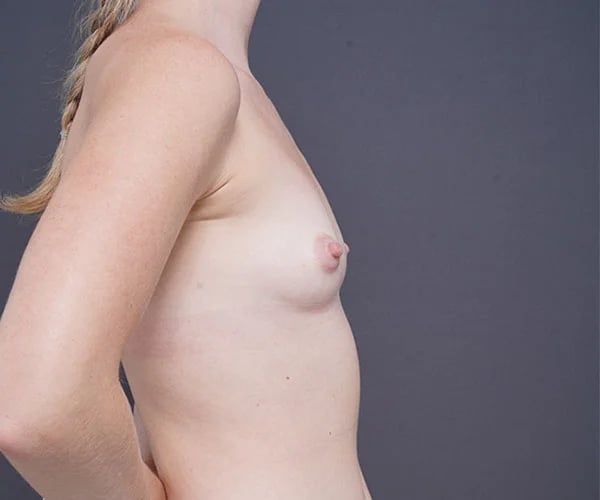
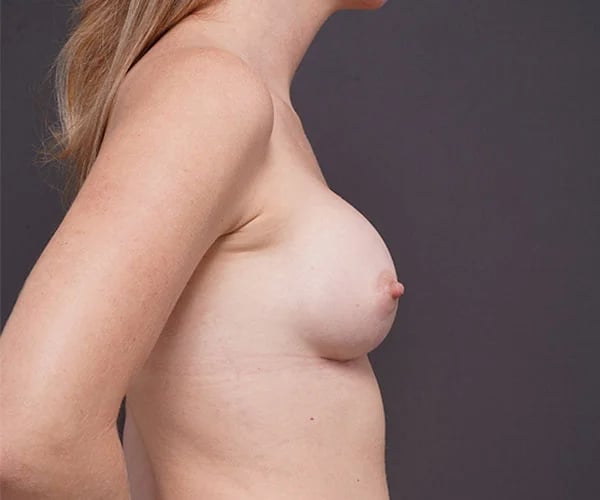
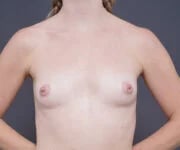
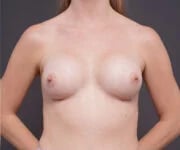
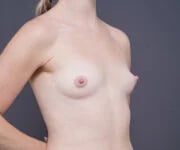
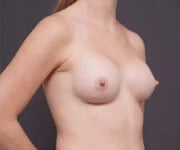

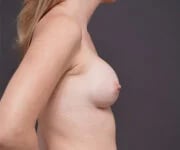
- Gender
- Female
Description
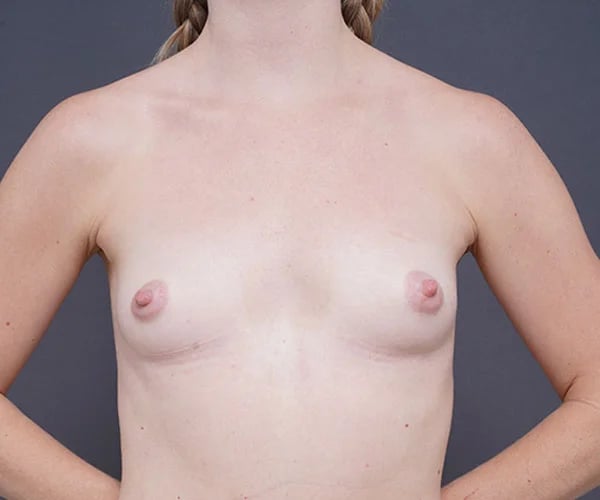
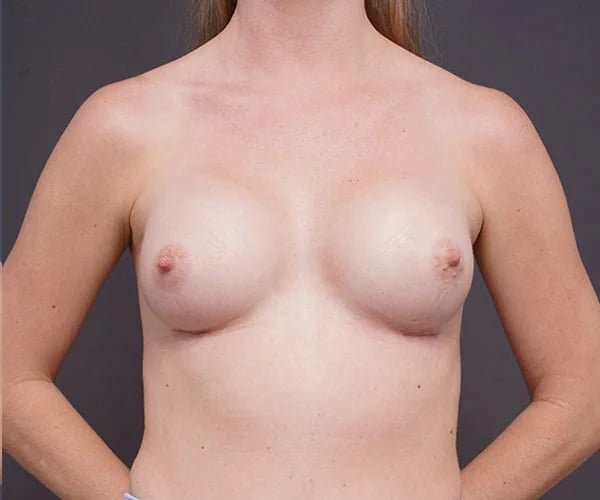
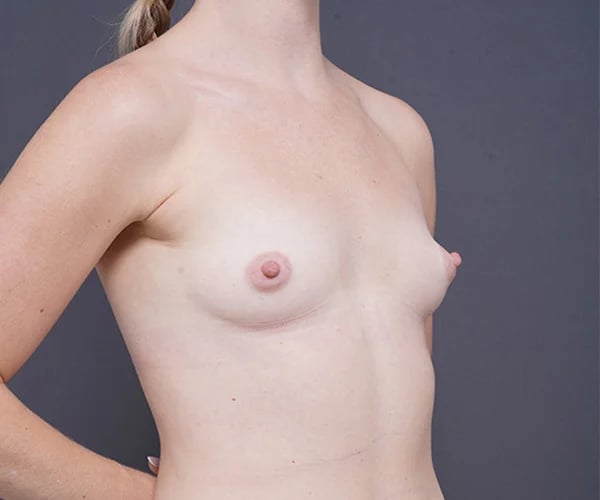
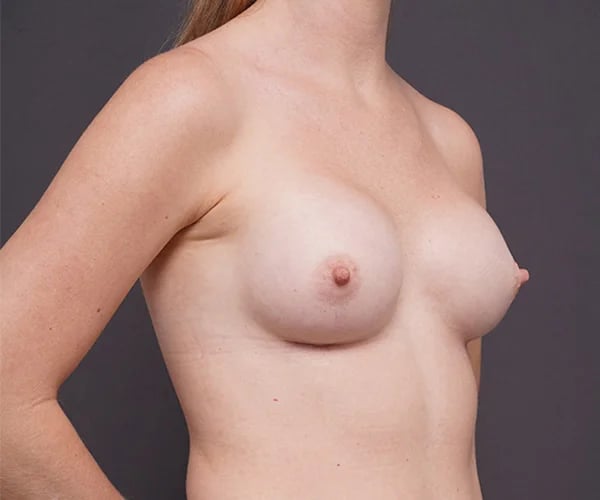
Patient is 6 weeks post breast augmentation.
Six Weeks In: An Early Photograph, Not a Final One
If you are looking at this case because you are weighing breast augmentation, it helps to keep in mind that six weeks is early. The patient is recorded as a female patient six weeks after breast augmentation, and the photograph shows a body partway through a process, not the end of one. It can still be helpful as a picture of what one stage of healing can look like. Individual results vary, and these photographs show one patient's outcome.
What Six Weeks Can and Cannot Tell You
At this point the worst of the bruising and swelling is behind the patient, the first activity restrictions are loosening, and most people feel recognisably like themselves again. The shape, however, is still evolving. Implants tend to start high and gradually move lower, the tissues over them are still firm, and the breasts often look rounder and fuller at the top than they eventually will. What a six-week photograph tells you reliably is the overall size relationship to the frame and the broad symmetry. What it cannot tell you is how the breast will feel and sit once everything has relaxed.
Swelling Can Be Misleading
Swelling does not distribute itself evenly, and it does not leave on a schedule. One side may carry more fluid than the other, one fold may look tighter, and the difference can change between morning and evening. Because swelling is easy to mistake for a structural problem, it is a common source of worry in the first two months. A simple rule helps: judge position and symmetry only after the tissues have settled, and judge size relative to the body, not to a number you had in mind.
When Implants Seem to Sit High
Patients sometimes arrive at six weeks convinced that their implants sit too high. In many cases they are simply in the middle of the settling process, and the position will improve with time. In a smaller number, the implant stays higher than intended, or drops too far, and that is something a surgeon assesses in person and not from a photograph. Keep in mind that early position is not final position, and patience is usually the first treatment.
Sleep, Lifting and the Practical Reality of Recovery
Recovery is rarely dramatic after the first week, but it is persistent. Sleeping on the back, avoiding heavy lifting, and holding off on upper-body workouts are the usual themes, and each has a reason: the pocket the implant sits in is healing, and disturbing it too early can affect the result. Planning time off work and help at home goes more smoothly once you know what breast augmentation recovery in Palm Beach actually feels like from one week to the next. Every surgeon gives patients their own timetable, and personal instructions always override general advice.
Scars at Six Weeks Are Not Scars at Six Months
Early scars are pink, slightly raised and sometimes itchy, and they alarm patients who assume that is how they will look permanently. In most people they flatten and fade over many months. Where the incision is placed, whether in the fold under the breast or elsewhere, is decided by anatomy, implant type and surgeon preference, and the right choice differs between patients. Protecting new scars from sun and following the aftercare plan are the practical steps that help.
When Worry Is Reasonable
Most early oddities settle by themselves, yet a few symptoms deserve a call rather than a wait. Rapidly increasing swelling on one side, a sudden change in shape, fever, redness spreading across the skin, or severe pain are all reasons to contact the surgeon promptly. Patients who are unsure whether something is normal are always better off asking.
Comparing Other People's Photographs Has Limits
Gallery images invite comparison, and comparison has limits. Bodies differ in rib width, breast tissue, skin and posture, so the same implant produces different results in different people, and an enhancement that suits one body may not suit another. A more useful approach to a gallery is to notice which proportions you respond to, then talk about those proportions with the surgeon.
How a Surgeon Thinks About Size
Size is the most visible decision in breast augmentation and it can be hard to frame. Cup size varies between brands, so it is a weak target. Surgeons tend to work from the width of the chest, the thickness of existing tissue, and the look the patient wants, and then choose an implant that fits those constraints. Pushing an implant beyond what the tissues can comfortably cover raises the risk of visible edges and long-term problems, which is why a restrained choice often ages better. Choosing an implant that the tissues can comfortably carry is the principle behind keeping breast augmentation natural and subtle.
Above the Muscle, Below It, and Why You Cannot Tell From Outside
Implants can be placed in front of the chest muscle or beneath it, and the choice has real consequences. Beneath the muscle, the implant has extra coverage along the upper breast, which can soften the transition and reduce visible edges, but the muscle also exerts pressure that can affect movement and early position. In front of the muscle, the implant sits directly under the breast tissue, which can work well where there is enough natural tissue. A photograph at six weeks rarely reveals which was used, and the patient's own anatomy shapes the decision as much as preference does.
Thinking About Incision Placement
Patients often think carefully about incision location, and it deserves consideration, though scars differ from person to person. The fold under the breast is a common location, and other routes exist. Each has advantages and limitations, depending on implant type, anatomy and what the surgeon is comfortable controlling. At six weeks the scar is still young, so judging it from a photograph is premature. Final appearance depends on genetics, tension, sun protection and time far more than on location alone.
The Emotional Arc of the First Two Months
Recovery is physical, and it is also emotional in ways patients do not always expect. The first week often brings relief and excitement. The weeks that follow can bring doubt, particularly when swelling makes the breasts look unfamiliar, or when comparisons with other people's results start to creep in. Many patients describe a dip in confidence around the third or fourth week, followed by a steady rise as shape and feel improve. Knowing that this is a recognised pattern, and that it usually passes, may ease some of the anxiety.
Bras, Support and the Settling Phase
In the settling phase, a well-fitting bra or band helps control swelling and encourages the implant to rest where it was positioned. Surgeons differ on the exact type and timing, and some prefer no underwire early on. Whatever the instruction, following it matters, because the tissues are still adjusting and the pocket is still firming. Patients who wear the wrong support, or none, sometimes find their implants settle unevenly.
Photographing Your Own Progress
Many patients take their own progress photographs, and done sensibly it helps. Use the same lighting, the same distance and the same pose every time, and space the pictures weeks apart rather than daily. Daily checking can draw attention to normal fluctuations, while spaced images show the real trend. When you bring those photographs to a follow-up, they give the surgeon more useful information than a memory of how things looked last month.
Why Follow-Up Visits Matter
The visits after surgery are not a formality. The surgeon checks position, symmetry, incision healing and any signs of trouble, and adjusts instructions as healing progresses. Six weeks is a typical time for one of these checks, and patients who skip them lose the chance to catch small issues early. It is also the moment to ask about timing for returning to specific activities.
Looking Ahead Beyond the Healing Months
Implants are long-term devices and not permanent ones, and patients are wise to know that going in. Some will need revision at some point because of complications or changing preferences. The question of how long breast implants last is answered in more detail elsewhere, and women whose plans change can read about revision breast augmentation. None of that needs to cloud the early weeks, but it is part of what the operation involves.
Reading Gallery Photographs With the Right Questions
When you scan a gallery, it can help to ask whether the breasts look proportionate to the person, whether the transition from chest to breast is smooth, and whether the patient still looks like herself. Notice the stage each photograph was taken at, because six weeks and twelve months tell different stories. A gallery that shows several time points for similar cases can be more informative than one that shows only final images, and cases at six weeks like this one are useful because they show an earlier stage.
Planning Work, Childcare and Help at Home
Practical planning shapes recovery as much as surgery does. Patients who arrange help for the first week, particularly with lifting children or pets, tend to feel calmer and heal more comfortably. Desk work often resumes within days to a couple of weeks, while jobs involving lifting or strenuous arm movement need longer. Preparing meals, laundry and rides in advance removes small stresses that otherwise pile up when you are meant to be resting.
Travel, Flights and Sun in the Early Weeks
Short trips are usually possible once the surgeon is comfortable with how healing is going, though long flights and beach holidays deserve a conversation first. Sitting still for hours raises the risk of blood clots, so walking and hydration matter, and fresh scars should be kept out of strong sun. Booking a holiday for the weeks immediately after surgery tends to cause more stress than relaxation, and many patients prefer to wait until the tissues are calmer.
Returning to Exercise Without Setting Yourself Back
The urge to resume the gym is strong around six weeks, and a sensible return is gradual. Walking and lower-body work usually come back first, while exercises that load the chest and shoulders, such as push-ups and heavy pressing, return later, in steps that your surgeon approves. Pain, a sense of pulling or a sudden change in shape are signals to stop and call. Ramping up slowly costs a few extra weeks, whereas rushing risks the implant position the surgery was designed to create.
Awake or Asleep
Anesthesia concerns are one of the main reasons patients hesitate. For suitable candidates, awake breast augmentation offers an alternative to general anesthesia, and the broader concept is described under awake surgery. Whether it is appropriate depends on the patient and the plan, and it is decided with the surgeon.
What Comes Next
The coming months will do most of the remaining work. Swelling continues to fade, the breasts soften, and the shape settles. If you would like to see how the result develops, the breast augmentation gallery includes other patients at different points, and the overall approach to the operation is described on the breast augmentation page. To talk about your own plan, request a consultation with Dr. Bellamy.
Common Questions at Six Weeks
Is it normal for my implants to look high at six weeks?
Yes. Implants usually sit high at first and move lower as the tissues relax. Position at six weeks is rarely the final position.
When will my breasts look and feel natural?
Most patients notice meaningful softening over the first three to six months, though subtle changes can continue longer. Feel and shape improve gradually.
Are my scars going to stay this red?
Early scars are usually pink or red and slightly raised. They typically flatten and fade over many months, and sun protection and aftercare help.
When can I go back to the gym?
Lower-body and light activity may return earlier, while upper-body and strenuous workouts usually wait longer. Your surgeon sets the timeline for your own case.
What symptoms mean I should call the office?
Fast swelling on one side, a sudden change in shape, fever, spreading redness or severe pain should be reported promptly.