

"360 tummy tuck" is one of the most confusing phrases in body contouring. Search for it and you will find practices using it to describe at least three different operations, each with a different incision, a different recovery, and a very different ideal patient. Add "Lipo 360" to the mix, which sounds almost identical but involves no skin removal at all, and it is easy to walk into a consultation unsure what you are actually asking for.
This guide untangles the terminology. It explains what each version of a "360" procedure involves, who each one is designed for, and how to tell which one matches your body. The goal is simple: to help you use the right words in your consultation so that the plan you receive fits the problem you want solved.
Why "360" Causes So Much Confusion
The number 360 refers to a full circle. In body contouring, it signals that the procedure addresses the torso all the way around rather than only in front. That is where the agreement ends. The circle can be achieved with liposuction alone, with skin removal alone, or with a combination, and each approach solves a different problem.
Part of the confusion is marketing. "360" is memorable and appealing, so it gets attached to procedures loosely. Part of it is that patients often have more than one concern at once: fat on the flanks, loose skin on the lower belly, and a rounded abdomen from muscle separation. A good plan identifies which of those concerns you have, because each one requires a different tool.
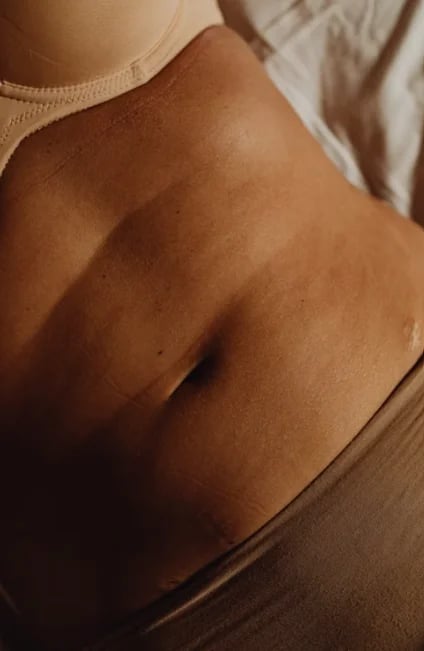
The Three Things a "360 Tummy Tuck" Can Mean
1. A tummy tuck combined with Lipo 360
This is the most common modern usage, and it is what many patients mean when they search "360 tummy tuck." The operation combines a traditional abdominoplasty in front with circumferential liposuction of the flanks, lower back, and sometimes the mid back.
The tummy tuck portion removes loose skin and excess fat from the lower abdomen and, when needed, tightens the separated abdominal muscles. The Lipo 360 portion sculpts the sides and back so the waist narrows all the way around. The incision is the standard low tummy tuck incision, placed so that it can hide beneath most underwear and swimwear. There is no incision around the back.
The ideal candidate has loose or overhanging lower abdominal skin plus stubborn fat on the flanks and back. This describes many women after pregnancy and many patients after moderate weight loss. Dr. Bellamy's tummy tuck procedure page explains how the abdominal portion of this plan is tailored to each patient.
2. An extended tummy tuck
An extended abdominoplasty uses a longer incision that continues past the hip bones toward the flanks. It is designed for patients whose loose skin wraps around the sides of the body, not just the front. By extending the incision, the surgeon can remove skin from the hips and flanks in addition to the abdomen.
Some practices call this a 360 or "near 360" tummy tuck because it treats more of the torso than a standard tummy tuck. It does not typically extend fully around the back.
3. A circumferential abdominoplasty or lower body lift
This is the most literal version of a 360 tummy tuck. The incision travels fully around the body at the level of the waist or upper hips, and skin is removed from the abdomen, flanks, and back in one operation. It often lifts the buttocks and outer thighs as well. It is sometimes called a belt lipectomy or lower body lift.
This operation is designed primarily for patients after massive weight loss, often following bariatric surgery, when loose skin hangs around the entire circumference of the trunk. It is a larger surgery with a longer recovery, and it is generally not the right choice for patients whose concerns are limited to the front of the abdomen.
What Is Lipo 360, and Why It Is Not a Tummy Tuck
Lipo 360 is circumferential liposuction of the midsection. It typically treats the upper abdomen, lower abdomen, flanks, and lower back, and sometimes the mid back and bra roll. The surgeon removes fat through small incisions, usually only a few millimeters long, placed in discreet locations. No skin is cut away, and no muscle is repaired.
This distinction is the most important point in this article. Liposuction removes fat. It does not remove skin, and it does not fix separated abdominal muscles. When patients with loose skin choose liposuction alone, the fat goes away but the skin often looks looser than before, because the volume that was filling it out is gone.
The ideal Lipo 360 candidate has good skin elasticity, no significant muscle separation, and stubborn fat that has not responded to diet and exercise. Many of these patients are close to their goal weight. You can see how Dr. Bellamy approaches the procedure on the Lipo 360 page.
Lipo 360 vs. Tummy Tuck: The Three Questions That Decide It
When patients compare "Lipo 360 vs. tummy tuck," they are really asking which problems they have. Three questions usually settle it.
Do you have loose or overhanging skin? If the skin of your lower abdomen hangs, folds, or looks crepey, especially when you sit or lean forward, you likely need skin removal. That points toward a tummy tuck. If your skin snaps back when you pinch it and lies flat when you are standing, Lipo 360 alone may be enough.
Do you have separated abdominal muscles? Diastasis recti is common after pregnancy. It creates a rounded or domed abdomen that does not flatten with exercise, sometimes with a visible ridge when you sit up. Only a tummy tuck can repair it, because the muscles are stitched back together during surgery.
Where is the fat? Fat under the skin that you can pinch responds to liposuction. Fat deep inside the abdomen, around the organs, does not. Visceral fat can make the abdomen look full even in patients with firm skin and intact muscles, and no body contouring surgery removes it. Weight loss and lifestyle changes are the tools for that.
Dr. Bellamy covers this decision in more depth in his article on whether Lipo 360 or a tummy tuck is right for you.
Who Is a Good Candidate for a Tummy Tuck With Lipo 360?
The combined procedure is designed for patients who have more than one concern. A typical candidate has several of the following: loose skin on the lower abdomen, stretch marks below the belly button, abdominal muscle separation, and fullness on the flanks and back that makes the waist look straight rather than curved.
Good candidates are also in stable health, at or near a stable weight, and do not smoke, or are willing to stop well before and after surgery. Nicotine reduces blood flow to the skin, which can compromise healing of the tummy tuck incision.
Timing matters too. Future pregnancies can stretch the skin and separate the muscles again, so many patients wait until they are finished having children. For women whose concerns include both the abdomen and the breasts after pregnancy, the combined approach is often part of a larger mommy makeover that addresses both areas in one recovery.
How the Combined Procedure Is Performed
Every plan is individualized, but the general sequence looks like this.
The surgery is performed under anesthesia in an accredited facility. Dr. Bellamy typically begins with liposuction of the flanks, lower back, and any other planned areas. Shaping the back and sides first allows him to see the full contour before addressing the front.
Next comes the tummy tuck. A low incision is made across the lower abdomen, typically between the hip bones, positioned so that it can be concealed by underwear or a bikini bottom. If muscle separation is present, the abdominal wall is repaired with sutures to restore a firm, flat foundation. The skin is then redraped, the excess is removed, and the belly button is brought out through a new opening in its natural position.
Finally, the incisions are closed in layers. Depending on the technique used, drains may be placed to help prevent fluid buildup, and you will wear a compression garment when you wake up.
Performing both procedures together has advantages beyond convenience. The waist narrows in all directions, so the front does not look flat while the sides remain full. It also means a single anesthesia session and a single recovery period.
Recovery: What to Expect
Recovery from a tummy tuck with Lipo 360 is more involved than recovery from either procedure alone, because it combines skin removal, possible muscle repair, and circumferential liposuction.
In the first week, most patients walk slightly bent at the waist to reduce tension on the incision. Walking short distances early is encouraged because it helps circulation and lowers the risk of blood clots. Swelling and bruising are common, especially along the flanks and back where liposuction was performed. Pain is typically managed with prescribed medication, and it improves noticeably over the first several days.
By weeks two to three, many patients return to desk work and light daily activities. Posture straightens gradually as the skin relaxes. Compression garments are worn for several weeks to support the tissues and help control swelling.
Around six weeks, most patients are cleared for more strenuous exercise, although core-intensive workouts are often introduced gradually when muscles have been repaired. Swelling continues to resolve over the following months, and the final result is usually visible between three and six months after surgery. The tummy tuck scar continues to fade for up to a year.
Recovery from Lipo 360 alone is generally shorter, with many patients returning to desk work within about one to two weeks. That difference is one reason it is worth confirming whether you truly need skin removal before choosing the combined procedure.
Results: What Each Option Can and Cannot Do
Setting expectations is one of the most important parts of the consultation.
Lipo 360 can refine the waist, reduce stubborn fat on the abdomen, flanks, and back, and create a more defined silhouette. It cannot tighten significantly loose skin, remove stretch marks, or repair muscles. It is also not a weight loss procedure. If you are curious about realistic volume expectations, Dr. Bellamy has written about how much weight you can realistically lose with Lipo 360.

A tummy tuck can remove loose skin, eliminate many stretch marks located below the belly button, repair muscle separation, and flatten the abdomen. It leaves a permanent scar, which is the trade-off for skin removal. With a skilled surgeon, that scar is positioned low and designed to fade over time.
Combining the two delivers a flat, tight abdomen along with a narrower waist all the way around. For the right patient, this produces a result that neither procedure could achieve alone. Reviewing tummy tuck before and after photos is a helpful way to see how scar placement, belly button shape, and waist contour look in real patients.
Common Myths About the 360 Tummy Tuck
Myth: A 360 tummy tuck always means a scar around the entire body. Only the circumferential version, designed mainly for massive weight loss patients, involves an incision that wraps around the back. When a 360 tummy tuck refers to a tummy tuck combined with Lipo 360, the only long scar is the low incision in front.
Myth: Lipo 360 can replace a tummy tuck if you choose the right technology. Some liposuction devices claim to tighten skin, and they may produce modest improvement in some patients. None of them can remove a meaningful amount of hanging skin or repair separated muscles. When skin removal is what your anatomy needs, a tummy tuck remains the reliable solution.
Myth: The combined procedure is only for people who have had children. Pregnancy is a common reason for loose skin and muscle separation, but it is not the only one. Weight fluctuation, genetics, and aging can all create the same combination of concerns in men and women.
Myth: You should lose all your weight after surgery. Body contouring works best when you are already at or near a stable weight. Losing a significant amount of weight after a tummy tuck can loosen the skin again, while gaining weight can add fat back to both treated and untreated areas. Reaching a stable weight first gives you the most durable result.
Myth: Recovery means months away from normal life. Recovery from the combined procedure is real and deserves planning, but most patients are back to desk work within a few weeks. The key is arranging help at home for the first several days and following your surgeon's guidance on activity and garments.
Tummy Tuck in West Palm Beach: Choosing the Right Surgeon
Whatever version of a "360" procedure you are considering, the surgeon's training and judgment matter more than the name of the operation. A tummy tuck with Lipo 360 requires skill in two disciplines: precise liposuction that leaves smooth transitions, and abdominoplasty technique that balances tension, scar position, and belly button aesthetics.
Dr. Justin Bellamy is a board-certified plastic surgeon who completed his residency at NYU Langone and an advanced aesthetic surgery fellowship at the Dallas Plastic Surgery Institute. Body contouring, including Lipo 360, tummy tuck, and mommy makeover, is a core part of his practice. You can learn more about his training on the Dr. Justin Bellamy biography page.
When you meet with any surgeon, ask them to explain exactly which procedure they are recommending, where the incision will be, and why. If they use the term "360 tummy tuck," ask them to clarify which of the three versions they mean. A clear answer is a good sign.
What to Ask During Your Consultation
Bringing specific questions helps you get specific answers. Consider asking the following.
Ask which of your concerns are caused by skin, which by fat, and which by muscle separation. Ask whether you need skin removal or whether liposuction alone will give you the result you want. Ask where your incision will be placed and how long it will be. Ask which areas will be treated with liposuction. Ask what recovery will look like for your specific plan, including time off work and exercise restrictions. Finally, ask to see before and after photos of patients who had the same procedure you are considering.
Hearing how other patients experienced the process can also help. You can read patient experiences on Dr. Bellamy's testimonials page.
The Bottom Line
A "360 tummy tuck" is not one procedure. It can mean a tummy tuck combined with Lipo 360, an extended tummy tuck that reaches the flanks, or a full circumferential body lift designed for massive weight loss. Lipo 360, despite the similar name, removes fat without removing skin.
The right choice depends on three things: your skin quality, whether your abdominal muscles are separated, and where your fat sits. Once those are clear, the name of the procedure matters far less than whether the plan fits your body.
If you are considering a tummy tuck or abdominoplasty in West Palm Beach, Palm Beach Gardens, Jupiter, or Boca Raton, you can schedule a consultation with Dr. Bellamy to find out which approach matches your goals.
Frequently Asked Questions
What is a 360 tummy tuck?
A 360 tummy tuck is a term used for procedures that contour the torso all the way around. Most commonly it means a tummy tuck combined with Lipo 360 of the flanks and back. It can also refer to an extended tummy tuck that reaches toward the flanks, or a circumferential abdominoplasty, also called a lower body lift, in which the incision goes fully around the waist.
Is a 360 tummy tuck the same as Lipo 360?
No. Lipo 360 is circumferential liposuction. It removes fat from the abdomen, flanks, and back through small incisions but does not remove skin or repair muscles. A tummy tuck removes loose skin and can repair separated abdominal muscles, and when combined with Lipo 360, it also contours the sides and back.
How do I know if I need a tummy tuck or Lipo 360?
If you have loose or overhanging lower abdominal skin, or separated abdominal muscles, you likely need a tummy tuck. If your skin is firm and elastic and your concern is stubborn fat on the abdomen, flanks, and back, Lipo 360 alone may be enough. A consultation with a board-certified plastic surgeon confirms which applies to you.
Does a 360 tummy tuck leave a scar around the whole body?
Only the circumferential version does. When a 360 tummy tuck means a tummy tuck combined with Lipo 360, the only long scar is the low tummy tuck incision in front, which can usually be hidden by underwear or swimwear. The liposuction incisions are only a few millimeters long.
How long is recovery from a tummy tuck with Lipo 360?
Most patients return to desk work in about two to three weeks and are cleared for more strenuous exercise around six weeks, with core workouts introduced gradually if the muscles were repaired. Swelling continues to resolve for several months, and final results are usually visible between three and six months.
Who is a candidate for a circumferential abdominoplasty?
A circumferential abdominoplasty, also called a lower body lift or belt lipectomy, is designed primarily for patients after massive weight loss who have loose skin around the entire trunk, including the back and buttocks. Patients whose concerns are limited to the front of the abdomen are usually better served by a standard or extended tummy tuck.
Work Out Which 360 Procedure Fits Your Body
Loose skin, muscle separation and stubborn fat each point to a different plan. Contact Bellamy Plastic Surgery to talk it through with Dr. Bellamy. Call (561) 705-0044 or complete our online contact form.