

Most people who start researching eyelid surgery describe the problem in everyday terms. "I look tired all the time." "My eyeshadow disappears into a fold." "I have bags that concealer can't hide." Those descriptions are useful, but they do not always point to the right operation. Upper eyelid surgery, lower eyelid surgery, and brow lifting each solve different problems, and the tired look you see in the mirror can come from any one of them, or from all three.
This guide explains how upper and lower blepharoplasty differ, what each can and cannot fix, and why a careful evaluation of the whole upper face matters before choosing a procedure. If you are considering blepharoplasty in West Palm Beach or elsewhere in Palm Beach County, it will help you walk into your consultation knowing which questions to ask.
A Quick Look at Eyelid Anatomy
The eyelids are some of the thinnest skin on the body, which is why they show age early. Beneath that skin sits the orbicularis oculi, a ring-shaped muscle that closes the eye. Behind the muscle, a thin membrane called the orbital septum holds small pads of fat in place around the eye.
With age, three things happen. The skin loses elasticity and stretches. The septum weakens, allowing fat to push forward into visible bulges. And the surrounding structures, including the brow and cheek, descend and lose volume. Each of these changes shows up differently in the upper and lower lids, which is why the two surgeries are designed so differently. For a broader overview of these age-related changes, Dr. Bellamy's earlier article on how to fix sagging eyelids walks through the most common causes.

What Upper Blepharoplasty Treats
Upper blepharoplasty addresses the area between the eyelashes and the brow. The most common concern is excess skin, sometimes called dermatochalasis, that folds over the natural eyelid crease. In mild cases this creates a hooded appearance. In more advanced cases, the skin can rest on the lashes or even block part of the upper field of vision.
Upper eyelid surgery can also address fat that bulges in the inner corner of the upper lid, near the nose. This small fat pad often becomes more prominent with age and contributes to a puffy, heavy look.
How upper eyelid surgery is performed
The incision is placed in the natural crease of the upper eyelid, where it heals into a fine line that is concealed when the eyes are open. Through this incision, the surgeon removes a precisely measured strip of skin, and sometimes a thin strip of muscle. Fat may be conservatively removed or sculpted if it is contributing to fullness.
Precision matters. Removing too much skin can make it difficult to close the eyes fully, which leads to dryness and irritation. Removing too much fat can create a hollow, aged appearance. The modern approach emphasizes preservation: remove what is truly excess, and leave the natural fullness that makes the upper lid look youthful.
Recovery from upper blepharoplasty is usually straightforward. Most patients have swelling and bruising for about one to two weeks, stitches are typically removed within the first week, and many return to work in about a week to ten days. Dr. Bellamy's blepharoplasty procedure page covers candidacy and technique in more detail.
What Lower Blepharoplasty Treats
Lower blepharoplasty focuses on the area beneath the eye, and the concerns here are different. The most common complaint is under-eye bags: fat that has pushed forward through a weakened septum, creating a bulge that casts a shadow. Other concerns include a hollow groove below the bags (the tear trough), loose or crepey skin, and a visible line where the lower eyelid meets the cheek.
Many patients who search for a "lower eye lift" in West Palm Beach are describing this combination of bags and hollows. The goal of modern lower blepharoplasty is not simply to remove the bags, but to create a smooth, continuous transition from the eyelid to the cheek.
Two approaches: transconjunctival and transcutaneous
Lower eyelid surgery is typically performed through one of two approaches.
The transconjunctival approach uses an incision on the inside of the lower eyelid. There is no visible external scar. This approach is often preferred for patients whose main concern is fat bulging, with good skin quality. It also preserves the natural support of the lower lid, which reduces the risk of changes in eyelid position.
The transcutaneous, or subciliary, approach places an incision just below the lower lash line, where it heals into a fine, well-concealed line. This approach allows the surgeon to remove or tighten excess skin and muscle in addition to addressing fat. It is useful for patients with more significant skin laxity.
Some patients benefit from a combination, such as a transconjunctival fat procedure with a small "skin pinch" below the lashes to remove a thin strip of loose skin.
Fat repositioning instead of fat removal
One of the biggest advances in lower eyelid surgery is fat repositioning. Rather than removing the bulging fat, the surgeon moves it downward to fill the hollow tear trough below. This single maneuver smooths the bag and fills the groove at the same time, producing a more natural result than removal alone.
Older techniques that removed large amounts of lower eyelid fat often left patients looking hollow or skeletal over time, especially as the face naturally loses volume with age. Repositioning, and in some cases adding volume with facial fat grafting, avoids that problem.
Recovery from lower blepharoplasty is often slightly longer than from upper lid surgery. Swelling and bruising typically last around two weeks, with residual swelling resolving over several more weeks.
When the Problem Is Actually the Brow
This is where many patients are surprised. A hooded upper eyelid is not always caused by excess eyelid skin. Often, the brow has descended, pushing the skin of the upper lid down from above. This is called brow ptosis.
If the brow is low and the surgeon removes eyelid skin alone, two problems can follow. The hooding may not fully improve, and the brow can be pulled even lower, bringing it closer to the eye and creating a heavier, sometimes angry appearance.
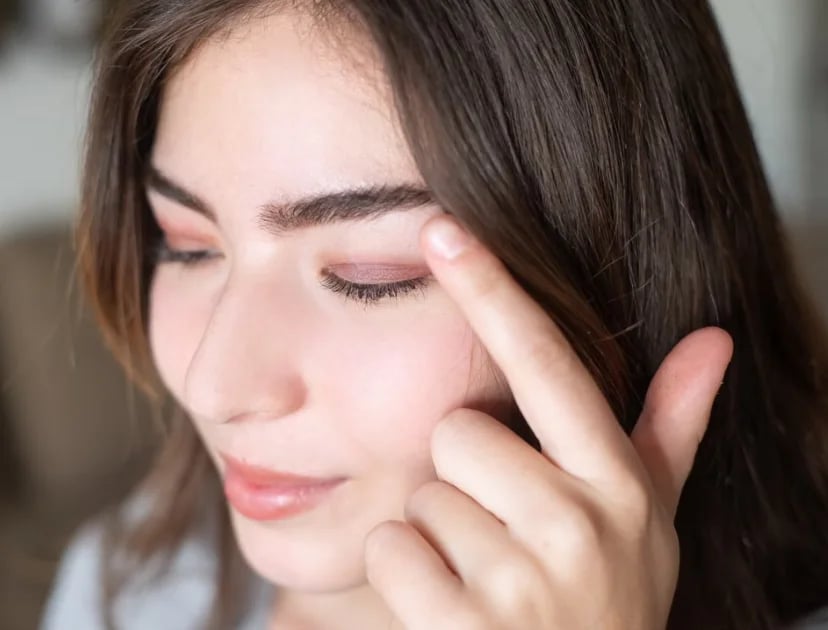
A quick self-check can offer clues. Look in the mirror with your face relaxed. Then gently lift your brow with a fingertip to where it sat when you were younger. If most of the hooding disappears, the brow may be a significant contributor. If loose skin remains even with the brow lifted, you likely have true eyelid skin excess as well.
When the brow is part of the problem, a brow lift either alone or combined with upper blepharoplasty often gives a better result. Many patients searching for brow lift in West Palm Beach are really trying to solve the same "tired eyes" concern that led them to research eyelid surgery.
When the Problem Is Eyelid Ptosis
There is one more condition that looks similar but requires a different fix: eyelid ptosis. In this case, the upper eyelid itself sits too low because the muscle that lifts it has stretched or detached from its attachment point. Patients often notice they raise their eyebrows constantly to see clearly, which can lead to forehead lines and fatigue.
Blepharoplasty removes skin and fat, but it does not raise the eyelid margin. Ptosis is corrected by repairing or tightening the lifting muscle. Identifying ptosis during the evaluation is essential, because a standard blepharoplasty will not fix it.
Upper vs. Lower Blepharoplasty: A Side-by-Side Comparison
Upper blepharoplasty treats excess skin and inner-corner fat on the upper lid. The incision sits in the natural eyelid crease. Recovery is usually about one to two weeks of visible swelling and bruising. It is often combined with a brow lift when the brow is low.
Lower blepharoplasty treats under-eye bags, tear trough hollows, and loose lower lid skin. The incision is either hidden inside the eyelid or placed just below the lashes. Recovery is usually about two weeks of visible swelling, sometimes a little longer. It is often combined with fat repositioning or fat grafting to smooth the lid-cheek junction.
For reference, the American Society of Plastic Surgeons 2024 fee report lists national average surgeon fees of $3,000 to $5,500 for upper blepharoplasty and $3,709 to $6,500 for lower blepharoplasty. Those figures exclude anesthesia and facility costs, and South Florida pricing often runs toward the upper end of national ranges.
Can You Have Both at the Same Time?
Yes. Four-lid blepharoplasty, meaning upper and lower eyelid surgery performed together, is common. Many patients have hooding above and bags below, and treating both in one session creates a balanced result with a single recovery period.
Combining procedures also avoids an imbalance where one area looks refreshed and the other still looks tired. The same logic applies to broader facial rejuvenation. Patients who also have laxity in the midface, jowls, or neck sometimes combine eyelid surgery with a deep plane facelift so that the eyes and the rest of the face age backward together.
Non-Surgical Options and Their Limits
Not every patient is ready for surgery, and some concerns respond well to non-surgical treatments.
Neuromodulators can soften crow's feet and, when placed strategically, create a subtle lift at the tail of the brow. Dr. Bellamy's page on Botox and neuromodulators explains how these treatments work.
Fillers can camouflage mild tear trough hollows in carefully selected patients. However, the under-eye area is delicate. Filler placed in patients with significant fat bulging can make bags look larger, and filler in thin lower lid skin can sometimes create a bluish tint or persistent puffiness. You can learn more on the dermal fillers page.
The key limitation is that neither option removes excess skin or bulging fat. When those are the underlying causes, surgery is usually the only way to achieve a lasting improvement.
Is Upper Eyelid Surgery Ever Covered by Insurance?
Upper blepharoplasty is usually a cosmetic procedure, but in some cases it is also functional. When excess upper eyelid skin hangs low enough to block part of the upper field of vision, some insurance plans may consider surgery medically necessary. Coverage decisions typically depend on documentation such as a formal visual field test performed with and without the eyelids taped up, along with photographs and a record of symptoms.
Criteria vary by insurance plan, and approval is never guaranteed. Lower blepharoplasty is almost always considered cosmetic, because under-eye bags and hollows do not typically affect vision. If you believe your upper eyelids are interfering with your sight, it is worth mentioning at your consultation and checking the requirements of your specific plan.
Common Concerns During Eyelid Surgery Recovery
Knowing what is normal can make recovery less stressful.
Dry or irritated eyes. Temporary dryness, a gritty sensation, or tearing is common in the first weeks as the eyelids heal and blinking patterns adjust. Lubricating eye drops and ointment are typically recommended. Patients with a history of dry eye should mention it before surgery, because it can influence how conservatively skin is removed.
Asymmetry while healing. Swelling rarely resolves evenly. It is common for one eye to look more swollen or bruised than the other for a period of time. This usually evens out as healing progresses, and judging the result before swelling has settled can be misleading.
Tightness or difficulty closing the eyes fully. Mild tightness is common early after upper eyelid surgery and usually improves as swelling decreases. Careful measurement during surgery is what prevents lasting problems with eyelid closure.
Lower eyelid position. After lower blepharoplasty, the lower lid can temporarily look slightly pulled down while swelling is present. Surgeons use techniques that support the lower lid, and choosing the transconjunctival approach when appropriate also helps preserve natural lid position.
Blurry vision. Ointment and swelling can blur vision briefly in the first days. Sudden changes in vision, significant pain, or rapidly increasing swelling should always be reported to your surgeon right away.
Why Florida Patients Should Think About Timing and Skin Care
Living in Palm Beach means strong sun exposure year-round. Ultraviolet light breaks down collagen and elastin, which accelerates eyelid skin laxity and fine lines around the eyes. It can also make fresh incisions more likely to darken if they are exposed to sun during healing.
After eyelid surgery, most surgeons recommend protecting the incisions from direct sunlight while they mature, using sunglasses and a broad-brimmed hat outdoors, and adding mineral sunscreen once the incisions have healed enough to tolerate it. Many patients prefer to schedule eyelid surgery at a time when their social and travel calendar allows them to stay out of the sun for the first couple of weeks.
How Long Do Eyelid Surgery Results Last?
Results from eyelid surgery are long-lasting, but they do not stop the aging process. Lower blepharoplasty results are often considered especially durable, because once bulging fat has been repositioned or removed, bags rarely return in the same way. Upper blepharoplasty results also last for many years, although the skin will continue to age naturally and the brow may continue to descend over time.
Several habits help preserve your result. Daily sun protection slows the breakdown of collagen in the delicate eyelid skin. Avoiding smoking supports healthy skin and circulation. Maintaining a stable weight, staying well hydrated, and treating allergies that cause chronic eye rubbing also help. Some patients choose occasional neuromodulator treatments around the eyes to keep crow's feet soft between surgical milestones.
What Happens During a Blepharoplasty Consultation
A thorough eyelid consultation evaluates far more than the eyelids. Dr. Bellamy assesses brow position, eyelid margin height, skin quality, fat distribution in both the upper and lower lids, lower lid tone and support, and volume in the cheeks. He also asks about any dry eye symptoms, previous eye surgery such as LASIK, and medical conditions that affect the eyes.
This complete picture allows him to recommend the procedure, or combination of procedures, that will actually address the cause of your concern. Dr. Bellamy trained at Johns Hopkins and NYU Langone before completing an aesthetic surgery fellowship at the Dallas Plastic Surgery Institute, and you can read more on the Dr. Justin Bellamy biography page.
It is also worth reviewing results before your appointment. The eyelid and brow lift before and after gallery shows how natural results look across different patients and combinations of procedures.
The Bottom Line
Upper blepharoplasty removes excess upper eyelid skin and sculpts inner-corner fat. Lower blepharoplasty treats under-eye bags and hollows, ideally by repositioning fat rather than simply removing it. A low brow or a drooping eyelid margin can mimic eyelid skin excess, and they require different solutions.
The best way to know which procedure fits your face is an evaluation of the entire upper face, not just the eyelids. If you are considering eyelid surgery in West Palm Beach, Palm Beach Gardens, Jupiter, or Boca Raton, you can request a consultation with Dr. Bellamy to find out whether upper, lower, or combined blepharoplasty is right for you.
Frequently Asked Questions
What is the difference between upper and lower blepharoplasty?
Upper blepharoplasty removes excess skin, and sometimes fat, from the upper eyelid through an incision hidden in the natural crease. Lower blepharoplasty treats under-eye bags, hollows, and loose skin, using an incision either inside the lower eyelid or just below the lash line.
How do I know if I need a brow lift instead of eyelid surgery?
Gently lift your brow with a fingertip while looking in the mirror. If most of the upper eyelid hooding disappears, a low brow is likely contributing, and a brow lift alone or combined with upper blepharoplasty may give a better result. A surgeon's evaluation confirms the cause.
Can upper and lower blepharoplasty be done together?
Yes. Performing upper and lower eyelid surgery in one session, often called four-lid blepharoplasty, is common. It creates a balanced result and requires only one recovery period.
Does lower blepharoplasty leave a visible scar?
It depends on the approach. The transconjunctival approach uses an incision inside the lower eyelid and leaves no external scar. The transcutaneous approach places a fine incision just below the lash line, which typically heals into a line that is difficult to see.
How long is recovery from eyelid surgery?
Upper eyelid surgery usually involves about one to two weeks of visible swelling and bruising, and many patients return to work in about a week to ten days. Lower eyelid surgery typically involves around two weeks of visible swelling, with residual swelling resolving over the following weeks.
How much does blepharoplasty cost in West Palm Beach?
The American Society of Plastic Surgeons 2024 report lists national average surgeon fees of $3,000 to $5,500 for upper blepharoplasty and $3,709 to $6,500 for lower blepharoplasty, excluding anesthesia and facility fees. South Florida pricing often runs toward the upper end of national ranges. Dr. Bellamy provides a personalized quote after consultation.
Get an Honest Read on Your Eyelids
Hooding, bags and a low brow can look alike in the mirror. Contact Bellamy Plastic Surgery for an assessment of which one you are actually seeing. Call (561) 705-0044 or complete our online contact form.