

If you are researching liposuction in West Palm Beach, you have probably seen two very different kinds of offers. One promotes SmartLipo or "laser lipo," often described as quick, minimally invasive, and done while you are awake. The other promotes Lipo 360, a more comprehensive procedure that sculpts the entire midsection in one session. Both use the word liposuction, and both promise a slimmer shape, so it is natural to wonder whether they are simply two versions of the same thing.
They are not. SmartLipo describes a technology, a laser used to help remove fat. Lipo 360 describes a treatment plan, the areas of the body being contoured. Understanding that difference will change the way you compare offers, and it will help you choose the approach that actually matches your goals.

What SmartLipo Is
SmartLipo is a brand name for laser-assisted liposuction. It was developed by the medical device company Cynosure and has been used for years in cosmetic practices across the country. The general term for this approach is laser-assisted liposuction, often shortened to LAL.
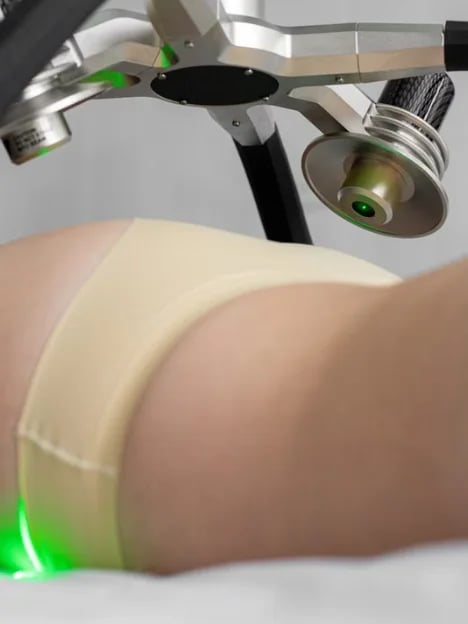
During laser-assisted liposuction, the surgeon inserts a thin fiber through a small incision. The fiber delivers laser energy into the fat layer, heating and disrupting fat cells so they become easier to remove. The surgeon then uses a cannula to suction out the loosened fat, just as in other forms of liposuction.
Laser lipo is often marketed with two additional claims. The first is that the heat helps tighten skin. The second is that the procedure can be done under local anesthesia with minimal downtime. Both claims deserve a closer look.
The skin tightening claim
Heat does cause some collagen contraction, and laser-assisted liposuction may offer modest tightening in some patients. However, the effect is generally limited. It is not a substitute for skin removal in patients with significant laxity, and results vary considerably from patient to patient. Energy-based devices also carry a risk of thermal injury if heat is concentrated too close to the skin, which is why surgeon experience with the device matters.
The local anesthesia claim
Many laser lipo procedures are performed while the patient is awake, using tumescent anesthesia, a dilute solution of local anesthetic and medication injected into the treatment area. This approach can work well for small, well-defined areas. The trade-off is that the total amount of local anesthetic a patient can safely receive is limited, which in turn limits how many areas can be treated in one session. For that reason, laser lipo under local anesthesia is usually best suited to smaller areas rather than full-body contouring.
What Lipo 360 Is
Lipo 360 is circumferential liposuction of the midsection. Rather than treating one area, the surgeon contours the full ring of the torso: typically the upper abdomen, lower abdomen, both flanks, and the lower back, and often the mid back and bra roll. The aim is a refined waist that looks balanced from the front, the side, and behind.
The name says nothing about which tool is used to remove the fat. Lipo 360 can be performed with traditional suction-assisted liposuction, power-assisted liposuction, ultrasound-assisted technology, or other energy-based devices. What defines it is the scope of the plan and the artistry of the contouring. You can read more about Dr. Bellamy's approach on the Lipo 360 procedure page.
Because Lipo 360 treats several connected areas in one session, it is usually performed under general anesthesia or deep sedation in an accredited surgical facility. That allows the surgeon to position the patient in different ways, reach every part of the torso, and blend transitions between zones so that no single area looks over- or under-treated.
SmartLipo vs. Lipo 360: The Core Difference
Here is the simplest way to understand the comparison.
SmartLipo answers the question, "What tool is being used?" It describes a laser-based method for loosening fat before it is removed.
Lipo 360 answers the question, "What is being treated, and how is the shape designed?" It describes a comprehensive contouring plan for the entire midsection.
That means the two are not strictly competitors. In theory, a surgeon could use a laser device as part of a Lipo 360. In practice, however, the way these services are marketed often reflects two different philosophies. Laser lipo offers are frequently built around treating a single area quickly, sometimes in an office setting. Lipo 360 is built around reshaping the torso as a whole.
Why Treating One Area Can Create a New Problem
One of the most common reasons patients seek revision after liposuction is imbalance. When only the front of the abdomen is treated, the flanks and back can look fuller by comparison. When only the flanks are treated, the lower back may create a shelf above the buttocks. The body is three-dimensional, and fat that remains in an untreated area becomes more noticeable once the neighboring area has been slimmed.
This is the main reason circumferential contouring has become popular. By treating the abdomen, flanks, and back together, the surgeon can shape a continuous curve from the ribs to the hips. The waist narrows in every direction rather than only from the front.
That does not mean single-area liposuction is never the right choice. If you have one well-defined pocket of fat and the surrounding areas are already balanced, treating only that area makes sense. The key is choosing based on your anatomy rather than on the device being advertised.
When Laser Lipo Can Make Sense
Laser-assisted liposuction, whether branded as SmartLipo or another name, can be a reasonable option in certain situations.
It can work for small, isolated areas of fat in patients with good skin quality. It can suit patients who strongly prefer a procedure under local anesthesia and understand the limits that come with that choice. It is sometimes used in delicate, smaller areas such as under the chin. If submental fullness is your main concern, Dr. Bellamy's chin liposuction page explains how that area is approached.
Laser lipo is less suitable when the goal is to reshape the entire midsection, when multiple connected areas need treatment, or when the patient has loose skin that needs to be removed rather than tightened.
When Lipo 360 Is the Better Fit
Lipo 360 is designed for patients whose concerns wrap around the torso. Typical candidates have stubborn fat on the abdomen plus the flanks, back, or bra roll, and want a defined waist rather than a flatter stomach alone. They generally have good skin elasticity, are at or near a stable weight, and are in good overall health.
It is important to set expectations clearly. Lipo 360 is a contouring procedure, not a weight loss method. Patients close to their goal weight typically see the most dramatic change in shape. Dr. Bellamy explains realistic expectations in his article on how much weight you can lose with Lipo 360.
For patients who want to use the harvested fat, Lipo 360 also pairs naturally with fat transfer. The fat removed from the midsection can be purified and transferred to the buttocks in a Brazilian butt lift, creating a more pronounced waist-to-hip contrast.
What Neither Procedure Can Do
Both laser lipo and Lipo 360 remove fat. Neither removes a significant amount of loose skin, and neither repairs separated abdominal muscles. If your lower abdomen has hanging skin, stretch marks below the belly button, or a rounded bulge caused by muscle separation after pregnancy, liposuction alone is unlikely to give you the result you want.
In those cases, a tummy tuck removes the excess skin and repairs the muscles, and it can be combined with Lipo 360 to contour the flanks and back in the same operation. Skin tightening claims from laser devices should not be used to talk a patient out of skin removal when skin removal is what the anatomy calls for.
Liposuction also does not remove visceral fat, the fat deep within the abdomen surrounding the organs. Only fat under the skin can be suctioned.
Safety: The Questions That Matter More Than the Device
When patients compare liposuction offers, they often focus on the technology. Safety and results depend far more on who is performing the procedure and where.
Who is the surgeon? Ask whether the person performing your procedure is board certified in plastic surgery. In many states, including Florida, physicians trained in other specialties can legally offer liposuction. Board certification in plastic surgery means the surgeon has completed extensive training focused specifically on surgery of the face and body.
Where will the procedure take place? An accredited surgical facility must meet independent standards for safety, sterilization, staffing, and emergency preparedness. Ask which organization accredits the facility.
Who is monitoring anesthesia? For larger procedures, ask who administers and monitors anesthesia throughout the surgery.
How much fat is being removed? There are safety limits on how much fat can be removed in a single session. A responsible surgeon will explain those limits and design your plan within them.
What happens after surgery? Ask about compression garments, follow-up visits, and who you can contact if you have a concern during recovery.
A surgeon who answers these questions clearly and directly is a good sign, regardless of which device they prefer.
Is Newer Technology Always Better?
Cosmetic surgery marketing often focuses on devices, and it is easy to assume that a newer or more advanced machine guarantees a better result. In practice, the device is only one variable, and often not the most important one.
Every liposuction technology, whether laser, ultrasound, power-assisted, or traditional suction, is a tool for removing fat. What determines the result is how the surgeon plans the procedure: which areas to treat, how much fat to remove from each, how much to leave behind to keep the contour natural, and how to blend transitions between areas. Two surgeons using the same device can produce very different outcomes.
Energy-based devices can be useful in the right situations. They may help in fibrous areas, such as the male chest or areas previously treated with liposuction, where fat is harder to remove. However, they also add heat to the tissues, which requires careful technique to avoid injury. A surgeon who uses energy devices selectively, based on the tissue in front of them, is usually more reassuring than one who uses a single device for every patient because it features in their advertising.
When you meet with a surgeon, it is reasonable to ask which technology they plan to use and why. A clear, specific answer about your anatomy is more meaningful than a list of device brand names.
Keeping Your Results After Liposuction
Fat cells removed by liposuction do not grow back, which is why results can be long-lasting. However, the remaining fat cells throughout the body can still expand with weight gain. If you gain a significant amount of weight after surgery, fat may accumulate in both treated and untreated areas, and the contour can change.
The patients who maintain their results best keep a stable weight through consistent eating habits and regular activity. Wearing compression garments as directed during recovery also helps the skin settle smoothly over the new contour.
Recovery: How Laser Lipo and Lipo 360 Compare
Recovery depends on how much is treated, not only on the technology used.
Laser lipo of a single small area under local anesthesia often has a short recovery. Many patients return to light activities within a few days, with swelling and soreness improving over one to two weeks.
Lipo 360 involves more area, so recovery is more involved. Most patients experience swelling and bruising across the abdomen, flanks, and back. Many return to desk work in about one to two weeks, wear compression garments for several weeks, and gradually resume exercise over the following weeks as directed. Swelling continues to resolve for several months, and final results are typically visible at around three to six months.
The longer recovery reflects the larger transformation. For patients who want a complete change in the shape of the torso, one comprehensive recovery is often preferable to several smaller procedures spread over time. Patients who have been through recovery describe what the process felt like on the patient testimonials page.
How to Evaluate Liposuction Offers in West Palm Beach
When you are comparing liposuction in West Palm Beach, Palm Beach Gardens, or Boca Raton, start with results rather than marketing terms.
Look at before and after photos of patients with body types similar to yours. Pay attention to smooth transitions between treated and untreated areas, the shape of the waist in profile, and the appearance of the back. A strong body contouring before and after gallery tells you more about a surgeon's skill than the name of any device.
Next, ask the surgeon to explain your plan in plain language: which areas, which technique, what type of anesthesia, and why. Then ask what realistic results look like for your body type and what recovery will involve.
Finally, consider the surgeon's training. Dr. Justin Bellamy is a board-certified plastic surgeon who completed his residency at NYU Langone and an advanced fellowship in aesthetic surgery at the Dallas Plastic Surgery Institute, where body contouring was a central focus. You can read more about his background on the Dr. Justin Bellamy biography page.
Who Should Not Have Liposuction
Liposuction is not the right choice for everyone, regardless of the technology used. Patients who are significantly above a healthy, stable weight usually benefit more from weight loss first, because liposuction is designed to refine shape rather than reduce overall body weight. Patients with significant loose skin may be disappointed with fat removal alone. People with certain medical conditions, including uncontrolled heart, lung, or blood clotting problems, may not be safe candidates for elective surgery. Smoking also increases surgical risk and can affect healing.
Expectations matter too. Liposuction can dramatically improve contour, but it will not change the underlying frame of the body, remove cellulite, or prevent future weight gain. A thorough consultation should cover these limits as clearly as it covers the benefits.
A Note for Men Considering Liposuction
Men frequently research laser lipo for the flanks and chest. Flank and abdominal fat often respond well to circumferential contouring, which creates a more athletic, tapered torso. The chest, however, is different. Fullness in the male chest is sometimes caused by glandular tissue rather than fat, and gland tissue does not respond well to liposuction alone. In those cases, gynecomastia surgery that removes the gland directly produces a better result. An examination distinguishes between the two.
The Bottom Line
SmartLipo is a laser-assisted technology for removing fat. Lipo 360 is a comprehensive plan for contouring the entire midsection. Laser lipo can be a reasonable choice for a small, isolated area in the right patient. When the goal is a refined, balanced waist from every angle, a circumferential approach performed by a board-certified plastic surgeon in an accredited facility usually delivers a more complete result.
The best procedure is the one designed around your anatomy, not the one with the most memorable name. If you are considering liposuction in Palm Beach, you can request a consultation with Dr. Bellamy to find out whether Lipo 360 or a more targeted approach is right for you.
Frequently Asked Questions
What is the difference between SmartLipo and Lipo 360?
SmartLipo is a brand of laser-assisted liposuction, a technology that uses laser energy to loosen fat before it is suctioned out. Lipo 360 is a treatment plan that contours the full circumference of the midsection, typically the abdomen, flanks, and back. SmartLipo describes the tool, while Lipo 360 describes what is treated.
Does laser liposuction tighten skin?
Laser energy can cause some collagen contraction, and some patients see modest tightening. The effect is generally limited and varies between patients. It does not replace skin removal for patients with significant loose skin, who are usually better served by a procedure such as a tummy tuck.
Is SmartLipo safer than traditional liposuction?
No liposuction technology is inherently safer than another. Safety depends mainly on the surgeon's training, the accreditation of the facility, appropriate anesthesia monitoring, and staying within safe limits for fat removal. Energy-based devices also carry a risk of thermal injury if used improperly.
Can Lipo 360 be done under local anesthesia?
Lipo 360 treats several connected areas in one session, so it is usually performed under general anesthesia or deep sedation in an accredited facility. Local anesthesia limits the amount of area that can safely be treated at once, which makes it better suited to smaller, single-area procedures.
Which is better for losing weight, SmartLipo or Lipo 360?
Neither is a weight loss procedure. Both remove fat beneath the skin to improve body shape. Patients who are at or near a stable weight and have good skin elasticity typically see the best contouring results.
How do I choose the best liposuction surgeon in West Palm Beach?
Look for board certification in plastic surgery, surgery performed in an accredited facility, a clear explanation of your treatment plan, and before and after photos of patients with body types similar to yours. The surgeon's skill and judgment matter more than the device used.
Compare Your Contouring Options With Dr. Bellamy
Spot treatment and full circumferential contouring solve different problems. Contact Bellamy Plastic Surgery to find out which one you need. Call (561) 705-0044 or complete our online contact form.