

If you've tried diet and exercise and still can't shake stubborn fat around your midsection, or if pregnancy and weight fluctuations have left you with loose, sagging skin, you've probably found yourself comparing Lipo 360 and a tummy tuck. They're two of the most requested body contouring procedures at our Palm Beach Gardens practice, and while people often use the terms almost interchangeably, they solve genuinely different problems. Understanding what each one actually does - and, just as importantly, what neither one can do - is the first step toward figuring out which is right for you, or whether you might benefit from both.
This guide walks through exactly how each procedure works, who tends to get the best results from each, what recovery actually looks like week by week, and how to think about cost. By the end, you should have a much clearer sense of which direction fits your body and your goals - though nothing here replaces a hands-on evaluation from a board-certified plastic surgeon, since skin quality and muscle tone can only really be assessed in person.
What Is Lipo 360?
Lipo 360 is a comprehensive form of liposuction that treats the entire circumference of the midsection in a single procedure, rather than addressing one area at a time. The name refers to the 360-degree approach: the front of the abdomen, the flanks (love handles), the lower back, and sometimes the upper abdomen and bra line are all contoured together, so the results look proportional and natural from every angle rather than fixing one spot while leaving the rest unaddressed.
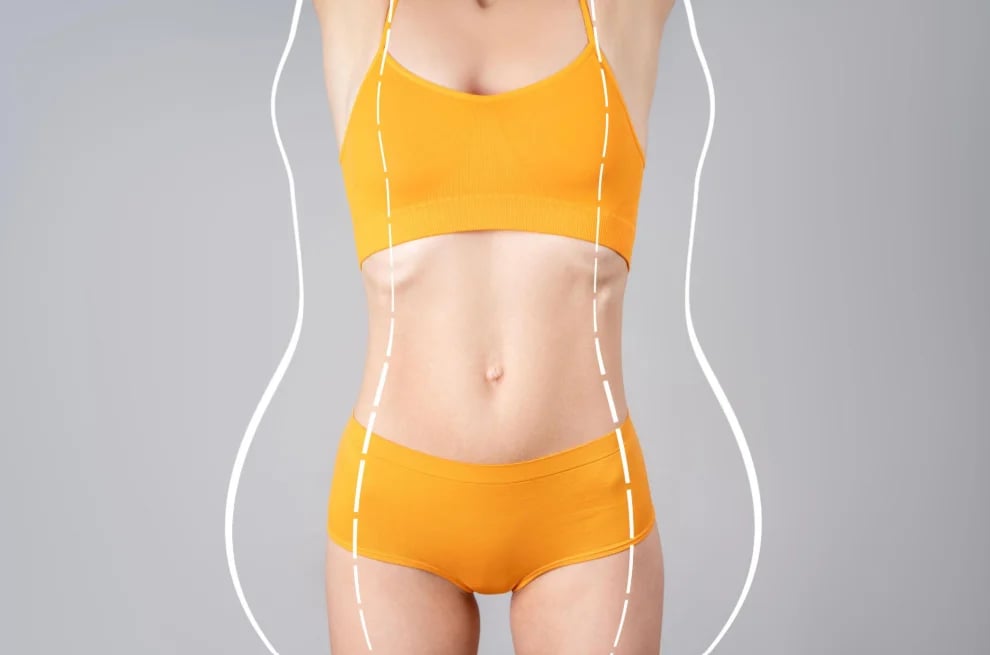
During the procedure, a thin cannula is used to break up and suction out excess fat cells through small incisions that are barely visible once healed. Because it's a fat-removal procedure, Lipo 360 works best on people who are already close to their goal weight and have pockets of fat that haven't responded to diet and exercise. It is not a weight-loss procedure, and it isn't designed to treat loose or crepey skin - for that, the elasticity of your own skin has to do the work of retracting smoothly after the fat is removed.
Most patients describe the recovery as more manageable than they expected. Swelling and some tightness are normal for the first couple of weeks, a compression garment is typically worn for several weeks to support the skin as it retracts, and most people return to desk work within a few days to a week.
What Is a Tummy Tuck?
A tummy tuck, or abdominoplasty, is a surgical procedure that removes excess skin from the abdomen and tightens the underlying muscles. Where liposuction only removes fat, a tummy tuck addresses two things liposuction cannot: skin laxity and diastasis recti, the separation of the abdominal muscles that commonly occurs during pregnancy or significant weight change.
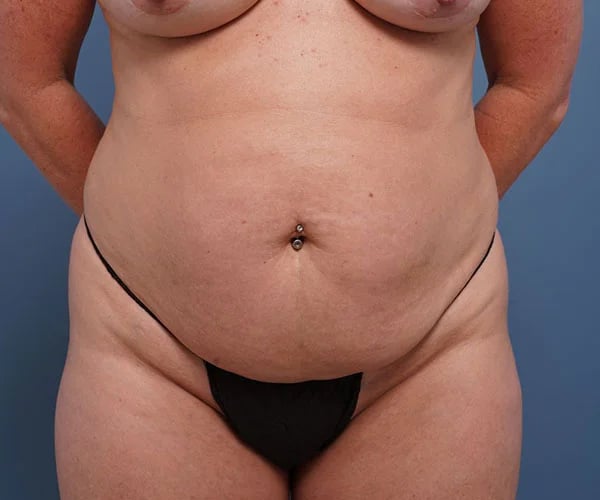
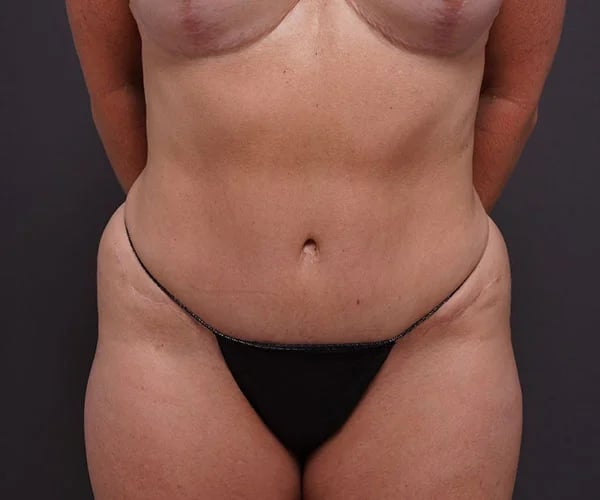
An actual patient of Dr. Bellamy, one year after a full tummy tuck. See the full case. Individual results may vary.
The procedure is performed through a horizontal incision low on the abdomen, typically placed so it can be concealed beneath most underwear and swimwear. In many cases, the belly button is also repositioned as part of the process. If muscle separation is present, the surgeon sutures the abdominal muscles back into their natural position, which is often what restores a flatter, firmer profile more than the skin removal alone.
Because it involves more extensive surgery and a longer incision than liposuction, recovery from a tummy tuck takes longer. Most patients need two to four weeks before returning to non-strenuous work, and several more weeks before resuming core-intensive exercise. The trade-off is a result that liposuction alone cannot achieve: tighter skin and a repaired muscle wall, not just less fat.
Lipo 360 vs. Tummy Tuck: Key Differences at a Glance
| Factor | Lipo 360 | Tummy Tuck |
|---|---|---|
| What it treats | Stubborn fat around the abdomen, flanks, and lower back | Excess skin and separated abdominal muscles |
| Best for | Good skin elasticity, fat that hasn't responded to diet and exercise | Loose skin, stretch marks, muscle separation from pregnancy or weight loss |
| Incisions | Small entry points, no significant scarring | One low horizontal incision, sometimes around the navel |
| Anesthesia | Local, twilight, or general depending on scope | General anesthesia |
| Typical recovery | 1-2 weeks before returning to normal activity | 2-4 weeks, with strenuous activity restricted longer |
| Muscle repair | Not addressed | Diastasis recti (muscle separation) can be corrected |
| Combinable with the other? | Yes, as part of a mommy makeover or combined body contouring plan | Yes, often paired with liposuction for a fuller result |
The table above captures the core distinction: Lipo 360 is a fat-removal procedure for people with good skin quality, while a tummy tuck is a skin-and-muscle procedure for people whose main concern isn't fat at all, but laxity and separation. Neither procedure is a substitute for the other - they're built to solve different problems, which is exactly why so many patients end up considering both.
Who Is a Good Candidate for Lipo 360?
You may be a strong candidate for Lipo 360 if:
- You're at or near your goal weight, with isolated pockets of fat that haven't responded to diet and exercise
- Your skin still has good elasticity and would be expected to retract smoothly after fat removal
- You want a more sculpted, proportional silhouette across the entire midsection, not just one area
- You don't have significant muscle separation or loose, hanging skin
- You're looking for a shorter recovery than a more invasive body contouring surgery would require
Lipo 360 is popular among patients who've maintained a stable weight through diet and exercise but still have stubborn fat that just won't move - a common and completely normal experience, since some fat deposits are more resistant to lifestyle changes than others, regardless of overall fitness.
Who Is a Good Candidate for a Tummy Tuck?
A tummy tuck tends to be the better fit if:
- You have loose or sagging abdominal skin, often following pregnancy, significant weight loss, or the natural effects of aging
- You notice a visible bulge or separation down the center of your abdomen (diastasis recti)
- You have stretch marks concentrated below the belly button, which are typically removed along with the excess skin
- Diet and exercise haven't changed the appearance of the loose skin, because skin laxity doesn't respond to those interventions the way fat does
- You're finished having children, since future pregnancies can affect the results of muscle repair
Many tummy tuck patients come to us after major weight loss or after having children, once they've reached a stable weight but are left with skin that no longer has the elasticity to retract on its own. In those cases, no amount of additional diet or exercise closes that gap - it's a structural issue that only surgery addresses.
Can You Combine Lipo 360 and a Tummy Tuck?
Yes, and for many patients, this combination produces the most complete result. Because Lipo 360 addresses fat and a tummy tuck addresses skin and muscle, pairing them allows a surgeon to sculpt the entire midsection while also tightening what liposuction alone would leave loose. This combined approach is especially common among patients who are also considering a mommy makeover, which typically combines abdominal contouring with breast and sometimes additional body procedures in a single surgical plan.
Some patients also pair Lipo 360 with a Brazilian Butt Lift, using fat harvested during liposuction to enhance the buttocks while contouring the midsection at the same time.
Combining procedures does mean a longer single recovery period compared to either procedure alone, but it also means one surgery and one recovery window instead of two separate ones spaced months apart. During your consultation, Dr. Bellamy will evaluate your skin quality, muscle tone, and goals to determine whether a combined approach makes sense for your anatomy, or whether a staged approach is safer given your health history.
Recovery Timeline Comparison
Recovery is often the deciding factor for patients weighing these two procedures, especially those balancing surgery with work and family commitments. Here's a general comparison, though your own timeline will depend on the extent of your procedure and your body's individual healing:
| Milestone | Lipo 360 | Tummy Tuck |
|---|---|---|
| Compression garment | 2-4 weeks | 4-6 weeks |
| Back to desk work | 3-5 days | 2-3 weeks |
| Light exercise | 2 weeks | 4-6 weeks |
| Full exercise, including core work | 4-6 weeks | 8-12 weeks |
| Final results visible | 3-6 months, once swelling resolves | 6-12 months, as scars mature |
These timelines are general guidelines, not guarantees - healing varies from patient to patient, and combining procedures typically extends the recovery window compared to either surgery performed alone. Dr. Bellamy will walk through a personalized recovery plan during your consultation based on your specific procedure and health history.
How Much Weight Can You Realistically Lose With Lipo 360?
This is one of the most common questions we hear, and it's worth addressing directly: Lipo 360 is a body contouring procedure, not a weight-loss procedure. Most patients see a noticeable change in clothing size and silhouette rather than a dramatic shift on the scale, and it's worth understanding realistic Lipo 360 weight-loss expectations before your consultation. It's designed to remove stubborn, isolated fat deposits that haven't responded to diet and exercise, not to replace a healthy lifestyle as a means of significant weight reduction.
What Causes Stubborn Fat That Diet and Exercise Can't Fix?
It's a common source of frustration: you've lost weight, you exercise regularly, and there's still a stubborn pocket of fat around the flanks or lower abdomen that simply won't budge. This isn't a failure of willpower. Genetics play a significant role in where the body stores and releases fat, and certain areas - particularly the abdomen, flanks, and lower back in both men and women - tend to hold onto fat cells more stubbornly than others, regardless of overall fitness level. Hormonal changes, pregnancy, and aging can also shift how and where fat is distributed, sometimes creating deposits that weren't there in your twenties even if your weight hasn't changed.
This is precisely the gap Lipo 360 is designed to close. It doesn't replace diet and exercise, and patients who maintain a healthy lifestyle after the procedure tend to see the longest-lasting results, but it directly removes the fat cells that lifestyle changes alone haven't been able to touch.
Preparing for Your Procedure
Once you and Dr. Bellamy have settled on Lipo 360, a tummy tuck, or a combined approach, preparation looks fairly similar across all three. You'll typically be asked to avoid smoking for several weeks before and after surgery, since nicotine significantly impairs healing and increases the risk of complications. Certain medications and supplements, including blood thinners and some anti-inflammatories, may need to be paused in the weeks leading up to surgery under your surgeon's guidance.
It's also worth arranging your recovery environment in advance. Most patients benefit from having someone available to help for the first few days, stocking up on loose, comfortable clothing that won't press on the treated areas, and preparing meals ahead of time so cooking isn't a concern during the first week. For tummy tuck patients specifically, setting up a place to sleep with your upper body slightly elevated can ease pressure on the abdomen during the early days of recovery.
Dr. Bellamy's team will walk you through a personalized pre-operative checklist during your consultation, tailored to your specific procedure and health history, so nothing is left to guesswork on the day of surgery.
Because a tummy tuck is a more involved surgical procedure, requiring general anesthesia, a longer operating time, and more extensive aftercare, it typically costs more than Lipo 360 alone. Combining the two procedures increases the total investment further, but often costs less than scheduling them as two entirely separate surgeries, since you're only paying for one anesthesia team, one operating room booking, and one recovery period rather than two.
A number of factors influence the final price for either procedure: the number of areas treated, whether the surgery is performed in an accredited surgical facility versus a hospital setting, the surgeon's experience and training, and the specific technique used. Some practices offer financing options to help make either procedure more accessible, and it's reasonable to ask about payment plans during your consultation.
The most accurate way to understand pricing for your specific situation is a consultation, where Dr. Bellamy can evaluate your anatomy and goals and provide a detailed, personalized quote. Because both procedures are considered cosmetic, they are generally not covered by insurance.
Why Patients Choose Dr. Bellamy for Body Contouring
Dr. Justin Bellamy is a board-certified plastic surgeon who first became drawn to the field while spending time with a pediatric craniofacial surgeon and the chief of plastic surgery at Yale-New Haven Hospital. He graduated cum laude from Yale University with a degree in Molecular Biophysics and Biochemistry, then completed his medical training at the Johns Hopkins School of Medicine before attending the number one ranked plastic surgery residency program in the country at NYU Langone. From there, he completed an advanced aesthetic fellowship at the number one ranked program at Dallas Plastic Surgery Institute, working alongside leading surgeons on the most current body contouring techniques. He has since published more than thirty peer-reviewed articles and book chapters in the field.
What sets his practice apart isn't only the training, it's the follow-through. Dr. Bellamy takes a direct, personalized approach with every patient, staying in communication from your first consultation through your final follow-up rather than handing patients off along the way. Transparency is also central to how he practices: he regularly shares real patient outcomes on Instagram and in our before-and-after photo gallery, so prospective patients can see actual results rather than only curated marketing photography.
Because Lipo 360 and tummy tuck results depend heavily on surgical technique and an accurate read of each patient's skin and muscle quality, choosing a surgeon with extensive, specific training in body contouring matters as much as the procedure itself. Outside the operating room, Dr. Bellamy is known for bringing the same attention to detail into hobbies like bread baking and espresso brewing - the kind of patience-driven precision that tends to carry over into how he approaches a surgical plan.
Ready to Discuss Your Options?
Whether Lipo 360, a tummy tuck, or a combination of both makes sense for you depends on your anatomy, your goals, and your health history - and the only way to know for certain is a one-on-one consultation. Dr. Bellamy and his team serve patients throughout Palm Beach Gardens, West Palm Beach, Jupiter, and Boca Raton, and are happy to walk you through a personalized recommendation.
Schedule your consultation today to find out which procedure - or combination of procedures - is the right fit for your body contouring goals.
Frequently Asked Questions
Is Lipo 360 or a tummy tuck more painful?
Most patients report that a tummy tuck involves more discomfort in the first several days, given the more extensive incision and muscle repair involved. Lipo 360 recovery tends to feel more like significant soreness than surgical pain. Both are manageable with prescribed medication and typically ease significantly within the first week or two.
Will insurance cover either procedure?
Generally, no. Both Lipo 360 and a tummy tuck are considered elective cosmetic procedures and are not covered by insurance, even when related to weight loss or pregnancy. In rare cases where a tummy tuck is combined with a medically necessary hernia repair, a portion of the surgery may be eligible for partial coverage - this is something to discuss directly with your surgeon and insurance provider.
How long do the results last?
Lipo 360 removes fat cells permanently from the treated areas, so results are long-lasting as long as your weight remains relatively stable. A tummy tuck's results are also considered long-term, though the effects of aging and any future pregnancies can affect the abdominal profile over time. Maintaining a stable weight and a healthy lifestyle helps preserve results from either procedure.
Can I get Lipo 360 after a tummy tuck, or a tummy tuck after Lipo 360?
Yes, though timing matters. If you've had Lipo 360 and later develop loose skin or notice muscle separation, a tummy tuck can still address those concerns afterward. If you've had a tummy tuck first, additional liposuction can often be performed later to refine the surrounding areas, though your surgeon will evaluate your healed tissue and scarring before recommending a timeline.
What's the difference between Lipo 360 and a mommy makeover?
Lipo 360 is a single procedure focused on fat removal around the midsection. A mommy makeover is a broader, customized combination of procedures - often including a tummy tuck, breast surgery, and sometimes liposuction - designed to address multiple changes that commonly occur after pregnancy. Lipo 360 can be one component of a mommy makeover, but the two terms aren't interchangeable.
Is there an age limit for either procedure?
There's no strict age cutoff for either Lipo 360 or a tummy tuck. Candidacy depends more on overall health, skin quality, and realistic expectations than on age alone. That said, older patients may want to discuss skin elasticity specifically during their consultation, since it plays a larger role in Lipo 360 results than it does in a tummy tuck, which directly addresses excess skin regardless of elasticity.
Will I have visible scarring?
Lipo 360 incisions are small, typically just a few millimeters, and fade significantly over time, often becoming difficult to notice at all. A tummy tuck leaves a longer incision, usually placed low on the abdomen so it can be hidden beneath underwear or swimwear. Scar appearance varies by individual healing, but most patients find it a reasonable trade-off for the results, and proper aftercare can help scars fade further over the following months.
How do I know which procedure is right for me?
The most reliable way to know is a consultation. Photos and general guidelines are a useful starting point, but skin elasticity, muscle tone, and your specific goals all factor into the right recommendation, and those are things a surgeon needs to assess in person. Dr. Bellamy evaluates each patient individually rather than applying a one-size-fits-all approach.
Compare Lipo 360 and Tummy Tuck With Dr. Bellamy
If you are weighing Lipo 360 against a tummy tuck, schedule your consultation at Bellamy Plastic Surgery to find out which one your anatomy actually calls for. Call (561) 705-0044 or complete our online contact form.