
- Gender
- Female
Description
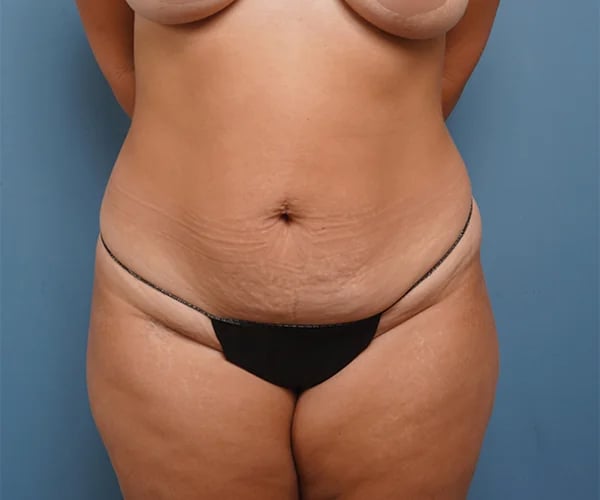
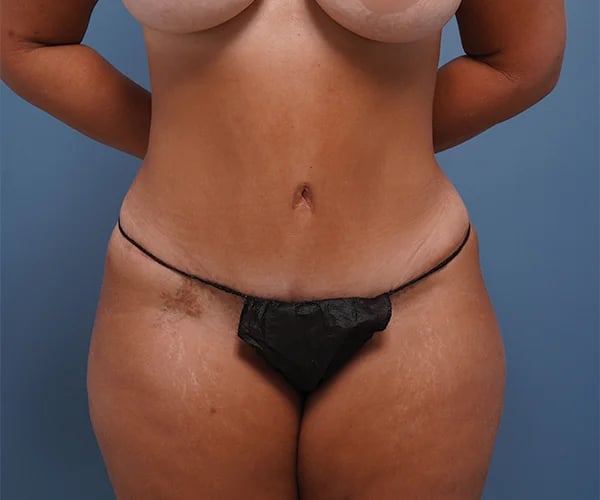
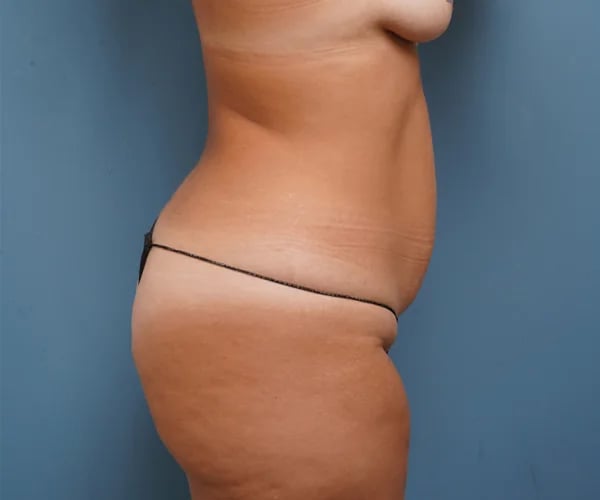
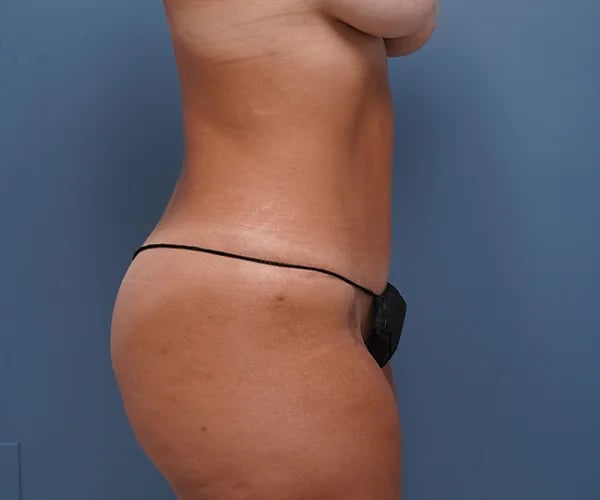
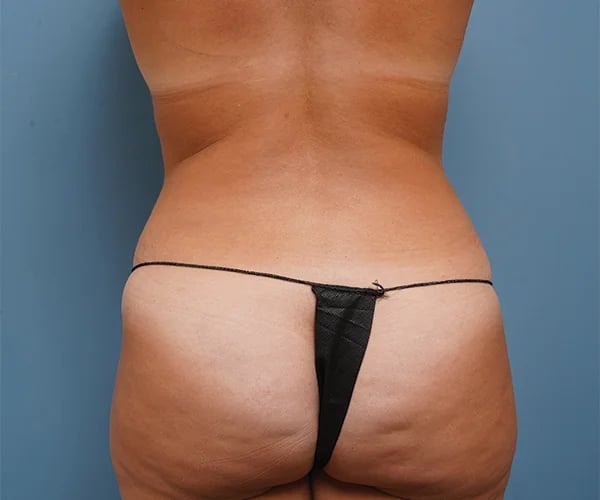
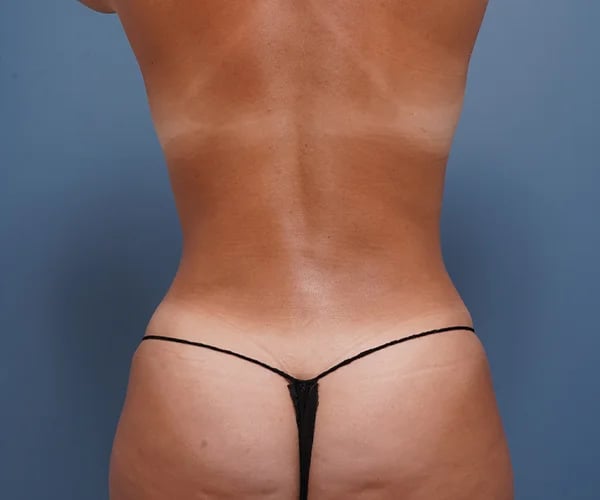
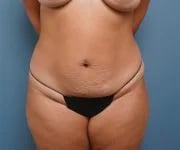
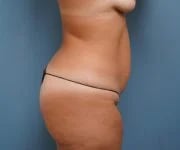
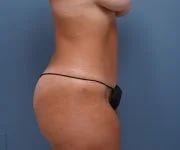
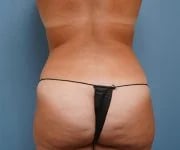
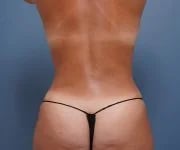
35 year-old female patient with prior of 2 pregnancies and a C-section underwent tummy tuck, lipo 360, and breast augmentation (375cc silicone, submuscular).
She is shown here at 6 months post-op.
Why this combination
This patient is a 35-year-old woman who had two pregnancies and a C-section before surgery. Her operation combined three procedures: a tummy tuck, Lipo 360 and a breast augmentation with 375 cc silicone implants placed under the muscle. The photos were taken six months after surgery.
That mix is common after pregnancy, and it targets three separate changes. Pregnancy stretches the abdominal wall and skin, which a tummy tuck is designed to address. Stubborn fat around the waist and back that persists after childbirth is what Lipo 360 treats. And breast volume and shape often shift after pregnancy and breastfeeding, which is where a breast augmentation comes in. Doing them together is what many patients think of as a mommy makeover.
What the C-section history adds
A prior C-section leaves a scar low across the abdomen, and that matters for planning. A tummy tuck incision sits in a similar low position, so the two scars are often worked together instead of adding a completely separate line. Surgeons also account for scar tissue in the area when they tighten the abdominal wall and reposition the skin.
What six months tells you
The timing is useful. Six months after a combined procedure, most swelling has settled and the contour is close to its final form, though scars are still maturing and will keep fading for a year or more. If you're using the photos to judge your own expectations, this is a fair point to compare against, since photos taken a few weeks after surgery still show swelling.
Reading the photos
When you look at this set, a few points are worth checking:
- The waist. Notice the line from the ribs to the hips and how the waist defines itself from the front and side.
- The abdomen. Look at how flat or smooth the lower abdomen is and how it meets the hips.
- Scar position. Look for where the low scar sits and how it has healed.
- The breasts. Compare the shape and fullness of the upper breast with how they sit on the frame.
- Proportion. Check that the changes look balanced with each other, not just individually.
Submuscular placement
The description notes that the implants were placed submuscular, meaning beneath the chest muscle. It is one of several placement options, and the choice depends on your tissue, your anatomy and the look you want. Submuscular placement gives the implant additional coverage at the top, which some patients prefer for a more natural upper slope. The decision, and the trade-offs for you, are worth discussing at a consultation.
Every patient is different
This is one patient's result. Skin, tissue, healing and starting point vary, so a similar plan can produce a different outcome. To see how a combination like this could look on you, the best step is an in-person conversation. A wider range of tummy tuck before and after results is worth comparing, and you can talk to the practice or call (561) 705-0044 about your own goals.
Frequently Asked Questions
What procedures did this patient have?
A tummy tuck, Lipo 360 and a breast augmentation with 375 cc silicone implants placed under the muscle. She was 35, with two prior pregnancies and a C-section, and the photos were taken six months after surgery.
Can you have a tummy tuck after a C-section?
Yes. Many tummy tuck patients have had C-sections. The tummy tuck scar sits low on the abdomen, and your surgeon plans around the existing scar and scar tissue.
Can a tummy tuck, Lipo 360 and breast augmentation be done together?
Often yes, as part of a mommy makeover, which combines them in one surgery with one recovery. Whether it's safe to combine depends on your health and goals, and Dr. Bellamy will advise you.
How long after surgery are results final?
Swelling has mostly settled by about six months, and the contour is close to final, though scars keep fading for a year or more.