

A loose, sagging neck is one of the most common reasons patients in Palm Beach seek out facial plastic surgery, and it is also one of the most frequently misunderstood. Many patients spend years trying creams, exercises, and non-surgical devices before realizing that a genuinely loose neck, once skin and muscle have lost their structural support, will not respond to anything short of surgery. This guide covers everything patients need to know about neck lift surgery in Palm Beach with Dr. Justin Bellamy, from what actually causes neck aging to cost, technique, recovery, and how to decide whether a neck lift alone is enough or whether it should be combined with a facelift.
Why the Neck Ages the Way It Does
The neck is one of the first areas of the face and upper body to show visible signs of aging, often years before the rest of the face develops comparable changes. This happens for a few specific anatomical reasons. The skin of the neck is thinner than facial skin and contains fewer oil glands, making it more prone to losing elasticity and developing visible laxity earlier than the cheeks or forehead. The platysma muscle, a thin sheet of muscle running from the jawline down to the collarbone, also plays a central role, since this muscle can separate down the middle with age, creating the vertical "bands" many patients notice running down the front of the neck, sometimes referred to as turkey neck.
Fat distribution changes with age as well, with some patients developing submental fullness, commonly known as a double chin, while others lose volume in ways that make the underlying muscle bands even more visible. Genetics play a significant role in determining how a given patient's neck will age, which is part of why two people of the same age and similar overall fitness level can have dramatically different neck appearances.
Signs You May Be a Candidate for a Neck Lift
Patients considering a neck lift typically notice one or more specific concerns. Loose, hanging skin beneath the chin and along the jawline that has lost its ability to spring back is one of the most common complaints. Visible vertical bands running down the center of the neck, caused by the separated platysma muscle, are another frequent concern, often becoming more pronounced when a patient tilts their head down or flexes the muscles in their neck and jaw. A loss of definition between the jawline and neck, sometimes described as a lack of a clear jawline contour, and stubborn submental fat that has not responded to diet or exercise are also common reasons patients seek out this procedure.
Dr. Bellamy evaluates each patient's specific combination of these concerns during a consultation, since the right surgical approach depends heavily on which of these factors, skin laxity, muscle banding, or fat, is contributing most significantly to a given patient's neck appearance.
What a Neck Lift Actually Involves
A neck lift is a surgical procedure designed to address loose skin, muscle banding, and excess fat in the neck and under the chin. Unlike non-surgical treatments, which can offer modest, temporary improvement at best, a neck lift directly addresses the underlying structural causes of neck aging, removing excess skin, tightening the platysma muscle, and, when appropriate, removing or repositioning fat to restore a more defined, youthful neck and jawline contour.
Dr. Bellamy's approach typically involves a combination of the following elements, tailored to each patient's specific anatomy:
Platysmaplasty (Muscle Tightening)
For patients with visible vertical banding, Dr. Bellamy addresses the underlying platysma muscle directly, suturing the separated edges of the muscle back together along the midline of the neck. This step, known as platysmaplasty, is often the single most important part of achieving a smooth, youthful neck contour for patients whose primary concern is muscle banding rather than skin laxity alone, since removing skin without addressing the underlying muscle separation would not resolve the visible bands.
Skin Excision and Redraping
For patients with loose, excess skin, Dr. Bellamy removes the excess tissue and redrapes the remaining skin over the newly tightened muscle and underlying structure, creating a smoother, more contoured appearance. The specific amount of skin removed and the incision pattern used depend on the extent of laxity present and whether the neck lift is being performed alone or in combination with a facelift.
Submental Liposuction
For patients dealing with excess fat beneath the chin, Dr. Bellamy can incorporate liposuction to remove this fat directly, refining the transition between the chin, jawline, and neck. This is frequently combined with muscle tightening and skin excision within the same procedure for patients whose neck concerns involve a combination of fat, muscle, and skin laxity.
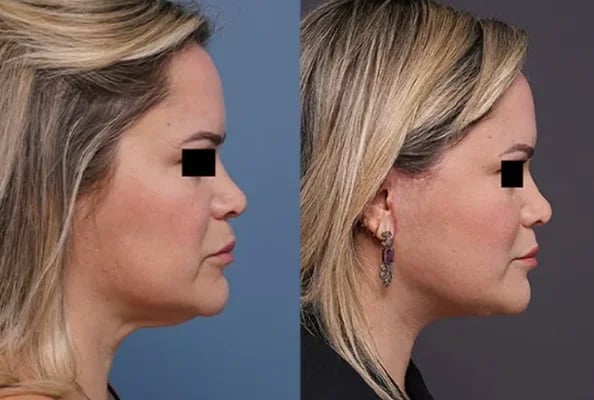
Neck Lift Alone vs. Combined With a Facelift
One of the most important decisions in planning a neck lift is determining whether the procedure should be performed on its own or combined with a facelift. This decision depends on where a patient's aging is concentrated.
Patients whose aging is largely confined to the neck, with relatively minimal sagging in the mid and lower face, are often excellent candidates for an isolated neck lift, since addressing the neck alone can produce a significant, satisfying improvement without the additional time and recovery associated with a full facelift. Patients with more advanced aging affecting both the neck and the face, including jowling, deepening nasolabial folds, and midface descent, typically achieve a more harmonious, complete result by combining a neck lift with a facelift during the same surgical session, since treating the neck in isolation on a face that is also visibly aging can sometimes create a mismatch between a rejuvenated neck and an aging face.
Dr. Bellamy's practice offers detailed information on the different types of facelifts available, including how a neck lift fits alongside these techniques, and his evaluation during the consultation determines which approach best serves each patient's specific pattern of aging.
Dr. Bellamy's Approach and Differentiators
Dr. Bellamy's approach to neck lift surgery reflects the same training and philosophy that defines his broader facial plastic surgery practice.
Deep Plane Technique Applied to the Neck
For patients combining a neck lift with a facelift, Dr. Bellamy frequently applies deep plane technique principles to the neck as well as the face, addressing the deeper supportive structures rather than relying on skin tension alone to create the lifted appearance. This approach is associated with more natural, longer-lasting results than older techniques that rely primarily on pulling and tightening the skin.
Academic Training
Dr. Bellamy graduated cum laude from Yale University with a degree in Molecular Biophysics and Biochemistry, completed his medical training at Johns Hopkins School of Medicine, and trained at the NYU Langone Plastic Surgery Residency program, widely regarded as the top plastic surgery residency program in the country. He then completed an advanced aesthetic fellowship at the Dallas Plastic Surgery Institute, where he further developed his expertise in modern facial and neck rejuvenation techniques. Patients can review his complete training background on the practice's about page.
Awake Surgery Option
For appropriately selected patients, Dr. Bellamy offers neck lift procedures, particularly when combined with an awake deep plane facelift, performed under local anesthesia with sedation rather than general anesthesia. This approach can reduce some of the risks and recovery considerations associated with general anesthesia. The practice's page on awake surgery explains this option in more detail.
Individualized Surgical Planning
Rather than applying a standardized approach to every patient, Dr. Bellamy evaluates each patient's specific combination of skin laxity, muscle banding, and fat to determine exactly which elements, platysmaplasty, skin excision, liposuction, or some combination, are needed to achieve the best possible result for that individual's anatomy.
Neck Lift Cost in Palm Beach
Cost is one of the most common questions patients have before scheduling a consultation. In the Palm Beach market, neck lift pricing varies considerably depending on the extent of the procedure and whether it is performed alone or combined with a facelift or other procedures.
What Determines the Final Price
An isolated neck lift, addressing only the neck without any facial component, generally costs less than a combined neck lift and facelift procedure, since the combined approach involves more surgical time and complexity. Within an isolated neck lift, the specific combination of platysmaplasty, skin excision, and liposuction needed also affects the final surgical fee, since a more comprehensive procedure addressing all three elements takes longer than a more limited procedure addressing only one or two.
Anesthesia fees vary depending on whether the procedure is performed under general anesthesia or, for appropriately selected patients, using an awake technique with local anesthesia and sedation. Facility fees cover the accredited surgical suite, equipment, and support staff. Dr. Bellamy's practice has a dedicated post discussing how much a neck lift costs in Palm Beach, which provides additional detail on the specific factors that influence pricing for this procedure.
Why Only a Consultation Provides an Accurate Quote
Because the right combination of techniques varies so much from patient to patient, and because many patients choose to combine their neck lift with a facelift or other procedures, an accurate cost estimate can only be provided after Dr. Bellamy evaluates a patient's specific neck and facial anatomy during a consultation. Online cost ranges should be treated as a general planning benchmark rather than a firm number.
Financing Options
Because a neck lift is considered an elective cosmetic procedure, it is not covered by health insurance. Most practices, including Dr. Bellamy's, offer financing through third-party providers, allowing patients to spread the cost of surgery over monthly payments. Patients are encouraged to ask about financing directly during their consultation.
What Happens During a Neck Lift Consultation
During a consultation, Dr. Bellamy examines the specific characteristics of a patient's neck, including skin elasticity, the degree of platysma muscle separation, and the amount and location of any excess fat. He also evaluates how the neck relates to the rest of the facial profile, since this informs whether a neck lift alone will achieve a patient's goals or whether combining it with a facelift or other procedure would produce a more complete, harmonious result.

Patients are encouraged to describe their specific concerns clearly, whether that is the visible bands running down the neck, a general loss of jawline definition, or persistent fullness beneath the chin, since this level of detail helps Dr. Bellamy tailor the surgical plan to the patient's actual priorities rather than a generic approach to neck rejuvenation.
The Neck Lift Procedure Itself
A neck lift is typically performed under general anesthesia or, for appropriately selected patients combining the procedure with an awake facelift, under local anesthesia with sedation. The procedure generally takes one and a half to three hours when performed alone, or longer when combined with a facelift, depending on the specific combination of techniques used.
Incisions for a neck lift are typically placed behind the ears and, when platysmaplasty is needed, a small incision beneath the chin. Dr. Bellamy addresses the platysma muscle first when muscle banding is present, suturing the separated edges together to create a smooth, tightened muscular foundation. Excess fat is then removed or repositioned as needed, and excess skin is trimmed and redraped over the newly tightened underlying structure before the incisions are closed.
Neck Lift Recovery Timeline
Recovery from a neck lift generally follows a predictable pattern, though the specific timeline varies depending on whether the procedure was performed alone or combined with a facelift. In the first few days, swelling and bruising are most pronounced, and patients typically wear a compression garment around the neck and jaw to help manage swelling and support the healing tissue. Most patients experience the peak of their discomfort during this initial period, well managed with prescribed pain medication.
By the end of the first week to ten days, the majority of the most significant swelling and bruising has begun to improve, and many patients feel comfortable in more private social settings. Most patients return to work within one to two weeks, depending on the specific extent of their procedure and how visible any residual swelling remains. By four to six weeks, most of the visible swelling has resolved, and patients begin to see a much clearer picture of their final results, though subtle refinement continues for several months as any deeper swelling fully resolves.
Setting Realistic Expectations for Neck Lift Results
A well-performed neck lift should restore a smooth, well-defined neck and jawline contour that looks proportionate to the rest of a patient's face, rather than an artificially tight or overly dramatic change. Patients with visible platysma banding should expect this specific concern to be directly addressed through platysmaplasty, since skin removal alone would not resolve muscle separation. Patients whose primary concern was submental fat should see a clearer, more defined transition between the chin and neck once that fat has been addressed.
Reviewing Dr. Bellamy's before-and-after photo gallery for facelift and neck lift results and the practice's testimonials can help patients calibrate realistic expectations before committing to surgery, since these resources show a range of results across different starting anatomy and degrees of neck aging.
How Long Do Neck Lift Results Last
Because a neck lift addresses the underlying structural causes of neck aging, including muscle separation and excess skin, rather than simply masking the appearance temporarily, results are generally long-lasting, often maintaining a significant improvement for a decade or more. Natural aging does continue after surgery, and some patients choose to incorporate non-surgical maintenance treatments in the years following their neck lift to address more subtle changes as they emerge, though a second neck lift is not typically needed for many years, if ever, for most patients.
Maintaining a stable body weight following surgery is one of the most important factors in preserving neck lift results over time, since significant weight fluctuation can affect the skin and fat distribution in the treated area regardless of how well the original surgery was performed.
Combining a Neck Lift With Other Procedures
Beyond a facelift, patients sometimes combine their neck lift with other procedures addressing related areas of concern. A chin implant is a common addition for patients whose neck appearance is affected by an underprojected chin, since improving chin projection can enhance the overall balance between the chin, jawline, and neck. Some patients also combine chin liposuction with their neck lift for a more comprehensive refinement of the submental area, or facial fat grafting if they are also addressing volume loss elsewhere in the face.
Dr. Bellamy evaluates each patient's full facial and neck profile during the consultation, rather than considering the neck in isolation, since a truly balanced, harmonious result often depends on how the chin, jawline, and neck relate to one another.
Non-Surgical Alternatives to Consider First
Patients with early, mild signs of neck aging sometimes explore non-surgical options before considering surgery. Neuromodulators can be used off-label in some cases to soften the appearance of platysma bands temporarily, and dermal fillers can address certain volume-related concerns in the lower face that indirectly affect the appearance of the neck. However, these treatments cannot remove excess skin or permanently repair a separated platysma muscle, meaning patients with genuine skin laxity or muscle banding will not achieve a comparable result to surgery through non-surgical treatments alone.
Dr. Bellamy's non-surgical rejuvenation offerings can serve as a reasonable starting point for patients with very early concerns, or as a complementary maintenance strategy following surgery, but he is direct with patients about when their specific concerns genuinely require a surgical solution rather than continuing to pursue non-surgical options that are unlikely to achieve their desired result.
Risks and Safety Considerations
As with any surgical procedure, a neck lift carries risks that should be discussed thoroughly during the consultation, including the general risks of bleeding, infection, and scarring, as well as procedure-specific risks such as temporary or, rarely, more lasting changes in sensation, asymmetry, and irregularities in contour during healing. The platysmaplasty portion of the procedure requires careful attention to the nearby nerves that control lower lip and chin movement, making surgeon experience with this specific technique an important safety consideration.
Choosing a board-certified plastic surgeon with specific training and experience in neck lift and platysmaplasty technique, operating in an accredited surgical facility, is one of the most important steps a patient can take to minimize these risks.
How to Choose the Right Surgeon for Your Neck Lift
Given how much individual technique and skill affect neck lift outcomes, patients evaluating their options in Palm Beach should ask any surgeon they are considering about their specific experience with platysmaplasty and neck lift procedures, request to see a substantial before-and-after gallery specifically for this procedure, and confirm board certification through the American Board of Plastic Surgery. It is also worth asking directly whether a surgeon typically recommends combining a neck lift with a facelift and understanding the reasoning behind that recommendation for your specific anatomy.
Dr. Bellamy's combination of top-tier academic and surgical training, specific experience with deep plane technique applied to both the face and neck, and individualized approach to surgical planning reflects the kind of background patients should look for when evaluating any surgeon for this procedure.
Understanding the Different Types of Neck Lift Incisions
The specific incision pattern Dr. Bellamy uses for a given neck lift depends on the particular combination of concerns being addressed. A more limited procedure focused primarily on submental fat and mild platysma banding may only require a small incision hidden beneath the chin, sometimes combined with a short incision behind each ear. A more comprehensive neck lift, particularly one addressing significant skin laxity, typically involves a longer incision extending from behind the ear down into the hairline at the back of the neck, allowing for more substantial skin removal and redraping.
Dr. Bellamy plans incision placement carefully to keep scars hidden within natural creases and the hairline as much as possible, and he discusses the specific incision pattern anticipated for a given patient's procedure during the consultation, so patients understand exactly what to expect before surgery.
The Role of the Digastric Muscle in More Advanced Neck Lift Techniques
For patients with more significant neck aging, particularly those seeking a highly defined, sharp jawline and neck angle, Dr. Bellamy may address deeper structures beyond the platysma muscle alone, including the digastric muscle and, in some cases, the submandibular gland, both of which can contribute to fullness beneath the jawline if enlarged or positioned prominently. Addressing these deeper structures requires more advanced surgical technique and carries additional considerations, since both structures sit close to important nerves and blood vessels in the neck.
This more advanced approach is not necessary or appropriate for every patient, and Dr. Bellamy evaluates whether a given patient's specific anatomy would benefit from this additional level of refinement during the consultation, rather than applying it as a standard part of every neck lift regardless of individual need.
What to Expect on the Day of Surgery
On the day of your neck lift, you will arrive at the accredited surgical facility, where the surgical team will confirm your procedure details and prepare you for anesthesia, whether general anesthesia or the awake local anesthesia with sedation approach for appropriately selected patients. Dr. Bellamy will typically mark the planned incision lines and confirm the surgical plan with you one final time before the procedure begins.
The procedure itself, as described earlier, generally takes one and a half to three hours when performed alone. Afterward, you will be moved to a recovery area where you will be monitored as anesthesia wears off, and a compression garment will be placed around your neck and jaw before you are discharged home, typically the same day, with a friend or family member responsible for driving you home.
How Age and Skin Elasticity Affect Neck Lift Planning
A patient's age and specific skin elasticity meaningfully affect neck lift planning and expected outcomes. Younger patients, often in their forties and early fifties, frequently have milder concerns, such as early platysma banding or mild submental fullness, with skin that still retains good elasticity, allowing for a more limited procedure with a smoother, more predictable redraping result. Older patients, or those with more significantly compromised skin elasticity due to sun damage or other factors, often require a more extensive skin excision to achieve a comparably smooth result, since less elastic skin will not redrape as tightly over the newly tightened underlying structures.
Dr. Bellamy's evaluation of skin quality during the consultation, alongside the specific pattern of muscle and fat concerns present, together determine the most appropriate surgical approach for each individual patient, rather than a single standardized technique applied regardless of these meaningful anatomical differences.
Male Neck Lift Considerations
Men considering a neck lift in Palm Beach have some specific anatomical considerations worth understanding. Beard growth patterns can affect incision planning, since Dr. Bellamy aims to keep incisions in locations that remain concealed even as facial hair grows in differently across the treated area. Men also tend to have thicker, less elastic skin than women on average, which can affect both surgical planning and the expected recovery timeline. Additionally, some men specifically want to preserve a more masculine, defined jawline angle rather than an overly softened or feminized contour, a preference Dr. Bellamy discusses directly during male patient consultations to ensure the surgical plan reflects the patient's specific aesthetic goals.
Taking the Next Step
If you are considering a neck lift in Palm Beach and want a personalized evaluation of your specific neck and facial anatomy, along with an accurate cost estimate, request a consultation with Dr. Bellamy's office today.
Frequently Asked Questions
How much does a neck lift cost in Palm Beach?
Cost depends on the specific combination of techniques needed, including whether platysmaplasty, skin excision, and liposuction are all required, and whether the neck lift is combined with a facelift. An accurate quote requires a personal consultation.
Can a neck lift be performed without a facelift?
Yes. Patients whose aging is concentrated in the neck, with relatively minimal sagging in the face, are often excellent candidates for an isolated neck lift without a facelift.
What causes the vertical bands that appear in the neck with age?
These bands result from separation of the platysma muscle, a thin muscle running down the front of the neck. This muscle separation is corrected surgically through a technique called platysmaplasty, which sutures the separated muscle edges back together.
How long does neck lift recovery take?
Most patients see significant improvement in swelling and bruising within one to two weeks and return to work during this window, with more complete results becoming apparent over four to six weeks as residual swelling resolves.
Will non-surgical treatments fix a loose or banded neck?
No. Non-surgical treatments can address some early, mild concerns, but they cannot remove excess skin or permanently repair a separated platysma muscle, meaning patients with genuine skin laxity or muscle banding require surgery for a comparable result.
How long do neck lift results last?
Because a neck lift addresses the underlying structural causes of neck aging, results are generally long-lasting, often maintaining significant improvement for a decade or more, provided a patient maintains a stable body weight afterward.
Is a neck lift covered by insurance?
No. A neck lift is considered an elective cosmetic procedure and is not covered by health insurance. Financing options are typically available for patients who want to spread the cost over time.
Schedule Your Palm Beach Neck Lift Consultation Today
If loose neck skin or banding is bothering you, schedule your neck lift consultation at Bellamy Plastic Surgery. Call (561) 705-0044 or complete our online contact form.