




- Gender
- Female
Description
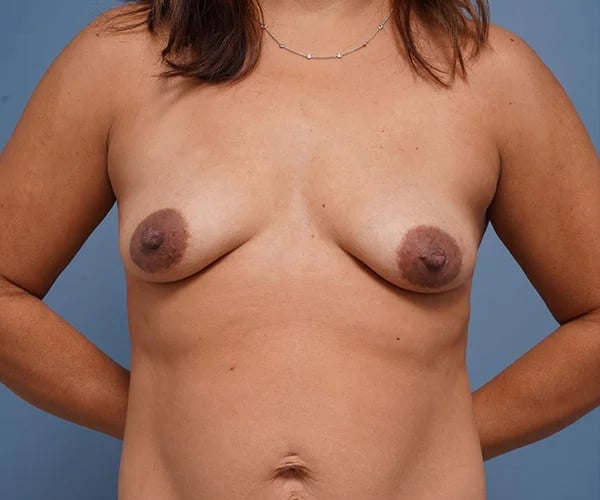
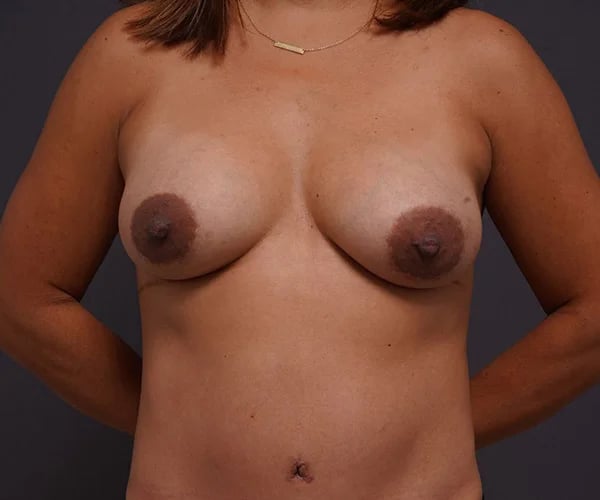
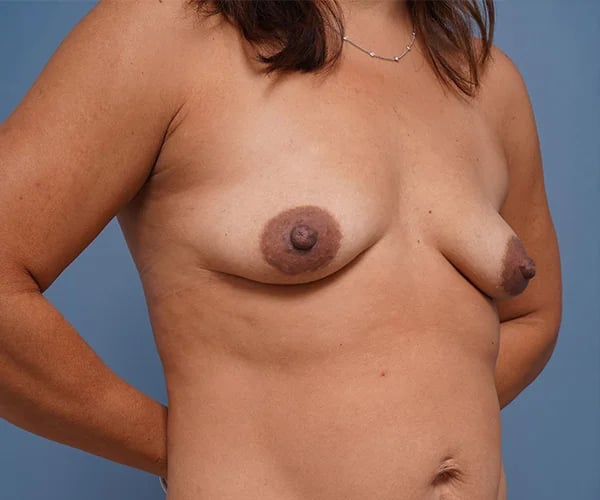
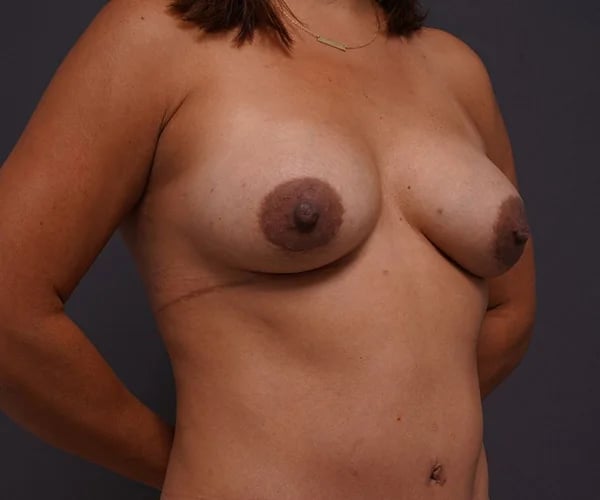
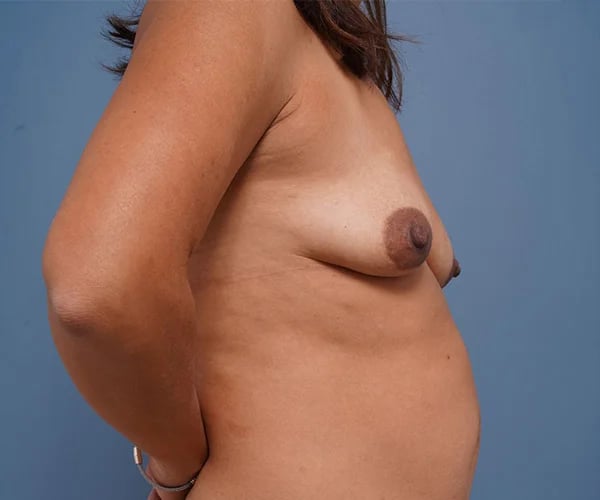
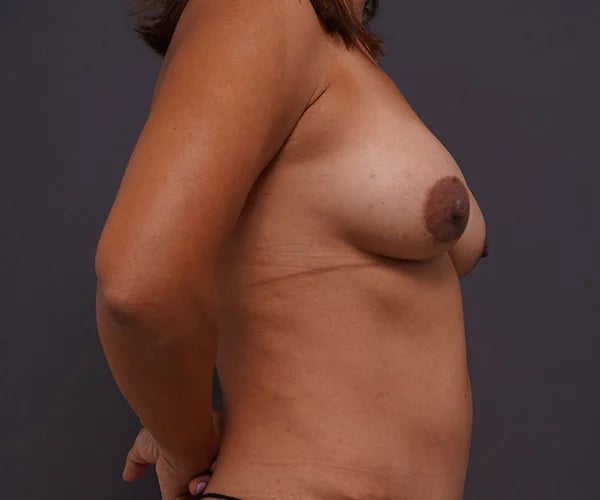
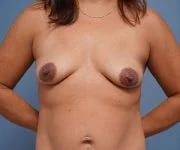
This patient is 5 months post-op breast augmentation.
Five months is far enough out that implants have dropped and settled into their final position, which is also when the surrounding breast tissue has relaxed enough to show how the implant will actually sit long-term rather than how it looked in the first weeks after surgery. Early on, implants typically sit a bit higher on the chest wall because the muscle and tissue around them are still tight from surgery. As that tightness eases over the following months, the implant gradually settles into a more natural position and the upper contour of the breast softens from a more rounded early shape into something that reads as more natural. Swelling at the five-month mark is minimal, so what's visible here is close to the final result rather than a transitional stage, though very subtle softening can continue for another month or two in some patients depending on tissue thickness and how much the skin needs to stretch to accommodate the implant.
Implant size, profile, and placement, whether above or below the chest muscle, are matched to a patient's existing chest wall width, tissue thickness, and breast base diameter rather than chosen from a fixed size chart or a cup size requested in isolation. Two patients who ask for a similar look can reasonably end up with different implant recommendations once their anatomy is actually measured, since the same implant volume can look noticeably different depending on how wide the chest is and how much natural tissue is already there to cover it. This is part of why results vary across patients even when implant sizes are similar on paper, and it's also why the planning conversation usually spends more time on anatomy than on a specific number. Placement above or below the muscle changes the timeline slightly too: submuscular implants tend to take a little longer to settle into their final position than implants placed above the muscle, since muscle tension plays a bigger role in how the breast looks in the early weeks. None of this is unique to this patient, but it's useful context for comparing one case in this gallery to another, since two post-op photos taken at the same time interval can still represent different stages of settling depending on where the implant sits. More background on how implant type and placement are typically discussed during a consultation is on the breast augmentation page.
Frequently Asked Questions
When do breast implants fully drop and settle?
Most patients see the majority of settling within 3 to 4 months after surgery, though it can take up to 6 months for implants to reach their final position, particularly with larger implants, submuscular placement, or thicker, tighter breast tissue to begin with.
Will my results look like this patient's?
Implant size, placement, and how the result settles over time depend on a patient's existing chest wall dimensions and tissue characteristics, so outcomes vary from patient to patient even with the same implant choice.
Is breast augmentation recovery still ongoing at 5 months?
No. Active recovery, including restrictions on exercise and heavy lifting, is typically complete well before this point, usually within 4 to 6 weeks. Fine changes in softness and position can continue beyond that, but the result at 5 months is generally considered stable.
How is implant size decided?
Implant size and placement are chosen based on chest wall width, existing breast tissue and skin elasticity, and the patient's stated goals, assessed in person during a consultation rather than from a standard size chart.