

Almost every patient considering a Brazilian Butt Lift in Palm Beach asks some version of the same question the moment they learn liposuction is part of the procedure: if you're already removing fat from my waist, back, or thighs, can't you just put that same fat into my backside? It's an intuitive question, and the intuition is largely correct, this is, in fact, exactly how a BBL works. But the specific mechanics of how fat gets from one part of your body to another, what survives the trip and what doesn't, and how Lipo 360 specifically factors into the equation, deserve a more precise answer than "yes, we recycle your fat." Here's what actually happens, stage by stage.
Stage One: Where the Fat Starts
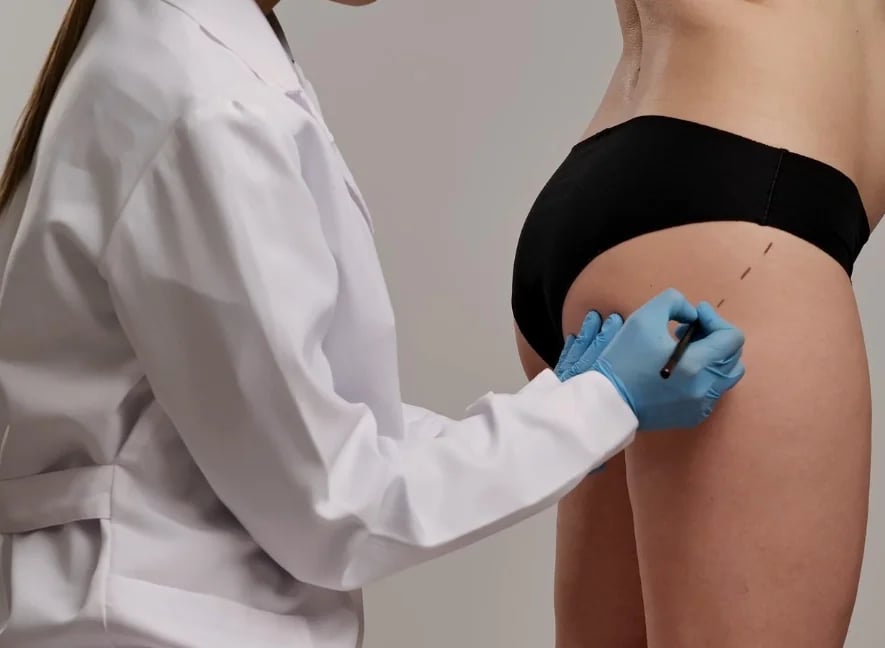
Before any of this can happen, you need to have enough donor fat to work with, and this is where Lipo 360 enters the picture as more than just a complementary procedure, it's often the actual source material for the BBL itself. Lipo 360 targets fat circumferentially around the midsection: the abdomen, flanks, lower back, and sometimes the upper back, precisely the areas that tend to hold stubborn, diet-and-exercise-resistant fat and, not coincidentally, precisely the areas surgeons prefer to harvest from for fat grafting, since fat from these regions tends to graft reliably and the resulting contour improvement in the donor area is itself a desirable outcome, not just a byproduct.
This is why so many Palm Beach patients specifically request Lipo 360 combined with BBL rather than a narrower, single-area liposuction: it maximizes the amount of usable donor fat while simultaneously sculpting the waist, which is exactly the double benefit that makes this combination one of the most requested procedure pairings at the practice.
Stage Two: The Harvest, and Why Technique Matters More Than You'd Think
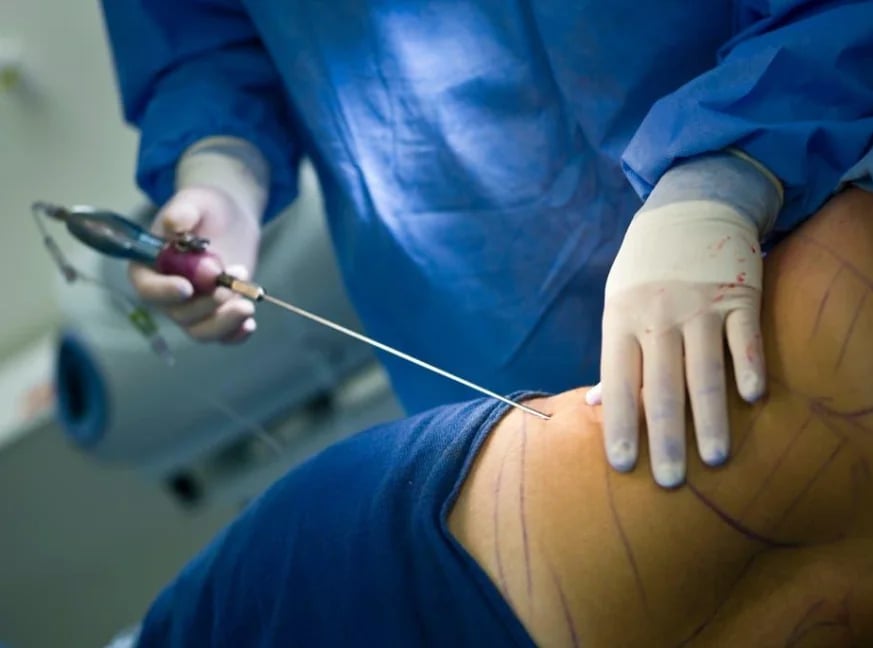
Once you're in the operating room, the fat removed for BBL purposes is harvested using a gentler, more specific liposuction technique than fat removed purely for contouring purposes elsewhere on the body. This distinction matters enormously and is worth understanding directly: fat cells are living tissue, and a technique optimized purely for removing volume quickly, using higher suction pressures or larger cannulas, can rupture and damage a significant proportion of fat cells in the process. Fat that's going to be reinjected needs to survive the trip relatively intact, which means surgeons performing combined Lipo 360 and BBL procedures typically use a lower-pressure, more careful harvesting technique specifically in the areas designated as BBL donor sites, even while using a more standard technique in areas being treated purely for contouring where cell survival isn't the priority.
This is one of the more overlooked technical details in patient understanding of this combined procedure: not all liposuction, even performed in the same surgery, is executed identically throughout, and the areas earmarked for fat transfer are handled with meaningfully more care than areas being treated for waist contouring alone.
Stage Three: Purification, the Step Most Patients Never Hear About
Once harvested, the fat doesn't go directly from the cannula into a syringe for reinjection. It passes through a purification process, most commonly either a centrifuge, which spins the harvested material to separate viable fat cells from blood, tumescent fluid, and damaged cell debris, or a filtration and decanting system that achieves a similar separation through gravity and mesh filtering rather than centrifugal force. Different surgeons and practices have genuine, reasonable preferences for one purification method over another, and there isn't a single universally agreed-upon superior technique, but the purpose is the same regardless of method: isolating the healthiest, most viable fat cells and removing everything else that shouldn't be reinjected.
This step matters directly to your eventual result, since injecting fat contaminated with excess fluid or damaged cellular debris both dilutes the effective volume of viable fat you're actually receiving and can increase the risk of complications like fat necrosis, discussed further below. A surgeon's specific purification protocol is a reasonable, worthwhile question to ask directly during your consultation.
Stage Four: The Reinjection, and Why the Technique Here Determines Your Result
Purified fat is then reinjected into the buttocks using a specific technique that's arguably the single most important technical factor in the entire procedure: fat must be placed in small, distinct deposits distributed carefully across multiple tissue planes and layers, rather than injected in large, concentrated pools. This is because fat cells need to establish a new blood supply from the surrounding tissue in order to survive long-term, a process called revascularization, and a fat cell sitting in the middle of a large pooled deposit is too far from any existing blood supply to survive, while fat cells distributed as small deposits throughout well-vascularized tissue have a much higher likelihood of successfully establishing this new blood supply and surviving permanently.
This is also precisely why BBL surgery takes considerably longer in the reinjection phase than the harvesting phase might suggest, a skilled surgeon is making hundreds of small, deliberate injection passes rather than a handful of large ones, specifically to maximize the surface area of fat in contact with viable surrounding tissue.
Stage Five: The Weeks After Surgery, When Survival Is Actually Decided
Here's the part of the journey that surprises most patients: the fat transfer procedure itself doesn't determine your final result nearly as much as what happens in your body over the following weeks. In the days immediately following surgery, transplanted fat cells are essentially surviving on a combination of stored energy and diffusion of nutrients from surrounding tissue, since they haven't yet established the new blood supply discussed above. This is the most vulnerable window for the transplanted fat, and it's exactly why post-operative instructions after BBL are so specific and, frankly, so restrictive compared to many other procedures.
Sitting or lying directly on the treated area during this early window compresses the fragile, not-yet-vascularized fat cells and can meaningfully compromise their survival, which is why patients are typically instructed to avoid sitting directly on their buttocks for a specific period, often two to three weeks, using specialized pillows or positioning to keep pressure off the treated area even when sitting is unavoidable. Compression garments, ironically, are used on the donor liposuction sites during this same period but are specifically avoided on the BBL area itself for the same reason, since compression on the buttocks would restrict the exact blood supply the fat cells are trying to establish. This is covered in more detail on our before and after gallery.
Stage Six: Why Not All the Fat Survives, and What That Means for Your Result
This is worth stating plainly and directly rather than glossing over: not all of the fat reinjected during a BBL survives long-term, regardless of how skillfully the procedure is performed. Survival rates reported in the surgical literature and by experienced practitioners commonly range from roughly 60 to 80 percent of the reinjected volume, meaning a meaningful portion of the transplanted fat, even under ideal technique and ideal post-operative compliance, will not survive and will instead be gradually reabsorbed by the body over the following months. This is normal, expected, and factored directly into surgical planning, which is why an experienced surgeon typically transfers more volume than your final desired result requires, anticipating this natural attrition rather than aiming to transfer exactly your target volume and hoping all of it survives.
This is also why final results aren't assessed immediately after surgery. The buttocks typically appear larger in the first few weeks than the eventual settled result, partly due to swelling and partly because the full extent of fat reabsorption hasn't yet occurred, with a more accurate picture of your true final result generally not apparent until three to six months after surgery, once swelling has fully resolved and the surviving fat cells have stabilized.
Stage Seven: What Determines Whether You're a Good Candidate for This Combination
Given everything described above, not every patient is an equally strong candidate for combining Lipo 360 with BBL fat transfer, and understanding why helps set realistic expectations before you ever reach a consultation. You need sufficient donor fat available to harvest a meaningful volume for transfer, which means patients who are already quite lean may not have enough usable donor fat to achieve significant buttock augmentation through fat transfer alone, and may need to discuss alternative or supplementary options with their surgeon. Your overall health and healing capacity matters considerably as well, since conditions that impair circulation or wound healing can reduce fat cell survival rates below the already-expected attrition discussed above. And your willingness and ability to comply with the specific post-operative restrictions, particularly the extended period of avoiding direct sitting pressure, genuinely affects your result, making this a procedure that requires real logistical planning around your work and home life during recovery, not just physical candidacy.
What Fat Necrosis Is, and Why the Careful Technique Described Above Matters
It's worth addressing a specific complication directly, since it's a frequent source of online anxiety and forum discussion around fat transfer procedures: fat necrosis occurs when transplanted fat cells die, typically due to inadequate blood supply reaching them, and can sometimes form small, firm lumps or, less commonly, areas of fluid collection that may require drainage. This is precisely why the careful, small-deposit injection technique described in Stage Four exists, distributing fat in small amounts across well-vascularized tissue specifically minimizes this risk compared to injecting larger volumes in concentrated areas, which is more likely to leave fat cells too far from a blood supply to survive cleanly and more likely to result in necrosis rather than simple, uneventful reabsorption. This is another reason surgeon technique and experience specifically with fat transfer, not just liposuction or buttock augmentation generally, is worth confirming directly during your consultation.
How Weight Fluctuation After Your Procedure Affects Your Result
It's worth addressing a question that comes up frequently in follow-up appointments, sometimes months after the initial recovery period has concluded: what happens to your combined result if your weight changes significantly afterward? Fat cells that have survived the transfer process and successfully established a blood supply behave, from that point forward, essentially like any other fat cells in your body, meaning they can enlarge with weight gain or shrink with weight loss along with your body's fat cells elsewhere. This is genuinely useful information for long-term planning: a stable weight following your recovery period generally supports a stable, predictable long-term result, while significant weight fluctuation in either direction after your fat cells have stabilized will likely affect your BBL result proportionally, similar to how it would affect any other area of your body carrying fat.
This is worth discussing directly during your consultation if you anticipate significant weight changes in your future, whether through planned weight loss, medical treatment, or other factors, since it may reasonably affect the timing of your procedure or how your surgeon plans your target volume.
About Dr. Bellamy's Approach to Combined Lipo 360 and BBL Procedures
Dr. Justin Bellamy, a board-certified plastic surgeon in Palm Beach Gardens who completed advanced fellowship training in aesthetic surgery at the Dallas Plastic Surgery Institute, approaches combined Lipo 360 and Brazilian Butt Lift procedures with the staged, technically deliberate process outlined throughout this article, including the differentiated harvesting technique for donor versus contouring areas, a defined purification protocol, and the small-deposit reinjection approach specifically associated with better fat survival outcomes in the surgical literature. Patients considering this combined procedure are evaluated individually for donor fat availability, overall candidacy, and realistic volume expectations given the natural attrition discussed above, rather than being given a uniform, one-size-fits-all projection of results. See our body contouring procedures page for more on this specific topic.
For patients whose goals extend beyond the buttocks alone, this combined approach is also frequently discussed alongside broader body contouring planning, including how Lipo 360 donor site results factor into your overall silhouette independent of the BBL result itself, and how this combination fits into a larger comprehensive plan if you're also considering procedures like tummy tuck or a full mommy makeover as part of your overall goals.
Stage Eight: How This Differs From Fat Transfer Elsewhere on the Body
It's worth understanding briefly how BBL fat transfer compares to fat grafting performed in other areas, since patients sometimes conflate the two or assume identical survival rates and technique apply universally. Facial fat transfer, for instance, typically uses much smaller volumes placed in thinner, less mobile tissue, and generally shows somewhat different survival characteristics than buttock fat transfer, which involves considerably larger volumes placed into tissue that experiences significant mechanical pressure and movement, particularly from sitting, on a daily basis for the rest of the patient's life. This is part of why the post-operative restrictions around sitting are so much more central to BBL recovery specifically than they are to facial fat grafting recovery, the ongoing mechanical stress the buttocks experience long-term is a genuinely different consideration than the comparatively protected environment facial fat grafts settle into.
Breast fat transfer, another common application, falls somewhere in between in terms of typical volume and mechanical considerations, and surgeons experienced across multiple fat grafting applications bring transferable technique principles, careful harvesting, proper purification, small-deposit reinjection, to each area while adjusting the specific approach based on the target tissue's unique characteristics and long-term mechanical environment.
What Happens If You Don't Have Enough Donor Fat for Your Desired Result
For patients who go through a thorough candidacy evaluation and learn they don't have sufficient donor fat to achieve their desired buttock volume through transfer alone, it's worth knowing this isn't necessarily a dead end. Some patients pursue a staged approach, undergoing an initial fat transfer procedure, then allowing several months for weight changes or simply revisiting the plan with additional donor sites once initial swelling has resolved and a clearer picture of retained volume is available. Others explore combining fat transfer with implant-based gluteal augmentation, a different surgical approach using silicone implants rather than fat, in cases where the desired volume genuinely exceeds what available donor fat and expected survival rates can achieve. This is a more involved surgical conversation with its own distinct risk and recovery profile, and is generally reserved for patients with a clear volume goal that autologous fat transfer alone cannot reasonably achieve, but it's worth knowing this option exists rather than assuming limited donor fat means your goals are entirely out of reach.
What Your Consultation Should Cover
A thorough consultation for this specific combined procedure should include a physical assessment of your available donor fat across the areas Lipo 360 typically addresses, a direct conversation about your specific desired buttock volume and shape and how that translates into a realistic transfer plan given expected attrition, and a detailed walkthrough of the post-operative restrictions specific to fat transfer, particularly the extended no-direct-sitting period, so you can plan your work and home logistics accordingly well before your surgery date. It's also worth asking directly about your surgeon's specific purification method and reinjection technique, using the vocabulary introduced throughout this article, since a surgeon genuinely experienced in this combination should be able to discuss these specifics comfortably and in detail rather than offering only general reassurance.
Frequently Asked Questions
Is Lipo 360 required in order to have a BBL, or can fat be harvested from just one area?
Fat can technically be harvested from a single area, but Lipo 360 is frequently chosen specifically because it maximizes usable donor fat volume while also achieving circumferential waist contouring, offering a dual benefit many patients specifically want.
What percentage of transferred fat actually survives after a BBL?
Survival rates commonly range from roughly 60 to 80 percent of the reinjected volume, which is why surgeons typically transfer more volume than the final desired result requires, anticipating natural reabsorption of a portion of the fat.
Why can't I sit normally after a BBL?
Newly transplanted fat cells haven't yet established a new blood supply and are vulnerable to being compressed and damaged by direct sitting pressure, which is why patients are typically instructed to avoid sitting directly on the treated area for a specific period, often two to three weeks.
When will I see my final BBL result?
A meaningful portion of early post-operative fullness includes swelling, and the true settled result, including the effects of natural fat reabsorption, generally isn't fully apparent until three to six months after surgery.
What is fat necrosis and how is it prevented?
Fat necrosis occurs when transplanted fat cells die due to inadequate blood supply. Careful, small-deposit injection technique distributed across well-vascularized tissue significantly reduces this risk compared to larger, concentrated injections.
Am I a good candidate if I'm already fairly lean?
Patients with limited donor fat may not have enough usable volume to achieve significant augmentation through fat transfer alone, which is worth discussing directly during a candidacy evaluation.
Schedule Your Palm Beach Lipo 360 and BBL Consultation
If you are considering circumferential liposuction with fat transfer, schedule a consultation at Bellamy Plastic Surgery to review whether a combined plan fits your anatomy and goals. Call (561) 705-0044 or complete our online contact form.